
The fundamentals of holding a perfect plank is correct form. This guide will teach you how to master the plank exercise to increase ab muscle strength and to build a strong core.
Plank, or in this guide more precisely front plank or elbow plank is an ab exercise where you hold your body on your toes and elbows in a straight line using your core muscles. It is important to hold the correct form. Don’t let your lower body fall too low and also not too high. In this guide you will learn how to hold the plank the correct way.
The plank hold is a great exercise for overall core strength and body awareness. Holding a plank position will work your core stability muscles that help you to have a good posture.
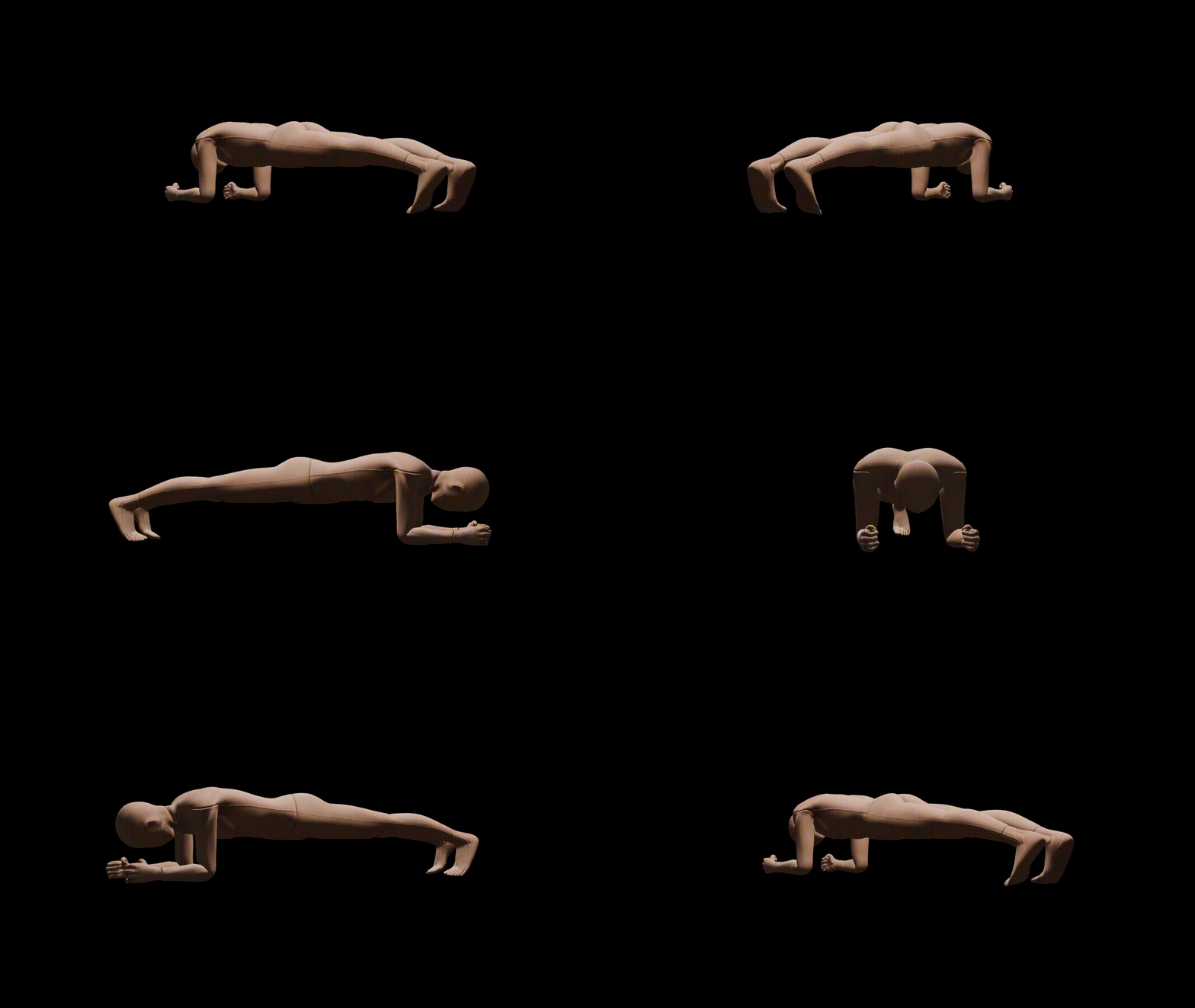
Table of contents:
Correct Form To Hold A Plank
Progression To Get 3 Minute Plank Hold
3 Most Common Mistakes When Holding Plank
How To Make Plank Hold Harder
Alternative Core Exercises
Correct Form To Hold Plank
First, you are going to go down on your knees, bend forward, rest on your arms, make an 90 degree bend in your elbows and bring your elbows under your shoulders so that your elbows and shoulders are vertically aligned. Positioning your hand in a slightly wider position will help you relax your upper body.
Now, from the kneeling position, with your toes raise your hips up in the air and then while still being on your toes slide your legs straight back so now only your arms and toes are touching the ground and you are in a nice straight level line position.
The key points in a correct plank position is having your head, shoulder, back and hips in the same level in a nice straight line and legs straight back on your toes. This is the correct plank position you want to hold for as long as possible. If and when this form starts to break by either having your lower back starting to raise higher or starting to sag lower it is time to stop doing the plank.
When doing plank for the first time it is normal to shake a lot and your form probably will not be perfect at first but it will become perfect by training. If your shoulders and arms start to tire before your core muscles, that is a sign of bad or wrong form, so in that case check again for a correct form and try to fix your position.
Progression To Get 3 Minute Plank Hold
A 3 minute plank is an impressive goal to aim for. Getting a longer plank obviously takes time, effort and lots of training – doing plank. When you first start you should first do easier variations of plank before moving to an elbow plank.
A couple easier variations of the plank are holding plank with straight arms instead of with 90 degree elbow bend and holding an elbow plank with your knees on the ground. If you are completely beginner you can try other ab and core muscle exercises to build a solid foundation and then move to the plank excerise.
Once you can do a solid, clean elbow plank, getting to a 3 minute plank hold is nothing but training, training and training.
Adding weights on your back when holding plank can make your workouts more effective and speed up your progress. Once you lift that extra weight off, holding only your bodyweight feels lightweight. Also on top of holding plank regularly doing other ab and core muscle exercises will boost your progression. See other alternative core exercises here and remember to train hard but also remember to rest. Rest is where muscles grow and you gain strength.
How To Make Plank Hold Harder
Add External Weight
If you have access to equipment, treat the plank like a pull ups or dips. Once your progress, add some weight. For a weighted plank, have a partner carefully place a weight plate on your upper back/shoulder blade area, making sure never to place it on the lower back. Alternatively, you can use a wright vest. Also using a sandbag across your back works and it adds an unstable, shifting load that forces your core to adapt to the movement.
3 Most Common Mistakes When Doing Plank
As stated earlier a good plank is a nice straight line with your head, shoulders and hips at level and arms in a slight wide angle and elbows at 90 degree angle.
One of the most common mistakes while doing plank is having your hips too low. So you are still in the air but having hips too low will prevent you from using your core muscles to support your midsection – making the hold not target the right muscles.
Another mistake is to drop your lower back too low. Once you have held the plank position for some time and get tired, your core will stop giving enough support and lower back starts to drop easily. This is a sign to stop your plank hold because it is not “fixable” like your hip position is.
People can also easily struggle with their upper bodies while holding the plank position. The usual mistake is to have tense arms and shoulders over-rounded which results in tiring your arms before your core and hence not getting a full good workout. In this case you just need to relax your arms, drop onto your shoulder blades and bring your hips up at the same time so your body is back at that straight line position.
So in summary avoid these mistakes: hips too low or too high, lower back giving up meaning you should stop plank at this moment. Don’t try to fix your position anymore. Rest and do another set later. Keep your upper body relaxed and stay on your shoulder blades to avoid tiring your arms before core muscles.
Alternative Core Exercises
Basic sit ups are the most common ab exercise that people do. You can do sit ups straight up, to the sides, full or half sit ups. There are so many variations and difficulty levels to sit ups that will definitely help you progress with your ab strength.
Hollow body holds are kinda like plank, but other ways around where you are laying on your back and lighting your shoulders and legs off the ground. Some people say they are a better version of plank and probably much easier to do.
Ab wheel is a cheap piece of equipment you should have in your home if you don’t have one yet. Rolling with an ab wheel can be difficult but it will get easier as you advance and it’s an incredible ab workout exercise.
Hanging leg raises is another great ab workout that you do hanging from a bar. Hanging leg raises can be done also in other variations depending on the difficulty. You can do it while bending your knees, with straight legs or toes to bar – all depending on your strength levels. The only downside is that you actually will need a bar to hang from but it will improve your hanging strength on the side so the exercise will transfer to your other calisthenic and bodyweight workouts.
Dragon flags are a legendary advanced core exercise, where you lie on a bench or the floor and grip a sturdy anchor point behind your head. You then drive your legs and torso up into a vertical position and slowly lower your body back down as a single, stiff unit. The goal is to hover your legs just above the ground before pulling back up, while keeping your body straight without letting your lower back arch and your butt touch the floor or bench surface.
