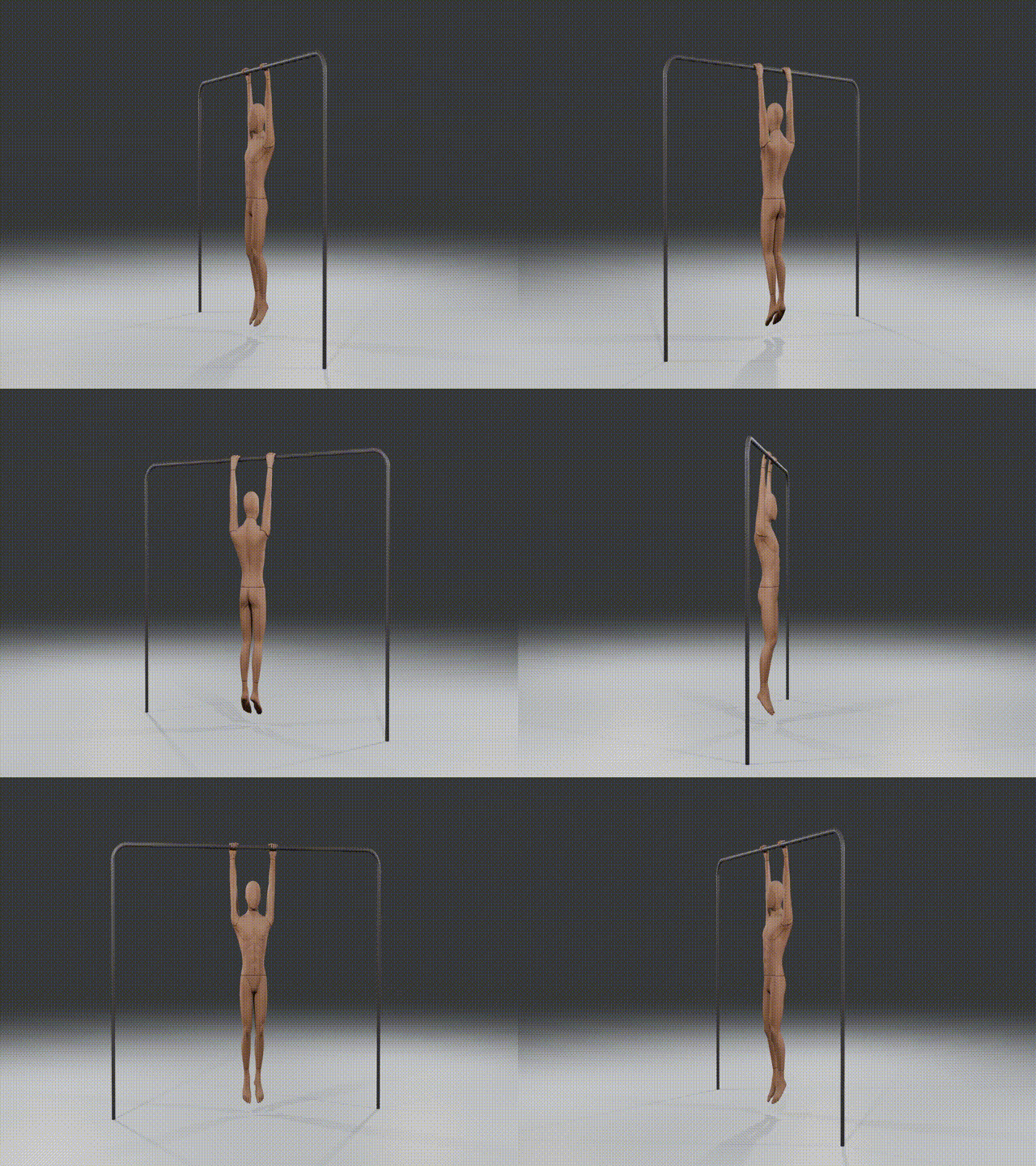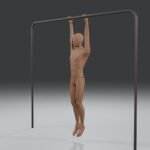

Opposite to active hang, where you have activated shoulders to keep your body up, in passive hang (or as some say dead hang) you let your whole body just hang loose and rely solely on your grip strength. Hang from a bar with your hands at about shoulder width and keep your arms straight and shoulders relaxed. Try to relax your whole body. You will feel your spine extend and feet come a bit closer to the ground. Don’t use muscles anywhere other than your grip to stay on the bar.
Passive hang stretches your spine, chest, lats, shoulders and arms and it is hugely recommended exercise to do.
You can do it at the start of your workout, in the middle or at the end – it’s not that specific, but you should do them. When you feel your body literally getting longer and, if the bar is not too high, your legs start touching the ground you know you are doing passive hangs the correct way.
Benefits Of Doing Passive Hangs
Passive hangs help relieve tension in your back muscles, spine and shoulders. Hanging opens up your shoulder joints and increases shoulder mobility.
Doing regular passive hangs will also increase your grip strength that will be beneficial in other exercises like hanging leg raises and front lever.
Passive hangs are pretty simple exercises so there is not much to say about them. Here are examples how your body should look like when doing passive hangs: