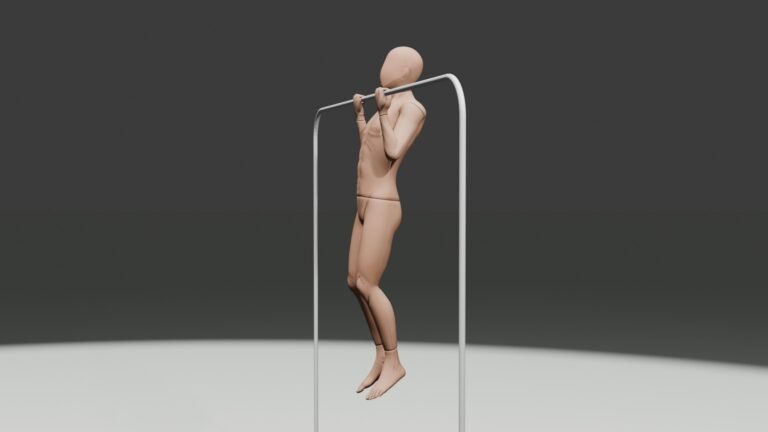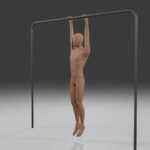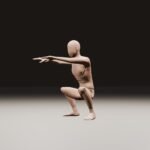

Dips are a bodyweight pressing exercise that primarily trains the chest, triceps and front of the shoulders. To perform a standard parallel-bar dip, support yourself on straight arms, lower your body under control by bending your elbows, then press back to the starting position.
Good dip form depends on controlling your shoulders, keeping your body stable and using a range of motion you can comfortably manage. If you cannot perform a full bodyweight dip yet, assisted and negative dips can help you build toward your first clean repetition.
This guide covers proper dip form, beginner progressions, chest vs triceps dips, common mistakes, workout programming and ways to train dips at home.
How to Do Dips With Proper Form
These instructions describe a standard bodyweight dip performed on parallel bars.
1. Start in the support position.
Grip the bars with your palms facing inward and support yourself with your arms straight. Keep your shoulders controlled rather than letting them shrug toward your ears.
2. Brace your body.
Tighten your core and keep your lower body still. Your legs can hang straight or bend slightly behind you as long as you are not swinging.
3. Begin the descent.
Bend your elbows and lower yourself under control. Keep your elbows tracking naturally behind you rather than allowing them to flare dramatically outward.
4. Use a comfortable depth.
For most people, a good starting point is to lower until the upper arms are around parallel with the floor. You do not need to force extra depth if your shoulders become uncomfortable.
5. Press back up.
Push firmly through the bars and extend your elbows until you return to the starting position. Keep your shoulders controlled at the top rather than shrugging upward.
6. Reset before the next repetition.
Make sure your body is stable before beginning the next descent. Avoid bouncing out of the bottom or using your legs to create momentum.
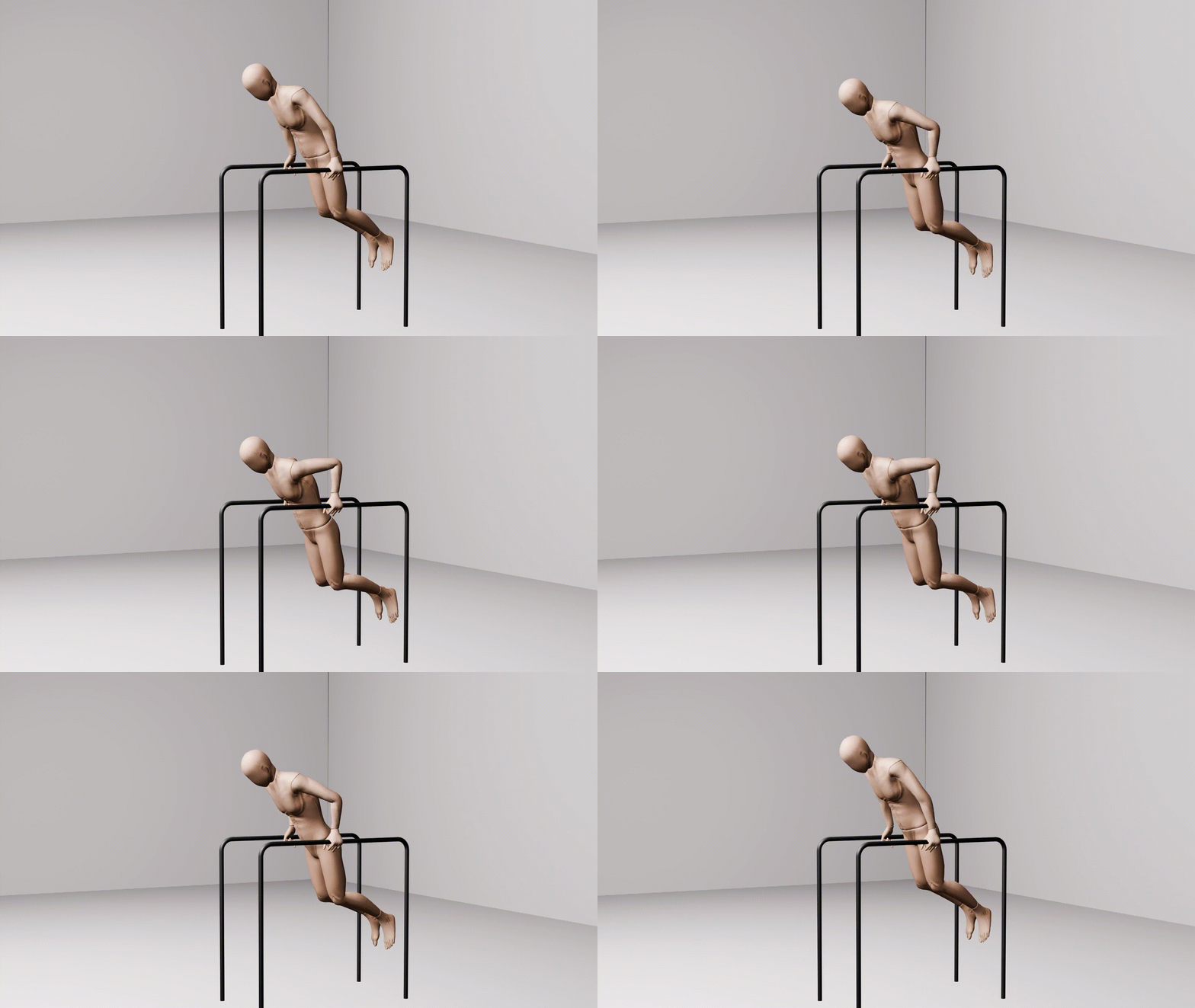
How Deep Should You Go on Dips?
A useful starting point is to lower until your upper arms are roughly parallel with the floor, which usually places the elbows near a 90-degree bend.
However, there is no single depth that is ideal for every person. Shoulder mobility, bar width, technique and training experience can all affect how comfortable the bottom position feels.
Do not force extra depth just because someone else dips lower. Use the deepest range you can control without bouncing, losing shoulder position or experiencing pain.
As your strength and control improve, you may be able to use a deeper range comfortably.
What Muscles Do Dips Work?
Dips primarily train the triceps, pectoralis major (chest) and anterior deltoids (front shoulders). Your upper back, shoulder-girdle muscles and core also help stabilize your body while you move between the bars.
The exact emphasis changes with your technique. A greater forward torso lean generally places more emphasis on the chest, while a more upright torso places relatively more emphasis on elbow extension and the triceps.
| Muscle group | Role during dips |
|---|---|
| Triceps | Extends the elbows as you press upward |
| Chest | Contributes strongly to the pressing movement |
| Front deltoids | Assist the shoulder during the descent and press |
| Core | Keeps the torso and legs stable |
| Upper-back / shoulder stabilizers | Help control the shoulder girdle |
Can’t Do a Dip Yet? Beginner Dip Progression
Full bodyweight dips can be challenging because you are supporting most or all of your body weight with your upper body. If you cannot perform a clean repetition yet, reduce the difficulty rather than repeatedly attempting failed reps.
Assisted Dips
Use an assisted-dip machine or resistance band to reduce the amount of body weight you need to press.
Practice the same technique you want to use for full dips: stable shoulders, controlled descent and a smooth press back to the top.
Gradually reduce the assistance as you become stronger.
Assisted Dips On A Machine
The machine-assisted dip utilizes a counterweight platform to offset a portion of your body weight, allowing you to practice full parallel bar dip mechanics while building foundational pressing power.

Resistance Bands
If you train at home, a set of resistance bands can also be used to reduce the load during assisted dips.Here is an example set from Amazon if you need bands for your setup.
Negative Dips
Negative dips train the lowering portion of the movement.
Start at the top of the dip with your arms straight. Lower yourself slowly for about 3-5 seconds until you reach a comfortable bottom position, then step back up rather than pressing yourself up.
Try 3-5 controlled repetitions per set. Once you can control the descent consistently, begin practicing assisted or full repetitions.
Full Bodyweight Dips
Once you can control assisted and negative dips, begin practicing full repetitions on parallel bars.
Start with small sets. Even 2-5 clean repetitions are useful when you are learning the movement. Add repetitions gradually rather than sacrificing form to reach an arbitrary target.
Still building basic pushing strength? Push-ups are a useful foundation because they train the chest, triceps and shoulders with less load than a full bodyweight dip. If standard push-ups are still difficult, work on them alongside easier dip progressions.
Read: How to Do Push-Ups
When I stared doing dips, it help a lot that I already had a solid foundation from doing push-ups and weightlifting like bench press and triceps with dumbells.
When you’re working on dip progressions, consistent training and recovery should remain your priorities. Creatine is an optional supplement that may support strength development. Creatine for Calisthenics guide explains the evidence, dosage, and possible water-weight changes.
Common Dip Mistakes and How to Fix Them
Shrugging the shoulders
Problem: Your shoulders rise toward your ears during the descent or press.
Fix: Keep the shoulders controlled and think about maintaining space between your shoulders and ears.
Flaring the elbows excessively
Problem: The elbows shoot far outward during the descent.
Fix: Let your elbows track naturally behind you rather than forcing them dramatically outward.
Dropping too quickly
Problem: You fall into the bottom position and rely on momentum to reverse the rep.
Fix: Slow down the descent and remain in control of the bottom position.
Going deeper than you can control
Problem: You force extra range even when your shoulders become uncomfortable or your posture collapses.
Fix: Use a comfortable depth and gradually increase your range as your control improves.
Swinging the legs
Problem: Your legs kick forward and backward to help you complete repetitions.
Fix: Brace your core and keep your lower body quiet. Use assistance if you cannot complete the repetition without momentum.
Doing half reps
Problem: You perform only the easiest top portion of the movement.
Fix: Use assistance if necessary so you can practice a consistent controlled range.
How Many Dips Should You Do?
The right number of dips depends on your current strength and training goal. Good form matters more than reaching a specific repetition target.
| Goal | Example starting point |
|---|---|
| Learning dips | 3–4 sets of 2–5 controlled reps or assisted reps |
| Building strength | 3–5 sets of around 4–8 reps |
| Building muscle | 3–4 sets of around 6–12 controlled reps |
| Bodyweight endurance | 2–4 sets of higher reps while form remains consistent |
These are practical starting ranges, not mandatory rules. Stop the set when your form begins to break down rather than forcing extra repetitions.
How to Add Dips to Your Workout
Dips work well as one of the main pushing exercises in an upper-body or full-body workout.
If dips are one of your main strength exercises, perform them while you are relatively fresh—usually after your warm-up and before smaller isolation exercises.
A simple upper-body session could look like:
- Pull-Ups or Inverted Rows – 3 sets
- Dips – 3 sets
- Push-Ups or Pike Push-Ups – 3 sets
- Core exercise (hollow body holds, dragon flags, plank) – 3 sets
You do not need to perform dips every day. Give your pressing muscles time to recover before training them hard again.
Dip Variations From Beginner to Advanced
Dips can be changed depending on your strength level, equipment and training goal. Some variations reduce the amount of body weight you have to lift, while others increase the difficulty through added resistance or instability.
If you’re still building toward your first full dip, use the beginner progression earlier in this guide. The variations below are useful once you want to change the equipment or make standard dips more challenging.
Bench Dips
Bench dips are performed with your hands on a bench, chair or other stable elevated surface behind you while your feet remain on the floor.
They primarily emphasize the triceps and are easier to scale because bending your knees and bringing your feet closer reduces the load.
How to do them: Place your hands beside your hips on a sturdy surface, move your hips just in front of the edge, bend your elbows to lower under control, then press back up.
Keep your body close to the bench and use a range your shoulders tolerate comfortably.

Straight Bar Dips

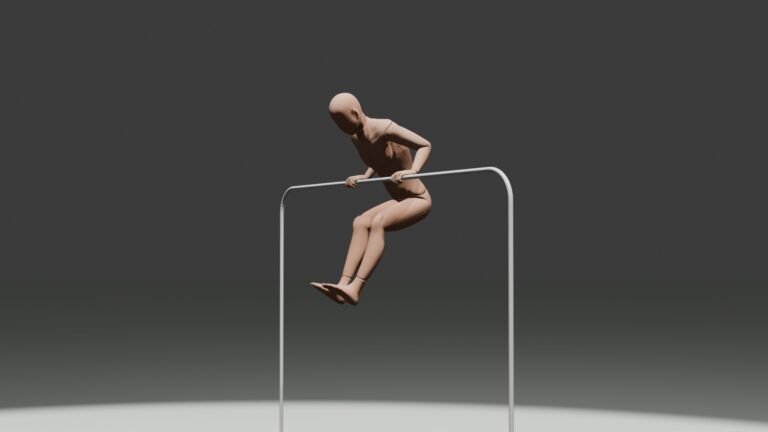
Straight-bar dips are performed over a single horizontal bar instead of between parallel bars. Because the bar is in front of your body, you must lean over it as you descend.
This makes straight-bar dips useful for calisthenics athletes working toward movements such as the muscle-up.
Keep the movement controlled and avoid bouncing your torso off the bar.
Weighted Dips
Weighted dips are the main progression once bodyweight dips are no longer challenging enough.
Add resistance with a dip belt or weighted vest while keeping the same controlled form you use for bodyweight dips. Start with a small amount of additional weight rather than allowing the load to shorten your range or change your technique.
Once bodyweight dips become easy, a dip belt is one of the simplest ways to add external resistance. If you’re looking for an example, this is one option available on Amazon.
Ring Dips
Ring dips are more demanding than parallel-bar dips because each ring can move independently. Your shoulders, arms and trunk must work harder to keep the rings stable throughout the repetition.
Build solid parallel-bar dips before progressing to rings. Keep the rings close to your body, lower under control and avoid allowing them to drift far outward.
Chest Dips vs Triceps Dips
Both versions train the chest and triceps. Changing your torso position can shift the emphasis, but it does not completely isolate one muscle group.
| Chest emphasis | Triceps emphasis | |
|---|---|---|
| Torso | Slightly leaned forward | More upright |
| Elbows | Track naturally with the torso | Stay relatively close to the body |
| Legs | Can angle slightly behind you to balance the lean | Usually stay more underneath the torso |
| Main emphasis | More chest contribution | More triceps contribution |
Don’t exaggerate either position. A chest dip does not require folding your torso dramatically forward, and a triceps dip should not force you into an uncomfortable shoulder position.
How To Do Dips At Home
You do not need a commercial gym to train dips, but you do need a stable surface that can safely support your body weight.
Your main options are:
1. Parallel dip bars
Portable dip bars are the closest home equivalent to a normal gym dip station. They let you practice full bodyweight dips, assisted dips and eventually weighted variations.
2. Tall parallettes or equalizer bars
Tall bars provide enough clearance for full dipping movements while remaining easier to move and store than a large dip station.
3. A power tower or rack dip attachment
If you have more space, a power tower or dip attachment provides a fixed setup for dips and often other bodyweight exercises.
4. A sturdy bench for bench dips
A bench can be used for bench dips, but it does not reproduce the same movement as a parallel-bar dip.
Be careful with improvised furniture. Chairs, stools and tables can slide, tip or break under load. Only use household surfaces if they are genuinely stable and designed to support your weight. When in doubt, use purpose-built training equipment instead.
What Equipment Do You Need for Dips at Home?
If you want to train dips at home, a pair of parallel dip bars or a suitable dip station can be a useful investment.
Choose equipment with stable construction, a suitable weight rating, and enough space to lower your body comfortably without hitting the floor.
You do not need an expensive setup, but stability and proper installation are important. Avoid using unstable chairs or furniture as substitutes for dedicated dip equipment.
Browse dip bars and dip stations on Amazon.
Paid link: I may earn a commission if you purchase through this link.
Benefits of Dips
Dips are useful because they combine chest, triceps and shoulder strength in one bodyweight movement.
They also have a long progression path. Beginners can use assistance, stronger athletes can perform full bodyweight reps, and advanced trainees can add external weight or use more challenging variations such as ring dips.
Dips can help develop:
- upper-body pushing strength
- chest and triceps strength
- body control between parallel bars
- strength for calisthenics movements such as straight-bar dips and muscle-ups
- an easy path to progressive overload through added repetitions or weight
They are not mandatory for a good training program, however. If dips consistently cause pain despite adjusting your technique and range, choose another pressing exercise that you can perform comfortably.
Frequently Asked Questions
Are dips good for beginners? Full bodyweight dips can be difficult for beginners, but you do not need to wait until you are strong enough for a full repetition. Assisted dips and controlled negatives allow you to practice the movement while gradually building strength.
How deep should you go on dips? A useful starting point is to lower until your upper arms are roughly parallel with the floor. Use the deepest range you can control comfortably rather than forcing a fixed depth.
Do dips work the chest or triceps more? Dips train both. Leaning the torso forward generally increases chest emphasis, while keeping the torso more upright shifts relatively more emphasis toward the triceps.
How many dips should a beginner do? Start with sets you can perform with consistent form. If full dips are difficult, use assisted repetitions rather than forcing a specific number of bodyweight reps.
Can you do dips at home? Yes. Parallel dip bars, tall parallettes, a power tower or a rack dip attachment can all be used at home. Bench dips require only a sturdy elevated surface, although they are a different movement from parallel-bar dips.
Why do my shoulders hurt during dips? Shoulder discomfort can have several causes, including using more depth than you currently control, training with excessive volume or using a setup that does not suit you. Stop if you experience sharp or persistent pain, adjust the exercise, and consider qualified medical advice if symptoms continue.