
Mastering the deadlift is about more than just moving heavy weight. It’s about functional movement patterns. It teaches you how to brace your core and use your hips to lift, which protects your back and spine in everyday life. Whether you are a calisthenics athlete looking to add lower-body mass or a powerlifter who just wants to lift huge weights, deadlift must be added to your workout routine.
Quick Deadlift Summary TLDR
- Primary muscles targeted: Glutes, hamstrings, lower back, traps, and forearms.
- Stance: Feet hip-width apart, bar over mid-foot.
- The key: Hinge at the hips, keep a flat back, and “push the floor away”.
- Rep range: 2-5 reps for strength. 8-12 reps for muscle growth and endurance.
What Is The Deadlift?
The barbell deadlift is a lower body exercise that involves lifting a loaded bar from the floor to a standing position. It is widely considered the ultimate measure of total-body strength, because it requires alot from different body muscles and usually people lift most weights through deadlift. Unlike the squat, which is a “pushing” movement for the legs, the deadlift is a “pulling” movement that targets legs but also the posterior chain – the muscles running along the back of your body.
How To Do Deadlifts With Correct Form
To prevent injury and maximize your “one-rep max,” follow these four steps for every single rep:
1. Setup for deadlift (feet and bar position)
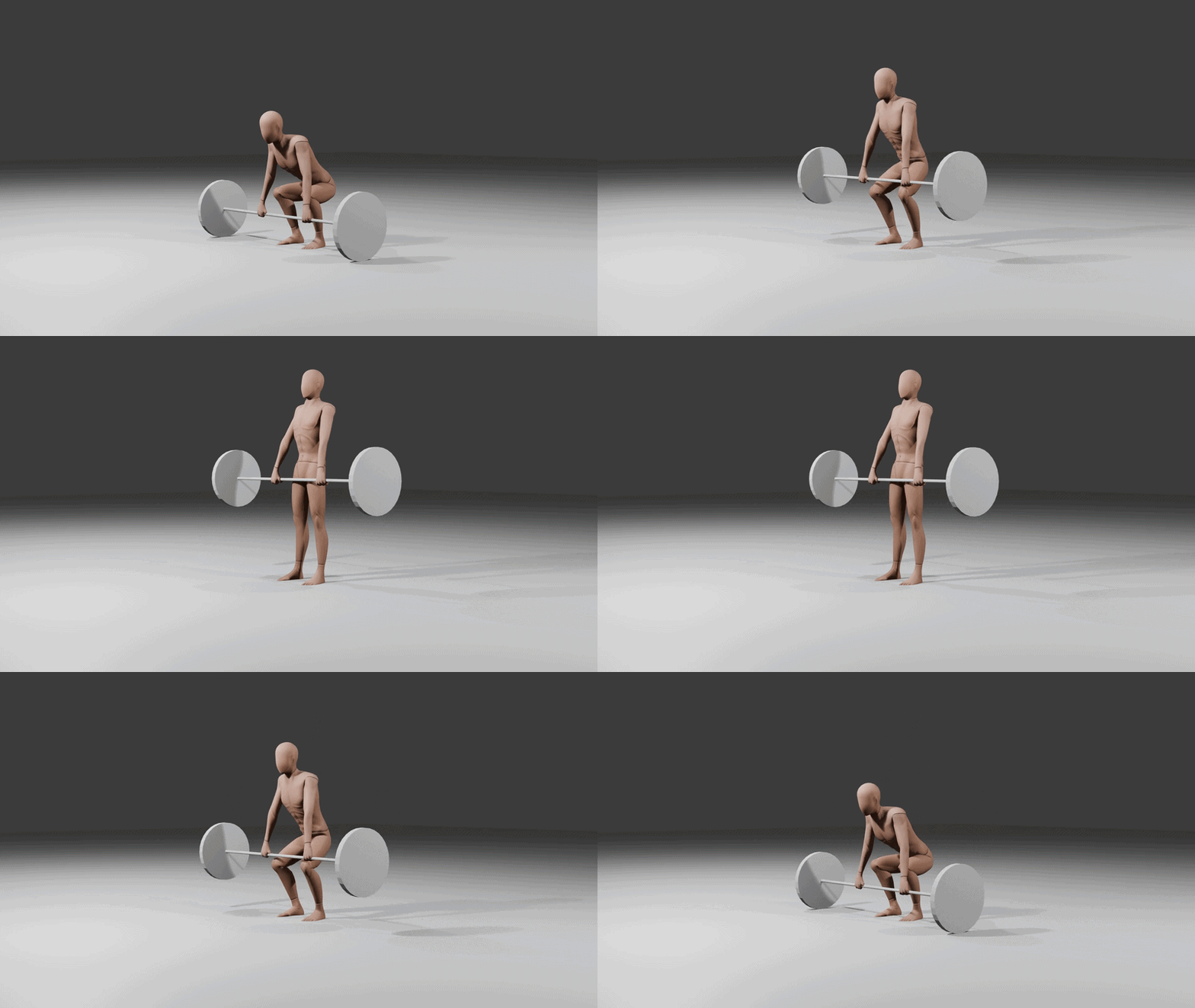
Walk up to the bar so it is over the mid-foot. Your shins should be about an inch away from the metal. Bend at the hips to grab the bar with a shoulder-width grip. Do not move the bar.
2. How your back should be when deadlifting
Drop your hips until your shins touch the bar. Flatten your back by pulling your chest up and shoulders back. You should hear a “clink”. This is “pulling the slack out of the bar.” Your body should feel like a tight spring and your back in correct flat, straight position.
3. Correct way to lift the bar (drive, don’t pull)
Take a deep breath into your belly and hold it. Instead of pulling with your arms, drive your feet into the floor – your arms should stay straight all the time. Keep the bar in contact with your shins and thighs throughout the entire movement.
4. The lockout at the top of deadlift
Stand tall until your hips are fully extended. Squeeze your glutes at the top. Avoid leaning back, as this puts dangerous pressure on your lumbar discs. At the end of movement your body should be straight up and the bar touching about your hips with arms straight.
Deadlift Progressions & Variations
If you are a beginner, jumping straight into a heavy barbell deadlift can be intimidating. Use these progressions to build your way up:
- Kettlebell deadlifts: Basically regular deadlifts but with a kettlebell. Perfect for learning the “hip hinge” mechanic.
- Rack pulls: Deadlifting from a higher starting point to focus on the top half of the move. So have the bar on rack at abut your knee height and lift from there.
- Regular vs. sumo: Regular (narrow stance) is better for back developmen. Sumo deadlift (wide stance) is often easier for people with long torsos or hip mobility issues.
- Romanian deadlifts (RDL): A variation where you don’t touch the floor, focusing purely on hamstring stretch and growth.
Common Deadlift Mistakes (And How To Fix Them)
| Mistake | The Result | The Fix |
| Rounding the Back | Disc Herniation / Pain | “Chest up” and squeeze your armpits. |
| Hips Rising Too Fast | Stiff-Legged Pull | Start with hips slightly higher; drive with legs. |
| Bar Path Drifting | Increased Back Load | Keep the bar “shaving” your shins. |
Sumo Deadlift vs. Regular Deadlift: Which One Is Best For You?
While both movements are effective for building total-body strength, the choice between sumo deadlifts and regular deadlifts usually comes down to your unique body proportions (limb length) and your specific training goals.
The Regular Deadlift (The Standard)
In the regular deadlift, your feet are hip-width apart and your hands grip the bar outside of your legs.
- Muscles Used: This version puts a massive demand on the lower back and the hamstrings. It requires a longer range of motion to get the bar from the floor to the lockout.
- Best For: Lifters with shorter torsos and long arms. It is the “purest” test of posterior chain strength and is excellent for building a thick, powerful back.
The Sumo Deadlift (The Wide Stance)
In the sumo deadlift, your feet are set very wide (pointing toward the plates) and your hands grip the bar inside of your legs.
- Muscles Used: Because your torso stays more upright, this version shifts the load away from the lower back and onto the quads and adductors (inner thighs). It has a shorter range of motion, which is why many powerlifters prefer it for moving maximum weight.
- Best For: Lifters with long torsos or shorter arms who struggle to keep a flat back in the regular stance. It’s also a great alternative for those with a history of lower back sensitivity.
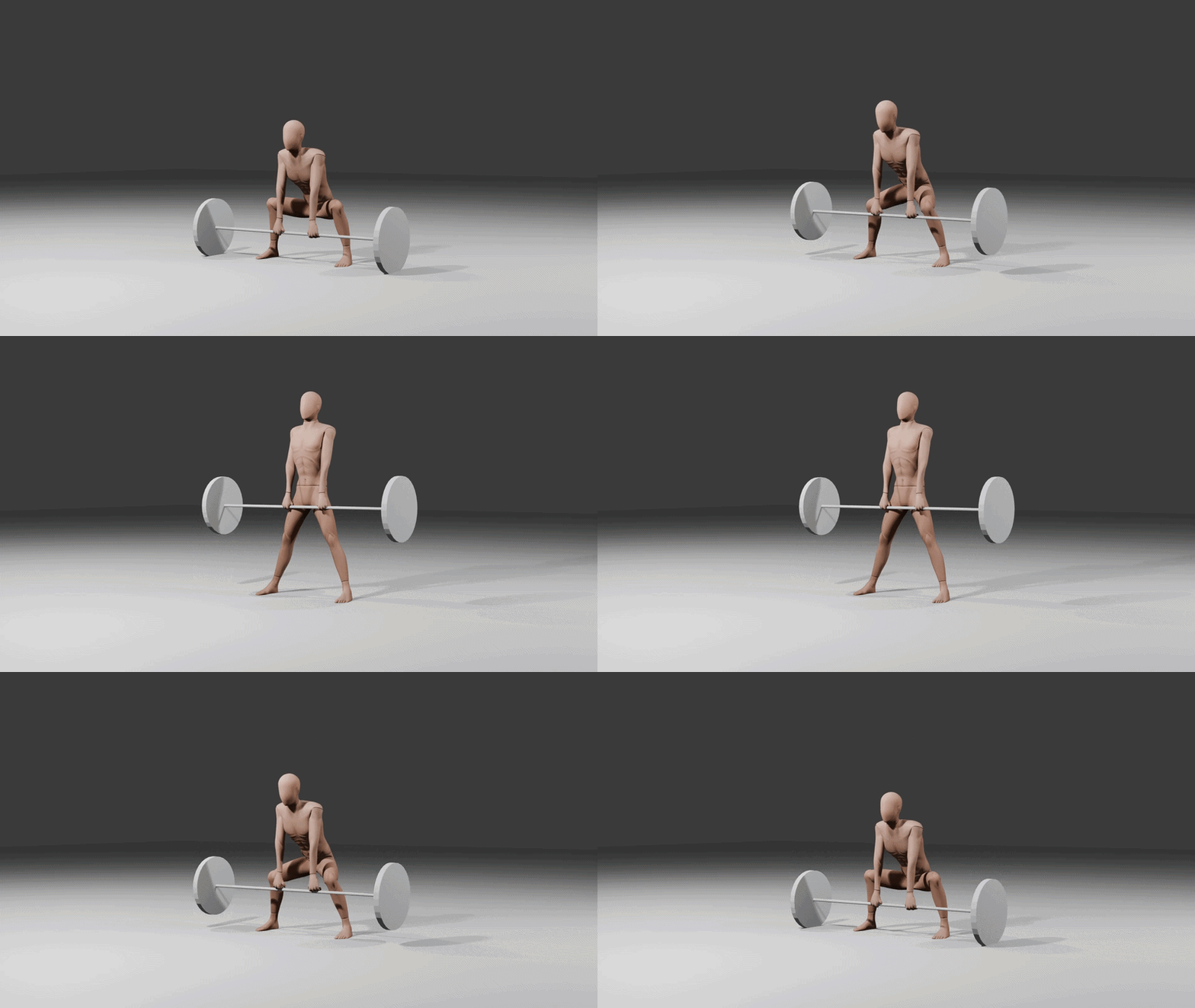
| Feature | Regular Deadlift | Sumo Deadlift |
| Foot Stance | Narrow (Hip-width) | Wide (Near the plates) |
| Grip Position | Outside the legs | Inside the legs |
| Torso Angle | More bent over (Horizontal) | More upright (Vertical) |
| Back Stress | High (Great for erector growth) | Moderate (Easier on the spine) |
| Leg Focus | Hamstrings & Glutes | Quads, Glutes & Adductors |
Which One Should You Choose?
There is a common myth that Sumo is “cheating” because of the shorter range of motion. This is false. Sumo requires significantly more hip mobility and “off-the-floor” leg power.
What do I recommend? Try both! If you feel a sharp pinch in your hips during sumo, your hip sockets might be better suited for regular deadlifts. If you find it impossible to keep your back flat in regular deadlifts, sumo deadlifts might be the safer anb stronger deadlift for your body type.
Frequently Asked Questions (FAQ)
Is deadlifting bad for your back?
No. Deadlifting with bad form is bad for your back. Deadlifting with a neutral spine is the best way to strengthen the muscles that protect your spine.
How often should I deadlift?
Because deadlifts are taxing on the central nervous system (CNS), most people should only deadlift 1-2 times per week.
Should I use a weightlifting belt?
Belts are great for heavy sets (above 80% of your max), but beginners should learn to brace their core naturally first.
The Benefits of Deadlifting
Beyond raw strength, deadlifts improve your grip strength, which carries over to your front lever and pull up training. They also boost bone density and improve posture by strengthening the traps and erectors.