
Squats are one of the best leg exercises you can do. They build strength, improve mobility, and train your entire lower body.
But they’re also one of the most commonly done wrong—and when you add heavy weight too soon, they can lead to serious injuries.
This beginner guide shows you how to squat properly, how to stay safe, and how to build strength without risking your body.
What even is a squat?
A squat is a lower body exercise where you bend your hips and knees to lower your body down, then stand back up.
It mainly trains:
- Legs (quads, hamstrings)
- Glutes
- Core
Why squat form matters
Good squat form:
- Builds strength faster
- Reduces stress on joints
- Prevents injuries
Bad form—especially under heavy weight—can lead to:
- Knee pain
- Lower back injuries
- Long-term joint problems
Many people struggle with tight hip flexors without realizing how much they affect movement, posture, and exercise performance. Tight hips can make squats, lunges, running, core exercises, and even simple mobility work feel uncomfortable or restricted. If you spend a lot of time sitting or train frequently, it’s worth learning how to improve hip mobility and reduce stiffness before it starts affecting your workouts.
Read our complete guide on tight hip flexors and how to fix them to learn the causes, symptoms, stretches, strengthening exercises, and the best ways to improve hip mobility naturally.
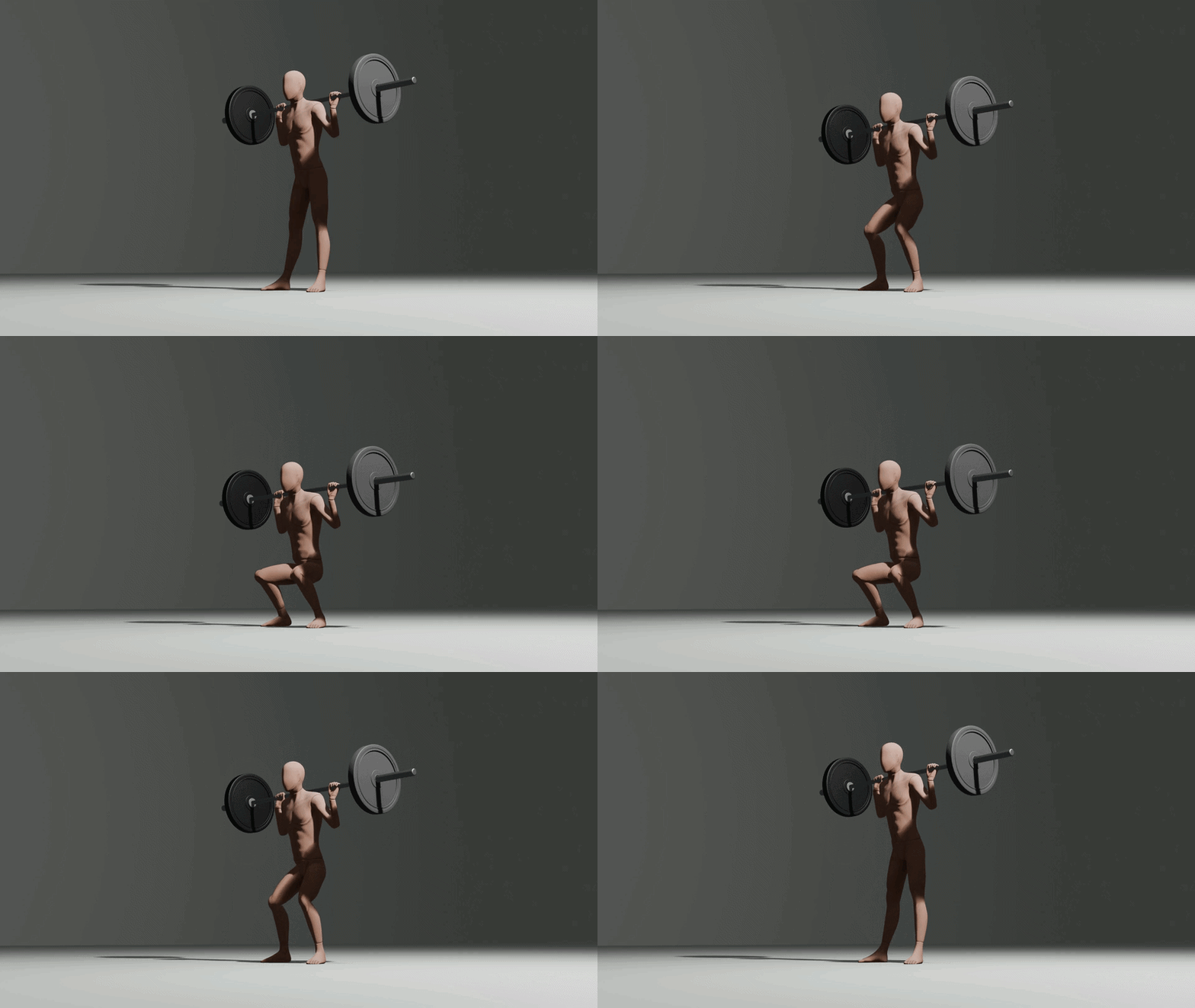
How to squat properly (step-by-step)
Step 1: Stand with feet shoulder-width apart
- Toes slightly pointing outward
- Weight evenly on your feet
Step 2: Brace your core
- Tighten your core like you’re about to be pushed
- Keep your chest up
Step 3: Start the movement from your hips
- Push your hips back slightly
- Then bend your knees
Step 4: Lower under control
- Keep your back neutral (not rounded)
- Knees should follow your toes
- Go as low as you can while staying controlled
Step 5: Push back up
- Drive through your heels
- Keep your chest up
- Fully stand up at the top
Common squat mistakes
1. Knees collapsing inward
This puts stress on your knees.
👉 Focus on pushing knees slightly outward.
2. Rounding your lower back
This is one of the biggest injury risks.
👉 Keep your core tight and chest up.
3. Heels lifting off the ground
This reduces stability.
👉 Keep your weight through your whole foot.
4. Going too heavy too soon
This is where most injuries happen.
👉 Master bodyweight squats first.
Why squats can cause injuries (especially with heavy weight)
Squats themselves are not dangerous—but poor form + heavy weight is.
Heavy squats are one of the most common exercises where people get injured because:
- The spine is under load
- Small form mistakes get amplified
- People push beyond their control
Common injuries include:
- Lower back strain
- Knee ligament stress
- Hip issues
👉 The biggest mistake:
Trying to lift heavy before building proper movement and control.
How to prevent squat injuries
1. Start with bodyweight squats
Master the movement and form first.
2. Focus on control, not weight
Slow, controlled reps build safer strength.
3. Progress gradually
- Add reps first
- Then difficulty
- Then weight (if needed)
4. Stop if something feels wrong
Pain is not part of proper training.
5. Keep your core engaged
A strong core protects your lower back. Some great core exercises to support squatting are hollow body holds and planks.
Beginner squat progression (safe approach)
Level 1: Assisted squats (holding support)
3 sets of 10–15 reps
Level 2: Bodyweight squats
3 sets of 10–15 reps
Level 3: Tempo squats (slow)
3 sets of 8–12 reps
- 3 seconds down
- 1 second pause
Level 4: Advanced variations
- Split squats
- Bulgarian squats
Level 5: Barbell squats (carefully)
- Barbell squats with added weight
- focus on form to prevent injuries, but barbell squats are necessary to build strength and muscle.
How to include squats in your routine
Use them in a simple plan like this:
👉 Beginner Bodyweight Workout Plan (No Equipment Needed)
Train 2–3 times per week and focus on improving your form over time.
How long until you improve?
With consistent practice:
- 2–3 weeks: better control and balance
- 4–6 weeks: stronger legs and improved form
- 8+ weeks: noticeable strength and confidence
Final advice
Squats are powerful—but only when done correctly.
Don’t rush to add weight. Build your foundation first. Most injuries happen when people skip the basics.
If you focus on control, consistency, and proper form, squats will become one of the safest and most effective exercises you can do.