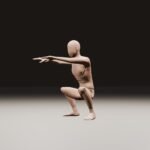

The bodyweight squat is one of the most useful lower-body exercises you can learn.
It trains your legs and glutes, requires no equipment, and teaches the movement pattern you’ll use in harder squat variations later.
The main goal is not to squat as deep or as fast as possible. It is to move through a comfortable range of motion while keeping your feet stable, knees controlled, and torso balanced.
If you are a beginner, focus on clean reps before adding speed, weight, or harder variations.
How to Do a Bodyweight Squat With Proper Form
Start standing with your feet around shoulder-width apart.
Your exact stance may vary slightly depending on your hip structure and mobility, so you do not need to force one exact foot position.
Then:
- Stand tall with your feet firmly planted.
- Turn your toes slightly outward if that feels natural.
- Brace your core before starting the rep.
- Bend your knees and hips at the same time.
- Lower yourself under control.
- Keep your whole foot in contact with the floor.
- Allow your knees to travel in the same general direction as your toes.
- Descend as far as you can while maintaining control and balance.
- Push through your feet to stand back up.
- Finish tall without aggressively leaning backward at the top.
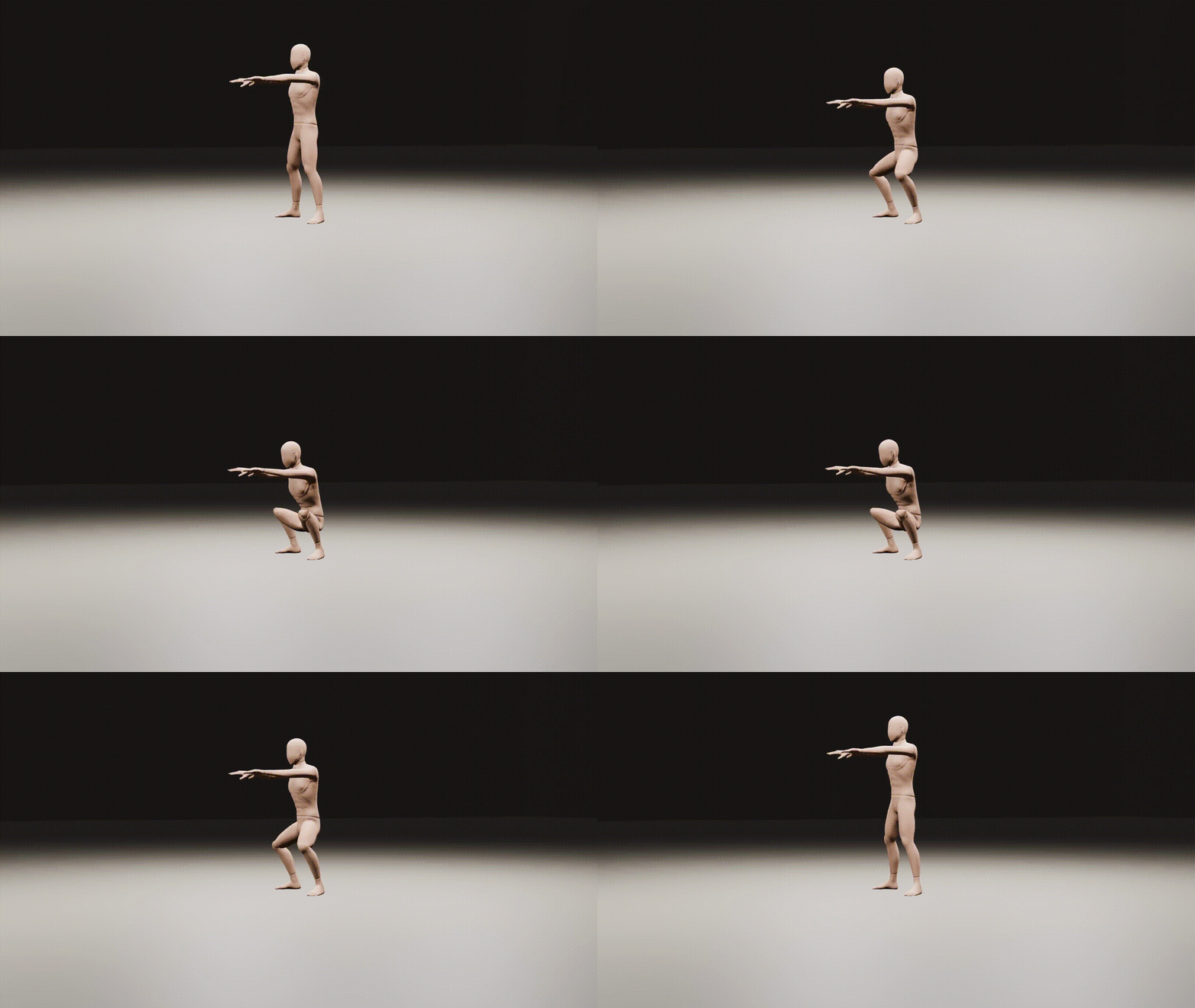
Think about sitting down between your legs, rather than only pushing your hips far behind you.
Your torso does not have to remain perfectly vertical. Some forward torso lean is normal.
Quick Squat Form Check
Before worrying about repetitions, check these points:
| Check | What you want |
|---|---|
| Feet | Firmly planted on the floor |
| Knees | Tracking generally in line with your toes |
| Heels | Staying down |
| Core | Braced throughout the rep |
| Torso | Controlled, without collapsing forward |
| Depth | As deep as you can comfortably control |
| Speed | Smooth and controlled |
| Balance | No rocking onto your toes or heels |
If you lose balance or your form changes significantly at the bottom, reduce the depth slightly and build from there.
What Is the Best Foot Position for Squats?
There is no single perfect squat stance for everyone.
A good starting point is:
- feet around shoulder-width apart
- toes pointing slightly outward
- weight distributed across the whole foot
From there, adjust slightly until the movement feels comfortable.
Some people naturally squat better with a wider stance. Others prefer a slightly narrower one.
What matters most is that you can:
- keep your feet stable
- control your knees
- reach a comfortable depth
- stay balanced
You should not force your feet to point perfectly straight if that makes the movement uncomfortable.
Where Should Your Knees Go During a Squat?
A common beginner mistake is becoming afraid of letting the knees move forward.
Your knees can move forward during a squat.
The more important goal is keeping them controlled and generally tracking in the same direction as your toes.
Avoid deliberately forcing your knees far outward or letting them collapse inward uncontrollably.
A useful cue is:
Keep your knees following your toes as you lower and stand back up.
Your knees may naturally move past your toes depending on your proportions, stance and squat depth. That alone does not mean your squat is wrong.
How Deep Should You Squat?
Squat as deep as you can comfortably and with control.
For many people, reaching around thigh-parallel or slightly below is a useful goal.
But you do not need to force a specific depth if:
- your heels lift
- you lose balance
- your lower back position changes dramatically
- you feel pain
- you cannot stand back up under control
Depth can improve gradually as your strength, balance and mobility improve.
A shallow squat performed well is a better starting point than forcing a deep position you cannot control.
Common Bodyweight Squat Mistakes
Heels Lifting Off the Floor
Problem: You shift onto your toes as you descend.
Fix: Reduce your depth and focus on keeping your whole foot connected to the floor.
You can also experiment with a slightly wider stance or a small change in toe angle.
Knees Collapsing Inward
Problem: Your knees move inward noticeably as you squat or stand.
Fix: Slow the rep down and focus on keeping the knees tracking with your toes.
Do not aggressively force them outward; simply keep them controlled.
Falling Forward
Problem: Your chest drops excessively and you feel like you are about to tip forward.
Fix: Keep your core braced, slow the descent, and reduce the depth if necessary.
Some forward torso lean is normal. The problem is losing control.
Squatting Too Fast
Problem: You drop quickly into the bottom position and bounce back up.
Fix: Use a controlled descent.
Try taking around 2–3 seconds to lower yourself while learning.
Forcing Maximum Depth
Problem: You push deeper even after your form starts breaking down.
Fix: Stop at the deepest position you can currently control.
Your depth can improve over time.
Letting the Feet Roll Inward or Outward
Problem: You lose contact through part of the foot.
Fix: Think about keeping three points connected to the floor:
- heel
- base of the big toe
- base of the little toe
This can help create a more stable base.
Beginner Bodyweight Squat Progressions
If a normal squat feels difficult, you do not need to force it.
Use an easier variation first.
| Progression | How to do it | Suggested goal |
|---|---|---|
| Assisted Squat | Hold a stable support while squatting | 10–15 controlled reps |
| Box Squat | Squat toward a chair or bench | 10–15 reps |
| Bodyweight Squat | Full unsupported squat | 10–20 clean reps |
| Tempo Squat | Lower slowly for 3 seconds | 8–12 reps |
| Pause Squat | Pause briefly at the bottom | 8–12 reps |
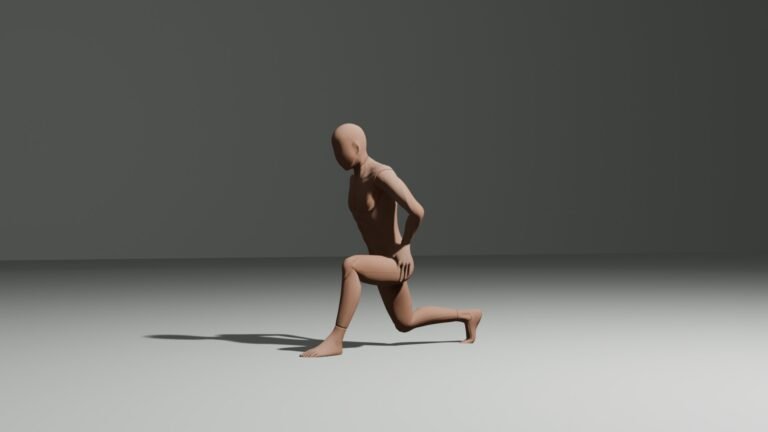
| Split Squat | Train one leg more independently | 8–12 each side |
Assisted Squat
Hold onto something stable such as a railing, rack or sturdy support.
Use your hands only as much as necessary.
This can help you practice depth and balance without worrying about falling backward.
As you improve, use less assistance.
Box Squat
Place a chair or bench behind you.
Squat down slowly until you lightly touch or sit on the surface, then stand back up.
This gives you a clear depth target and can help beginners feel more confident.
Avoid dropping heavily onto the chair.
Bodyweight Squat
Once you can squat without assistance, the standard bodyweight squat should become your main variation.
Focus on:
- stable feet
- controlled knees
- comfortable depth
- smooth tempo
Tempo Squat
Tempo squats make the same exercise harder without adding weight.
Try:
3 seconds down → brief pause → stand normally
This forces you to control the movement instead of relying on momentum.
Pause Squat
Lower into your normal squat and pause for 1–2 seconds near the bottom.
Stay tight instead of relaxing into the position.
Then stand back up.
What Muscles Do Bodyweight Squats Work?
Bodyweight squats mainly train the lower body.
| Muscle group | Role |
|---|---|
| Quadriceps | Extend the knees as you stand |
| Glutes | Help extend the hips |
| Adductors | Assist hip movement and stability |
| Hamstrings | Support the hips and knees |
| Calves | Help stabilize the lower leg and ankle |
| Core | Helps keep your torso controlled |
The exact contribution of each muscle changes depending on your stance, depth and body proportions.
How Many Bodyweight Squats Should You Do?
You do not need hundreds of repetitions.
For beginners, a good starting point is:
| Goal | Sets × Reps |
|---|---|
| Learning technique | 2-3 × 5-10 |
| General strength | 3-4 × 8-15 |
| Muscular endurance | 2-4 × 15-25 |
| Harder progression | 3-4 × 6-12 |
Choose a rep range where you can maintain good form.
If 20-30 normal squats become very easy, you may get more benefit from a harder variation rather than simply doing more repetitions.
How to Add Squats to Your Workout
Bodyweight squats fit well into a simple full-body workout.
For example:
| Exercise | Sets |
|---|---|
| Push-Ups | 3 |
| Bodyweight Squats | 3 |
| Pull-Ups or Inverted Rows | 3 |
| Hollow Body Hold or Plank | 3 |
For beginners, squatting around 2–3 times per week works well in many programs.
You do not need to train squats every day to improve.
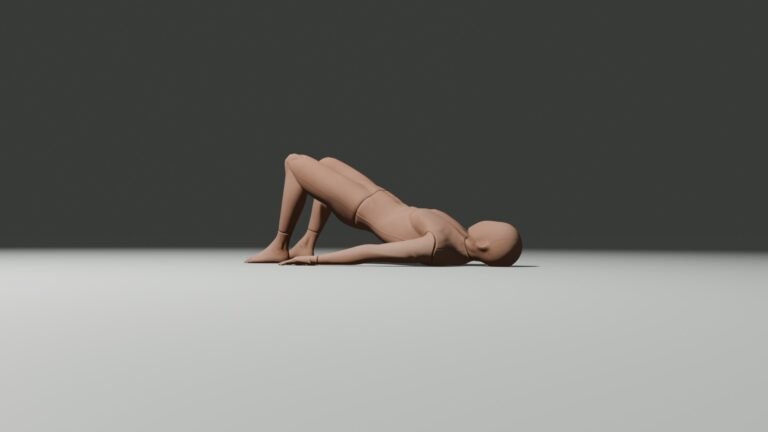
For a more balanced lower-body workout, combine squats with an exercise that emphasizes hip extension, such as Glute Bridges. They let you focus on glute control without repeating the squat movement.
You can also use them as part of your:
Bodyweight Squats vs Barbell Squats
Both use the same basic squat movement, but they serve slightly different purposes.
| Bodyweight Squat | Barbell Squat | |
|---|---|---|
| Equipment | None | Barbell and rack |
| Beginner friendly | Very | Requires more setup and technique |
| Main purpose | Learn movement, control and endurance | Build strength with external load |
| Progression | Tempo, pauses, single-leg variations | Add weight gradually |
| Load | Your bodyweight | Bodyweight plus external weight |
You do not need barbell squats to benefit from squat training.
Bodyweight variations can become very challenging through:
- slower tempo
- pauses
- split squats
- Bulgarian split squats
- single-leg progressions
If you later decide to train with weights, learning a good bodyweight squat gives you a useful foundation.
Barbell squat guide: How to Do Barbell Squats
What If I Cannot Squat Deep?
That is fine.
Start with the range of motion you can control.
Limited depth may be influenced by:
- ankle mobility
- hip mobility
- balance
- strength
- stance
- body proportions
You do not need to solve everything at once.
Practice consistently and experiment with small stance changes.
An assisted squat or box squat is often the easiest way to build confidence.
Should Your Knees Go Past Your Toes?
They can.
Your knees naturally move forward during many squats, especially if you squat deeper.
Rather than trying to keep your knees permanently behind your toes, focus on:
- keeping your feet planted
- keeping your knees controlled
- maintaining balance
- using a comfortable range of motion
Are Bodyweight Squats Good for Beginners?
Yes.
They are one of the easiest lower-body exercises to scale because you can adjust:
- depth
- assistance
- speed
- repetitions
- stance
- variation
If the standard squat is too difficult, start with assisted squats or box squats.
Do Squats Work Your Glutes?
Yes.
Your glutes help extend your hips as you stand up.
They work alongside your quadriceps, adductors and other lower-body muscles.
Squatting deeper may change how different muscles contribute, but there is no need to force extra depth purely to “activate” the glutes.
Why Do I Fall Backward When I Squat?
This often happens when you are still learning balance or struggling to move comfortably through the ankles and hips.
Try:
- holding onto a stable support
- using a slightly wider stance
- turning your toes slightly outward
- reducing squat depth temporarily
- practicing box squats
Do not force yourself into one exact stance.
Why Do My Heels Lift During Squats?
You may be squatting deeper than you can currently control, or your ankle mobility may be limiting the position.
Start by reducing your depth.
If your heels stay down at a slightly shallower depth, train there and gradually work lower.
Are Squats Bad for Your Knees?
Squats should not automatically hurt your knees.
A properly scaled squat is a normal strength exercise for the lower body.
However, if you experience sharp, persistent or worsening knee pain, stop forcing the movement and consider getting it assessed by a qualified healthcare professional.
Do not train through significant pain just to reach a certain depth or rep target.
Final Advice
Do not obsess over making your squat look identical to someone else’s.
People have different limb lengths, hip structures and mobility.
Focus on the things that matter most:
keep your feet stable, control your knees, brace your core, use a comfortable depth, and move smoothly.
Once you can perform clean bodyweight squats consistently, make the exercise harder with slower reps, pauses or more advanced variations instead of simply chasing huge rep numbers.