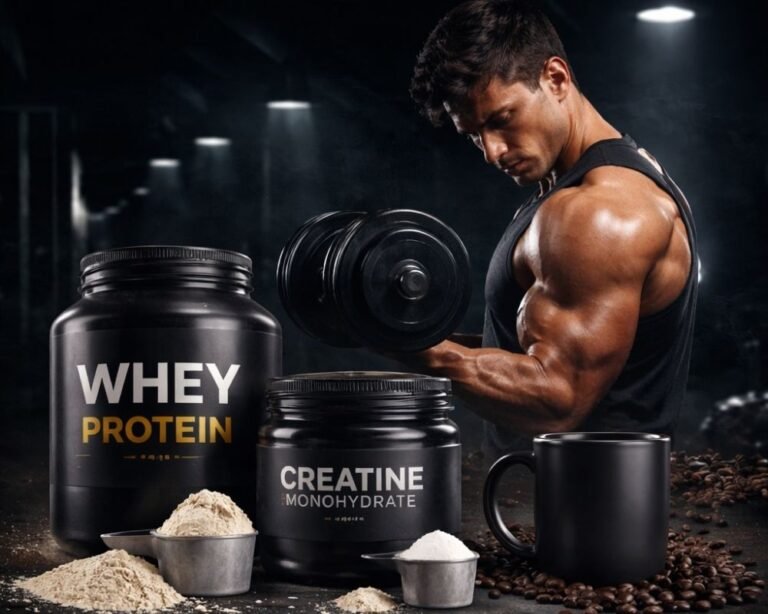

Creatine is a natural compound made from amino acids (arginine, glycine, and methionine) in the liver, kidneys, and pancreas, primarily stored in skeletal muscles to produce fast energy during high-intensity exercise. It is a popular, safe, and highly researched supplement that enhances strength, increases muscle mass, and improves workout recovery.
Creatine TLDR
- What it is: A natural compound that helps your muscles produce energy during heavy lifting.
- Main Benefit: Increased strength, power, and muscle fullness.
- Safety: Extensively studied and safe for healthy adults.
- The Goal: To saturate your muscle cells with phosphocreatine for better performance.
What Are The Effects Of Creatine?
Creatine’s primary job is to increase the availability of ATP (Adenosine Triphosphate), which is the “energy currency” of your cells. When you are performing explosive movements like barbell squats or sprinting, your body uses ATP faster than it can create it.
By taking creatine, you increase your body’s stores of phosphocreatine. This allows you to:
- Lift More Weight: Perform an extra 1–2 reps at the end of a heavy set.
- Recover Faster: Speed up recovery between sets during high-intensity training.
- Increase Muscle Volume: Creatine draws water into the muscle cells (cell hydration), making your muscles look fuller and harder.
- Brain Health: Emerging research suggests creatine may also improve cognitive function and mental fatigue.
How Much Creatine Should I Take Per Day?
For the vast majority of people, the “sweet spot” is 3 to 5 grams per day.
Some people choose to do a “Loading Phase” (taking 20 grams a day for a week) to saturate their muscles faster, but this often causes stomach upset and isn’t strictly necessary. If you stick to 5 grams daily, your muscles will be fully saturated in about 3–4 weeks. Consistency is more important than the specific time of day you take it; just ensure you take it every single day, including rest days.
How Long Do The Effects Of Creatine Last?
Creatine is not a stimulant like caffeine; you won’t “feel” it 30 minutes after taking it. Instead, it works through saturation.
Once your muscles are fully saturated, the effects are “always on.” This means as long as you continue your daily dose, you will have that extra energy reserve available for every workout. If you miss a single day, don’t panic—it takes several weeks for your muscle stores to drop back to baseline levels.
What Happens If I Stop Taking Creatine?
If you stop taking creatine, your body will slowly return to its natural levels of phosphocreatine over the course of 4 to 6 weeks.
- Initial weight drop: Any immediate weight loss is just shedding excess water, not muscle mass.
- Minor performance dip: You might feel a slight decrease in your peak explosive power during heavy lifts or sprints.
- Muscle stays put: The actual muscle tissue you built won’t vanish, provided you keep training and eating well.
- Brain benefits fade: Any subtle cognitive boosts or fatigue-resistance gained from the supplement will likely return to your baseline.
As one of the most thoroughly vetted supplements on the market, creatine is famous for rewriting the rules of cellular energy by rapidly generating ATP (your muscles’ primary fuel source). It is a staple for boosting strength, hyper-charging muscle growth, and even sharpening mental clarity.
But what actually happens if you decide to skip your daily scoop? Rest assured, your hard work at the gym isn’t going to evaporate overnight. Here is exactly what to expect.
1. You Will Likely Shed Some Water Weight
If the number on the scale drops a few weeks after quitting creatine, don’t panic. You aren’t losing hard-earned muscle; you are simply flushing out extra fluids.
Creatine naturally draws water directly into your muscle cells, which gives them a fuller, more pumped appearance and often adds two to three pounds to your baseline weight. When you stop supplementing, your body’s water retention levels normalize. While your muscles might look slightly less “inflated,” this is purely a cosmetic shift and has nothing to do with losing actual tissue.
2. Your Peak Power and Stamina Might Dip
Because creatine acts as a backup battery for short, intense bursts of movement, stopping it will eventually impact your highest gear in the gym.
Once you halt supplementation, your body’s internal phosphocreatine reserves will slowly taper off over the course of four to six weeks. Without that extra cellular energy, you might notice you can’t grind out that final rep of a heavy bench press or that your max sprint speed feels a bit harder to maintain. However, this is usually a minor plateau rather than a total collapse of your athletic progress.
3. Your Actual Muscle Mass Will Not Disappear
A common myth is that quitting creatine causes your muscles to instantly shrink away. Fortunately, physiology doesn’t work that way.
The physical muscle fibers you built while using the supplement are yours to keep, assuming your lifestyle stays consistent. While the lack of creatine might slightly slow down the pace at which you build new muscle, the existing mass will remain intact. To lock in your gains, simply stay committed to your training routine, eat enough protein, and prioritize your recovery.
4. You Might Lose a Subtle Mental Edge
While primarily celebrated in the fitness community, creatine also plays a vital role in fueling the brain—especially during mentally taxing or exhausting situations.
Emerging neuroscience indicates that creatine supplementation helps support short-term memory, focus, and sharp reasoning, particularly in older adults or those suffering from sleep deprivation. While there isn’t definitive data mapping the exact timeline of what happens when you quit, it stands to reason that any cognitive performance boosts will gradually fade as your brain’s creatine levels return to their natural baseline.
How Much Does Creatine Cost?
One of the best things about creatine is its affordability. It is widely considered the most “bang-for-your-buck” supplement on the market.
On average, a 500g tub of Creatine Monohydrate (the gold standard version) costs between $25 and $40. At a 5g daily dose, that tub will last you 100 days. This brings your cost down to roughly $0.25 to $0.40 per day. Always look for “Creapure” or basic “Micronized Creatine Monohydrate”. There is no need to buy expensive “advanced” versions like HCL or Nitrate, as they haven’t been proven to be more effective.
Common Myths and FAQs
| Question | The Reality |
| Does it cause hair loss? | No current peer-reviewed study has proven a direct link to hair loss. |
| Does it damage kidneys? | Not in healthy individuals. If you have pre-existing kidney issues, consult a doctor. |
| Is it a steroid? | No. It is a naturally occurring compound found in red meat and fish. |
| Should I take it with protein? | Taking it with carbs or protein may slightly increase absorption, but it’s not mandatory. |
How to Protect Your Gains Without Supplements
At the end of the day, creatine is an enhancer, not a requirement. The true foundation of physical fitness relies on the basics.
To maintain your strength and muscle definition without a daily scoop, focus heavily on the fundamentals:
- Progressive Overload: Keep challenging your muscles by gradually increasing your workout intensity or volume.
- Targeted Protein Intake: Aim for a steady daily intake of roughly 1.4 to 2.2 grams of protein per kilogram of body weight.
- Quality Rest: Ensure you are getting adequate sleep to allow your muscles and nervous system to repair effectively.
The Bottom Line
Creatine is a safe, effective, and cheap tool to help you reach your goals faster. Whether you are focused on deadlifts or mastering the front lever, that extra 5–10% of energy can be the difference between a plateau and a personal record.