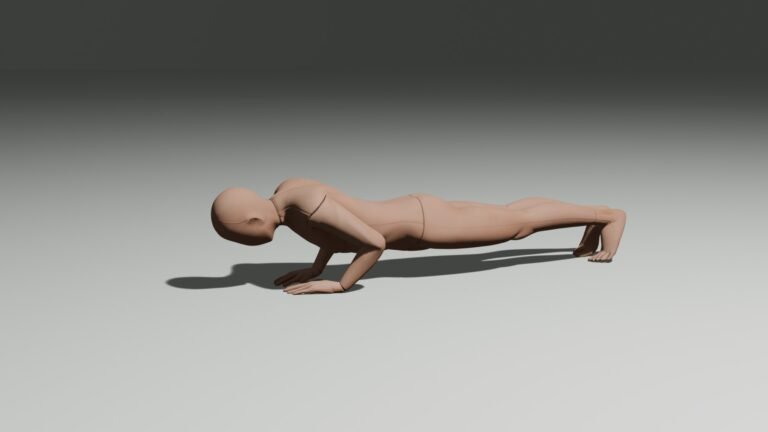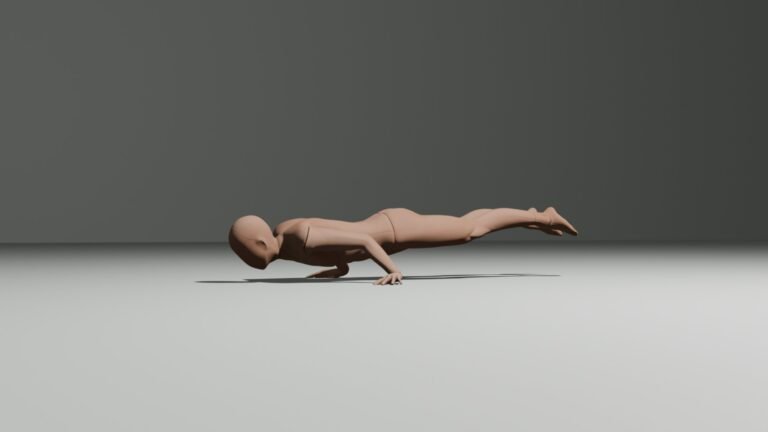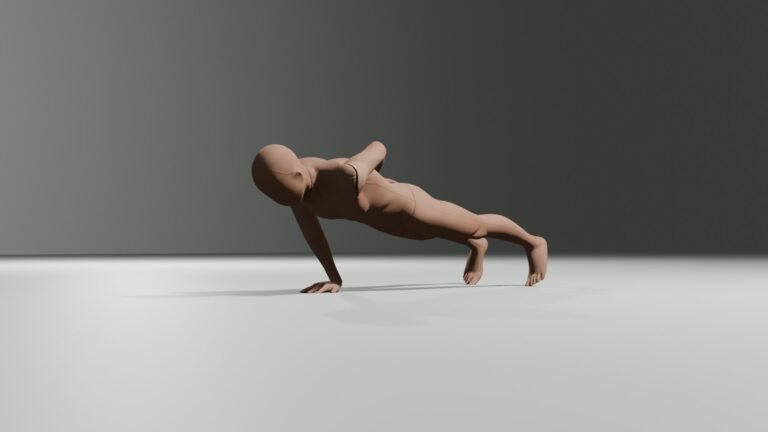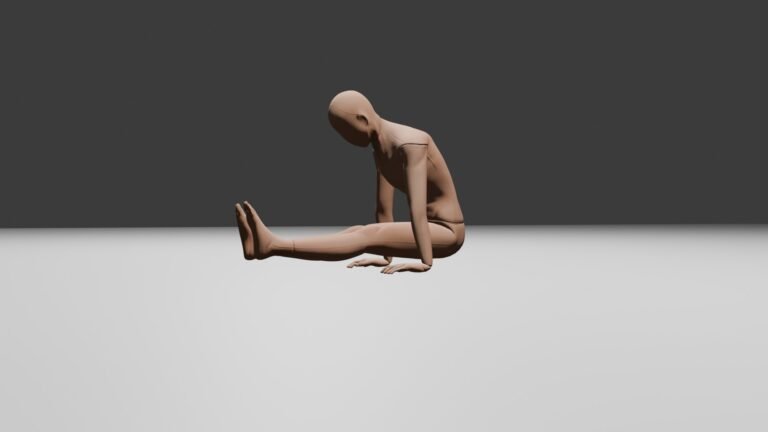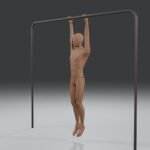

The muscle-up is one of the most recognizable skills in calisthenics. It combines an explosive pull-up, a transition over the bar, and a straight-bar dip into one continuous movement.
Unlike a regular pull-up, where the goal is to bring your chin above the bar, a bar muscle-up requires you to pull high enough to bring your upper body over it.
If you can already perform regular pull-ups but struggle to get your first muscle-up, the problem may be your pulling height, technique, transition timing, or pressing strength.
The basic muscle-up technique is simple to understand:
- Pull yourself explosively toward and above the bar.
- Lean your chest over the bar as you transition.
- Press yourself up until your arms are straight.
- Lower back down under control.
Learning to connect those movements takes practice.
This guide explains the technique, beginner progressions, common mistakes, and a practical workout you can use to build toward your first muscle-up.
What Is a Muscle-Up?
A muscle-up is an advanced upper-body exercise where you move from hanging underneath a bar to supporting yourself above it with straight arms.
The movement has three main phases:
- Pull: Generate enough upward momentum and pulling height to approach the bar with your chest.
- Transition: Bring your chest and shoulders forward over the bar while repositioning your elbows.
- Press: Finish with a straight-bar dip until your arms are extended.
Muscle-ups require a combination of pulling strength, pressing strength, coordination, and body control.
They are often easier to learn once you have built a solid foundation with pull-ups, chin-ups, and dips.
This guide focuses on the bar muscle-up, rather than the ring muscle-up, which has different technical demands.
How to Do a Bar Muscle-Up With Proper Form
The goal is to perform one smooth repetition without an uncontrolled swing or an uneven transition.
Step 1: Start With a Controlled Hang
Grip a secure pull-up bar with your hands approximately shoulder-width apart.
Use an overhand grip and wrap your thumbs around the bar.
Keep your arms extended and establish a controlled body position.
A small amount of natural body movement is normal, but avoid starting with an excessive swing.
Make sure you have enough clearance above the bar and around your legs.
Step 2: Pull Explosively and High
Start the pull with speed and intent.
Instead of thinking only about getting your chin over the bar, aim to bring the bar toward your upper chest or lower chest.
As you pull, your body may move slightly away from the bar before returning toward it for the transition.
This pulling path is different from a slow, conventional pull-up.
The important point is to generate enough height to make the transition possible.
You should not deliberately throw your entire body backward or lose control just to get higher.
Step 3: Transition Over the Bar
As your chest approaches the bar, begin moving your upper body forward over it.
Bring your shoulders above your hands and guide your elbows into the pressing position.
Try to transition both arms together.
If you can pull high but consistently get stuck at this stage, practice assisted transitions rather than repeatedly forcing failed attempts.
Step 4: Finish With a Straight-Bar Dip
Once your chest is above the bar, press down through your hands.
Extend your elbows until you reach a stable support position above the bar.
Avoid aggressively bouncing out of the transition.
Step 5: Lower Under Control
Reverse the movement as smoothly as you can.
Beginners may find the lowering phase difficult, so start with a level of assistance that allows you to descend safely.
Do not drop suddenly from the top or release your grip while still high above the ground.
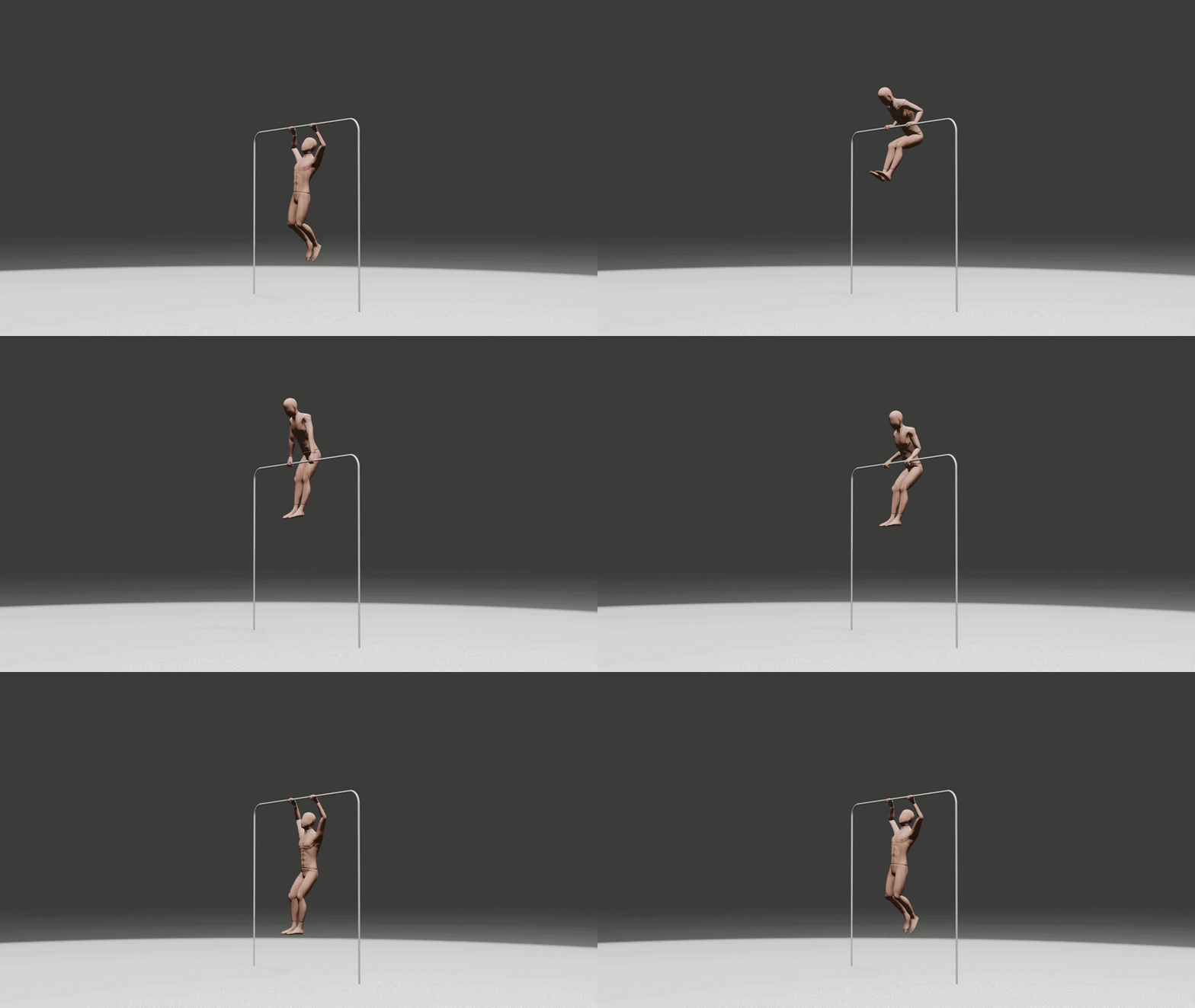
Quick Muscle-Up Form Check
- Secure grip and enough clearance above the bar
- Explosive, controlled high pull
- Chest moves over the bar
- Both arms transition together
- Stable straight-arm support at the top
- Controlled descent
Muscle-Up Progressions: How to Get Your First Rep
You do not need to practice full muscle-ups unsuccessfully every workout.
Instead, train the individual qualities that make the movement possible.
| Progression | Main purpose |
|---|---|
| Assisted Pull-Ups | Build foundational pulling strength |
| Regular Pull-Ups | Develop full-bodyweight pulling strength |
| Explosive High Pull-Ups | Improve pulling height and speed |
| Straight-Bar Dips | Build pressing strength above the bar |
| Assisted Muscle-Up Transitions | Learn how to move over the bar |
| Full Muscle-Up Attempts | Connect the pull, transition, and press |
You can train several of these at the same time. They are not strict levels that must be completed one by one.
1. Assisted Pull-Ups
If you cannot perform several controlled pull-ups yet, this is a good place to start.
Resistance bands or an assisted pull-up machine can reduce the amount of bodyweight you need to lift.
Use enough assistance to complete controlled repetitions through a comfortable range of motion.
Gradually decrease assistance as your strength improves.
You can also develop pulling strength with inverted rows.
2. Regular Pull-Ups
Regular pull-ups help build the strength needed for the first phase of a muscle-up.
Focus on full, controlled repetitions rather than swinging to increase your rep count.
A useful starting benchmark is being able to perform several clean pull-ups consistently.
There is no universal number that guarantees you will achieve a muscle-up.
Someone with fewer pull-ups but excellent explosive pulling strength and coordination may learn it before someone who can perform many slow repetitions.
3. Explosive High Pull-Ups
This is one of the most important progressions for a bar muscle-up.
Instead of pulling only until your chin clears the bar, try to pull higher while maintaining control.
Start by attempting to reach the upper chest.
As you improve, aim to bring the bar closer to your lower chest.
Think about:
- Pulling with speed from the beginning.
- Keeping your body controlled.
- Moving slightly away from the bar when appropriate.
- Reaching greater height without excessive kicking.
- Resting sufficiently between explosive sets.
Avoid turning every repetition into a maximum-effort struggle.
High pulling requires both strength and coordination.
4. Straight-Bar Dips
The top portion of a bar muscle-up resembles a straight-bar dip.
Start in a stable support position above a secure bar.
Lower your body through a comfortable range and press back up.
Begin with assistance or a reduced range if necessary.
This exercise helps you become comfortable supporting your weight above the bar and builds the pressing strength needed to complete the movement.
If you cannot control the dip portion, reaching the top of the bar may not be enough to finish the muscle-up.
Optional: Use Bar Pullovers to Reach the Top Position
A bar pullover is another useful skill to learn alongside muscle-up training.
Instead of pulling your chest over the bar like in a muscle-up, you lift your legs and rotate your body around the bar into a straight-arm support position.
I personally used bar pullovers to get above the bar and practise muscle-up negatives. Once I reached the top, I could focus on lowering myself through the muscle-up transition as slowly as I could control.
The important distinction: A bar pullover doesn’t teach the same transition as a muscle-up. But it can help you become comfortable above the bar and provide a starting position for assisted or controlled negative repetitions.
Only practise negatives within a range you can safely control, preferably with assistance when first learning.
If you’re interested in learning the movement, see our Bar Pullover Guide with Animation.
5. Assisted Muscle-Up Transitions
If your pulling strength is good but you get stuck during the transition, practice that specific portion.
One approach is to use a low bar with your feet supporting some of your bodyweight.
Practice moving from a high pulling position into a stable support above the bar.
Focus on bringing your chest forward and transitioning your arms together.
You can also experiment with resistance-band-assisted muscle-ups if you can set them up safely.
Bands can help some people learn the complete movement, although the amount of assistance changes throughout the repetition.
Choose the variation that helps you practice a controlled transition.
6. Full Muscle-Up Attempts
Once you can pull high, control the transition, and complete straight-bar dips, begin practicing full repetitions.
Perform attempts when you are fresh rather than after exhausting your pulling muscles.
Focus on technique and repeatability.
If your attempt turns into an uncontrolled swing or one-arm transition, return to an easier progression and work on the limiting phase.
What Should You Practice Next to Learn a Muscle-Up?
Not sure what’s holding you back? Find your current level below and focus on the exercise that addresses your biggest weakness.
| Your current ability | What to practice next |
|---|---|
| Can’t do a pull-up yet | Assisted Pull-Ups and Inverted Rows |
| Can do pull-ups but can’t reach chest height | Explosive High Pull-Ups |
| Can pull to chest height but can’t get over the bar | Feet-Assisted Muscle-Up Transitions |
| Can transition but struggle to press up | Straight-Bar Dips |
| Can do one muscle-up but struggle with consistency | Controlled Muscle-Up Repetitions and Technique Practice |
| Can perform several clean muscle-ups | Improve Strict Form and Controlled Lowering |
How I Learned My First Muscle-Up
My own progression toward the muscle-up started with band-assisted pull-ups.
At first, my goal was simply to become strong enough to perform regular pull-ups.
Once I could do those consistently, I started paying more attention to how I was pulling.
During regular pull-ups, I had mainly focused on pulling myself upward using my back muscles. For the muscle-up, I began experimenting with a different pulling direction.
Instead of keeping my body close to the bar throughout the movement, I practiced pulling explosively while moving slightly away from it.
That change helped me start reaching the bar with my chest rather than only getting my chin above it.
I continued practicing these explosive, chest-high pull-ups and also incorporated weighted pull-ups to build additional pulling strength.
After spending time on that combination of strength and technique, I eventually achieved my first muscle-up.
I also experimented with band-assisted muscle-ups, but personally, they felt awkward and did not help me understand the movement as well as explosive high pull-ups did.
That does not mean band-assisted muscle-ups are ineffective. They may work very well for someone else, especially if the transition is their main difficulty.
My biggest lesson was that improving ordinary pull-up strength was useful, but learning to pull higher and in a way that supported the transition was what helped me achieve the skill.
If you are struggling with muscle-ups despite having decent pull-up strength, experimenting with your pulling height and technique may be more useful than simply adding more regular pull-up repetitions.
How Strong Do You Need to Be for a Muscle-Up?
There is no fixed number of pull-ups or dips that guarantees a muscle-up.
However, having a foundation of pulling and pressing strength makes the movement easier to learn.
Useful signs that you may be ready to begin focused muscle-up training include:
- You can perform several strict pull-ups.
- You can practice explosive pulling without losing control.
- You can support yourself securely above a bar.
- You have enough straight-bar dip strength to complete the pressing phase.
- You can practice assisted transitions comfortably.
Some athletes learn the muscle-up with fewer repetitions than others.
Strength matters, but so do technique, body proportions, coordination, and the specific muscle-up variation you are learning.
Creatine may support strength development during challenging workouts, although it won’t replace explosive pulling or transition practice. Learn more in our Creatine for Calisthenics guide.
Focus on the quality of your preparation rather than chasing one exact prerequisite number.
Common Muscle-Up Mistakes and How to Fix Them
1. Not Pulling High Enough
Problem: You can perform regular pull-ups, but your chest never reaches a useful position for the transition.
Fix: Practice explosive high pull-ups while continuing to build your basic pulling strength.
If your pulling height is insufficient, trying to force the transition usually will not solve the problem.
2. Pulling Without Considering the Transition
Problem: You pull upward successfully but remain underneath the bar.
Fix: Practice the pulling path and timing needed to bring your upper body forward over the bar.
Feet-assisted transition drills can help you understand the movement without needing to generate all the required height yourself.
3. Bringing One Elbow Over First
Problem: One arm reaches the top of the bar before the other.
This is commonly called a chicken-wing muscle-up.
Fix: Use an assisted variation that allows you to practice a more symmetrical transition.
Avoid repeatedly forcing uneven repetitions, especially if they place uncomfortable stress on your shoulders or elbows.
4. Using Too Much Swing
Problem: You rely on uncontrolled leg movement to get above the bar.
Fix: Improve your high pull-ups, trunk control, and transition timing.
Some muscle-up variations deliberately use momentum, but that is different from an uncontrolled swing.
5. Neglecting Straight-Bar Dips
Problem: You reach the top of the bar but cannot press into a stable support.
Fix: Train straight-bar dips and assisted support positions separately.
Developing pressing strength can make the final part of the movement much easier.
6. Attempting Muscle-Ups While Exhausted
Problem: You practice maximum-effort muscle-ups after completing too many pulling sets.
Fix: Perform technical muscle-up practice near the beginning of your workout, once you are warmed up.
Explosive movements generally benefit from adequate rest and good movement quality.
Beginner Muscle-Up Progression Workout
If you can already perform regular pull-ups, try this workout as a starting point.
Train approximately 2 times per week, leaving recovery time between hard sessions.
| Exercise | Sets | Reps |
|---|---|---|
| Explosive High Pull-Ups | 4 | 3-5 |
| Regular or Weighted Pull-Ups | 3 | 4-8 |
| Straight-Bar Dips | 3 | 5-10 |
| Feet-Assisted Muscle-Up Transitions | 3 | 3-5 |
| Hollow Body Hold | 3 | 15-30 sec |
Rest around 2–3 minutes between challenging pulling sets.
You may need more rest for explosive work if your speed drops significantly.
How to Use This Routine
Explosive high pull-ups: Prioritize speed, height, and clean technique. Use an assisted variation if necessary.
Regular or weighted pull-ups: Build pulling strength through controlled repetitions. Use external weight only if you already have sufficient strength and control.
Straight-bar dips: Develop pressing strength above the bar.
Assisted transitions: Practice the movement that connects the pull to the dip.
Hollow body holds: Strengthen trunk control, which can help you maintain a more organized body position during bar exercises.
You do not need to train every exercise to failure.
Most sets should end while you can still maintain the intended technique.
If you cannot perform regular pull-ups yet, begin with the Pull-Up Guide and easier pulling progressions before attempting this full workout.
Strict vs. Kipping Muscle-Ups
Not every muscle-up is performed in exactly the same way.
A strict muscle-up relies heavily on pulling strength and controlled movement, with little intentional lower-body momentum.
A kipping muscle-up uses a coordinated swing to help generate momentum through the pulling and transition phases.
| Strict Muscle-Up | Kipping Muscle-Up | |
|---|---|---|
| Momentum | Minimal intentional swing | Uses a coordinated swing |
| Main demands | High pulling strength and control | Timing, coordination, and strength |
| Body movement | More controlled | More dynamic |
| Common goal | Strength-focused calisthenics | Dynamic gymnastic or functional-fitness training |
Neither variation should involve completely uncontrolled movement.
If your goal is to develop a strict muscle-up, emphasize high pull-ups, controlled transitions, and pressing strength.
If you practice kipping variations, learn the necessary movement control and shoulder loading progressively rather than relying on random swinging.
What Muscles Do Muscle-Ups Work?
The muscle-up combines pulling and pressing, so it uses several upper-body muscle groups.
| Muscle group | Main role |
|---|---|
| Latissimus dorsi | Helps pull the body upward |
| Upper-back muscles | Assist pulling and shoulder-blade control |
| Biceps and brachialis | Assist elbow flexion during the pull |
| Forearms | Maintain grip on the bar |
| Chest | Contributes to the transition and pressing phase |
| Triceps | Extend the elbows during the dip |
| Shoulders | Assist movement and stabilization |
| Abdominals and other core muscles | Help control body position |
The contribution of each muscle changes throughout the movement.
For example, pulling muscles are particularly important early in the repetition, while the pressing muscles become more important once your torso is above the bar.
Muscle-Up vs. Pull-Up: What’s the Difference?
A regular pull-up finishes when your chin rises above the bar.
A muscle-up continues beyond that point and requires you to transition into a support position above the bar.
| Pull-Up | Muscle-Up | |
|---|---|---|
| Movement | Pulling | Pulling, transition, pressing |
| Finish | Chin above bar | Arms supporting body above bar |
| Main challenge | Pulling strength | Pulling height, transition, and pressing |
| Difficulty | Easier starting skill | More advanced skill |
| Equipment | Pull-up bar | Secure bar with sufficient clearance |
A strong pull-up foundation is helpful, but simply performing more regular pull-ups does not automatically teach the muscle-up transition.
How Long Does It Take to Learn a Muscle-Up?
The time required varies significantly.
Some people already have the necessary strength and learn the movement after developing the right technique.
Others need months of training to build pulling strength, transition control, or pressing ability.
Your progress depends on factors such as:
- Starting strength
- Pulling explosiveness
- Technique and coordination
- Training consistency
- Recovery
- Bodyweight and proportions
- Previous calisthenics experience
For me, learning to pull explosively toward my chest and developing strength through weighted pull-ups were important parts of the process.
Rather than worrying about reaching a muscle-up within a specific number of weeks, track measurable improvements.
For example:
- Can you pull higher than before?
- Can you control the transition with less assistance?
- Are your straight-bar dips improving?
- Can you perform explosive repetitions without excessive swinging?
These are useful signs of progress even before your first successful muscle-up.
Are Muscle-Ups Safe for Beginners?
Muscle-ups are an advanced exercise and place substantial demands on the shoulders, elbows, wrists, and grip.
If you are new to bodyweight training, begin with foundational pulling and pressing exercises rather than attempting uncontrolled muscle-ups immediately.
Use appropriate equipment, sufficient clearance, and a secure bar.
When learning transitions, choose drills that allow you to control the amount of assistance and avoid suddenly dropping onto the bar.
Stop if you experience sharp pain, instability, or other concerning symptoms.
If you have a shoulder or elbow injury, consider getting professional guidance before training the movement.
Frequently Asked Questions
Can you do a muscle-up with only five pull-ups?
Possibly, but five pull-ups do not guarantee that you are ready.
Your pulling height, pressing strength, technique, and coordination also matter.
Building a stronger foundation will generally make learning the movement easier.
Do weighted pull-ups help with muscle-ups?
They can help improve pulling strength, which is useful for muscle-ups.
However, weighted pull-ups should complement—not completely replace—explosive pulling and transition practice.
Are band-assisted muscle-ups worth doing?
They can be.
Bands reduce the load and allow some athletes to practice the complete movement.
However, they can change the feel and timing of the transition.
If band-assisted muscle-ups feel awkward, you can experiment with feet-assisted transitions and explosive high pull-ups instead.
Why can I do pull-ups but not muscle-ups?
A regular pull-up does not require the same pulling height or transition mechanics.
You may need more explosive pulling strength, better transition timing, stronger straight-bar dips, or some combination of these.
Should I learn a strict or kipping muscle-up first?
That depends on your goals.
If you want to develop strength-focused calisthenics skills, working toward a controlled bar muscle-up is a sensible approach.
Kipping techniques are a separate skill and require their own coordination and progressive preparation.
Should I practice muscle-ups every day?
Hard muscle-up attempts every day are not necessary.
For many people, two focused sessions per week provide a reasonable starting point, with easier practice or other training scheduled according to recovery.
What should I learn after my first muscle-up?
First, work toward repeating the movement consistently with clean technique.
Then you can focus on smoother transitions, reduced momentum, controlled lowering, or multiple consecutive repetitions.
There is no need to rush into harder variations immediately.
Final Advice
Learning your first muscle-up takes more than just performing regular pull-ups.
You need enough pulling strength to reach the necessary height, the coordination to transition over the bar, and the pressing strength to finish the movement.
From my experience, improving my pulling technique and practicing explosive, chest-high pull-ups made a major difference.
But everyone learns differently. Some athletes benefit from band-assisted muscle-ups, while others make better progress through high pulls and feet-assisted transition drills.
Find the progression that helps you improve your weakest part of the movement, practice consistently, and focus on controlled progress rather than rushing your first repetition.
Once you can connect the pull, transition, and dip, the muscle-up becomes a skill you can continue refining for years.