
The bench press is the king of upper-body exercises, focusing primarily on your chest, shoulders, and triceps. It is a compound movement performed by lying on a weight bench and pressing a barbell upwards from your chest. While it looks like a simple “pushing” move, doing it correctly requires attention, focus total body control – from your feet on the floor to your shoulder blades squeezed against the bench.
Bench Press Summary (The TL;DR)
- Primary Muscles: Pectoralis Major (Chest), Anterior Deltoids (Shoulders), and Triceps.
- Stance: Feet flat on the floor, shoulder blades retracted (squeezed), and a slight arch in the lower back.
- The Key: Lower the bar to your mid-chest and press in a slight diagonal arc back toward your face.
- Rep Range: 3–6 reps for Power; 8–12 for Muscle Growth.
Mastering the bench press will not only build a massive chest but also improve your overall pushing power and gym aura. Whether you are using a barbell or dumbbells, the principles of stability and bar path remain the same. Once you advance, you can try variations like the incline bench press or close grip bench press to target specific areas of your upper body.
How To Do Bench Press
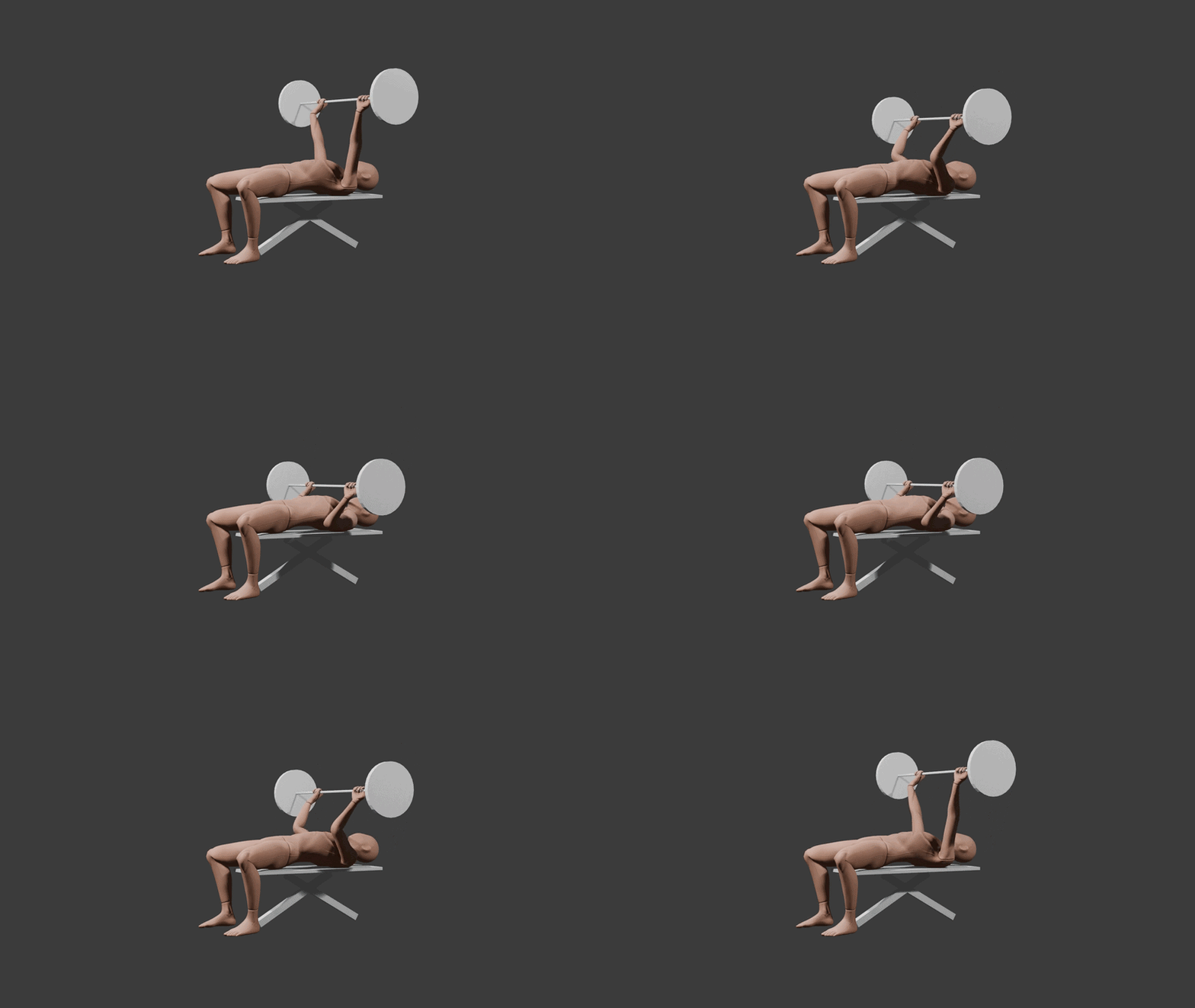
Start by lying flat on the bench. Your eyes should be directly under the bar. This prevents you from hitting the pegs when you press but keeps the bar close enough to unrack safely.
While lying down, plant your feet firmly on the ground. Drive them into the floor to create “leg drive,” which stabilizes your lower body. Squeeze your shoulder blades together and “tuck” them into the bench – this creates a stable platform for your shoulders and protects the rotator cuff.
Grip the bar slightly wider than shoulder-width. Wrap your thumbs around the bar (avoid the “suicide grip”). Unrack the bar and hold it directly over your shoulders with locked elbows.
Controlled and clean movement is the key to gaining strength and preventing injury. Lower the bar slowly to your mid-chest (around nipple height). Your elbows should be tucked at about a 45-degree angle – never flared out at 90 degrees. Once the bar touches your chest, press it back up in a slight diagonal arc toward your face until your elbows are locked.
Bench Press Progression
First of all, you should have a baseline of pushing strength. Being able to do a decent amount of push ups (aim for 15–20 clean reps) ensures your shoulders and triceps are ready for the weight of a barbell.
The bench press is about managing tension. To progress, you don’t just add weight; you refine your “setup.” The setup starts with the grip and moves all the way down to your feet.
Start your progression with the empty bar. Even if you are strong, practicing the bar path with no weight is essential. Focus on the “touch point” on your chest. Once you can do 3 sets of 12 reps with perfect form and zero wobbling, you are ready to add small increments of weight.
Working with a moderate weight will be your main strength builder. Try to keep your “arch” in your lower back natural but firm – do not let your butt lift off the bench. Before your heavy sets, I strongly recommend warming up your rotators and maybe doing 10 fast push ups to get the blood flowing to your chest. Having “cold” shoulders during a heavy press can easily lead to injuries.
Once the standard bench press starts feeling easy and you can hit your rep targets for 3-4 sets, it is time to make it harder by incorporating a pause at the bottom. Holding the bar on your chest for a 1 second count removes momentum and forces your chest to do 100% of the work. This will build the “bottom-end” power that helps with more difficult variations like the pause bench or spoto press.
Benefits Of Bench Press
While bodyweight push ups are great, the bench press allows you to load the chest with far more weight than you could ever achieve with just your body. This makes it the superior choice for pure muscle hypertrophy and maximum strength.
Doing the bench press as a part of your strength routine is highly beneficial for not only working out your pectorals but also improving your tricep strength, front deltoid durability, and even your pushing confidence. Also, once you can bench your own body weight, it’s a significant milestone in any fitness journey.
The bench press is the foundation of upper body power. It will unlock the strength needed for more advanced movements like the overhead press and weighted dips. It also has a massive carry-over to sports that require pushing, like american football or wrestling.