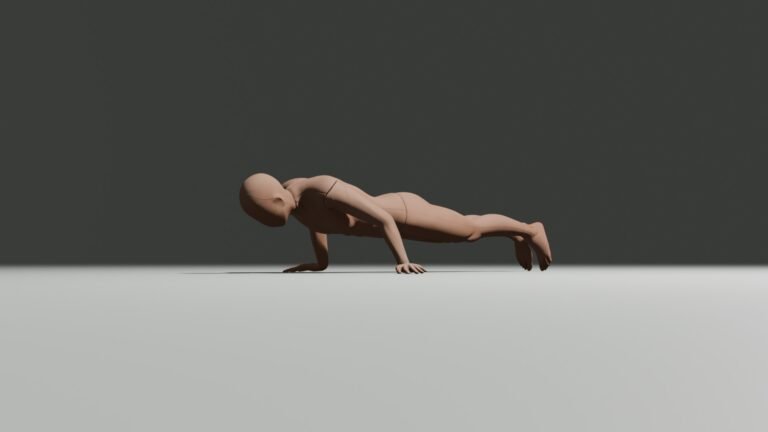

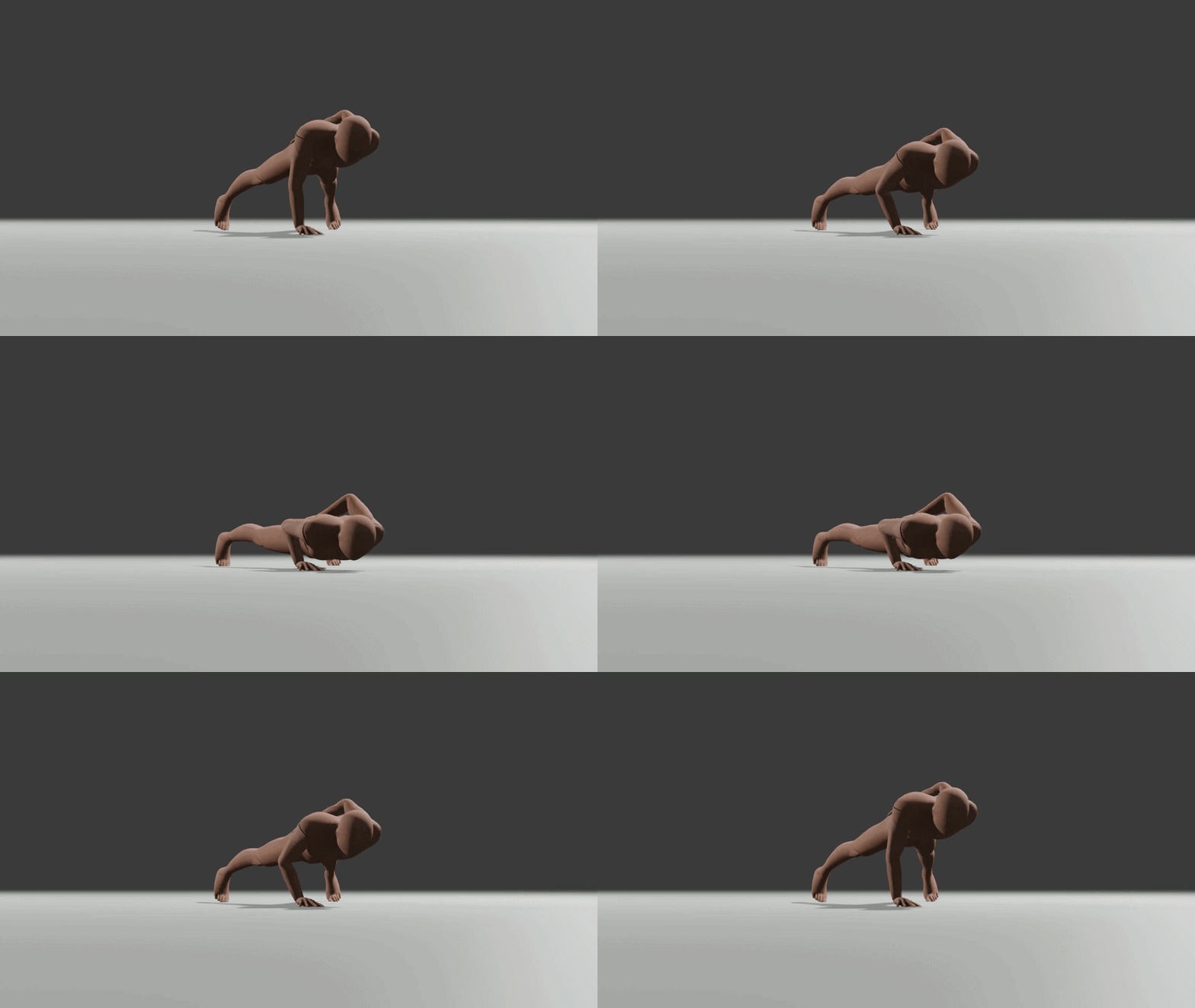
The one-arm push-up is the ultimate demonstration of unilateral pressing strength and core stability. By removing a primary support point, you force a single arm to press roughly 100% of the active single-arm load.
Beyond sheer upper-body pushing power, this movement introduces severe anti-rotational forces, demanding maximum recruitment from your obliques, core, and lower body to keep your torso level.
- Primary Muscles: Chest (Pectoralis Major), Triceps Brachii
- Secondary Muscles: Front Deltoids, Core (Obliques), Glutes
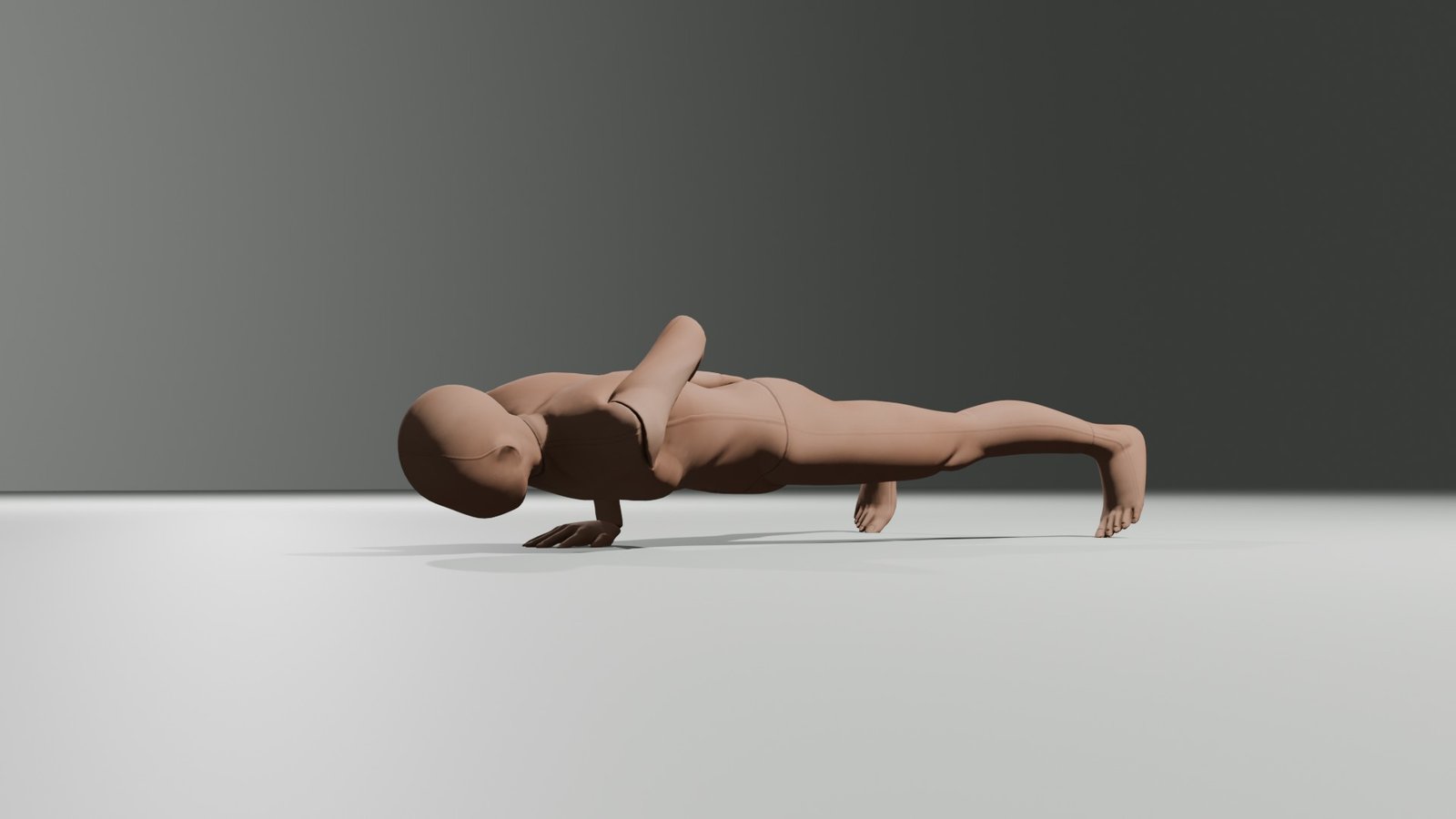
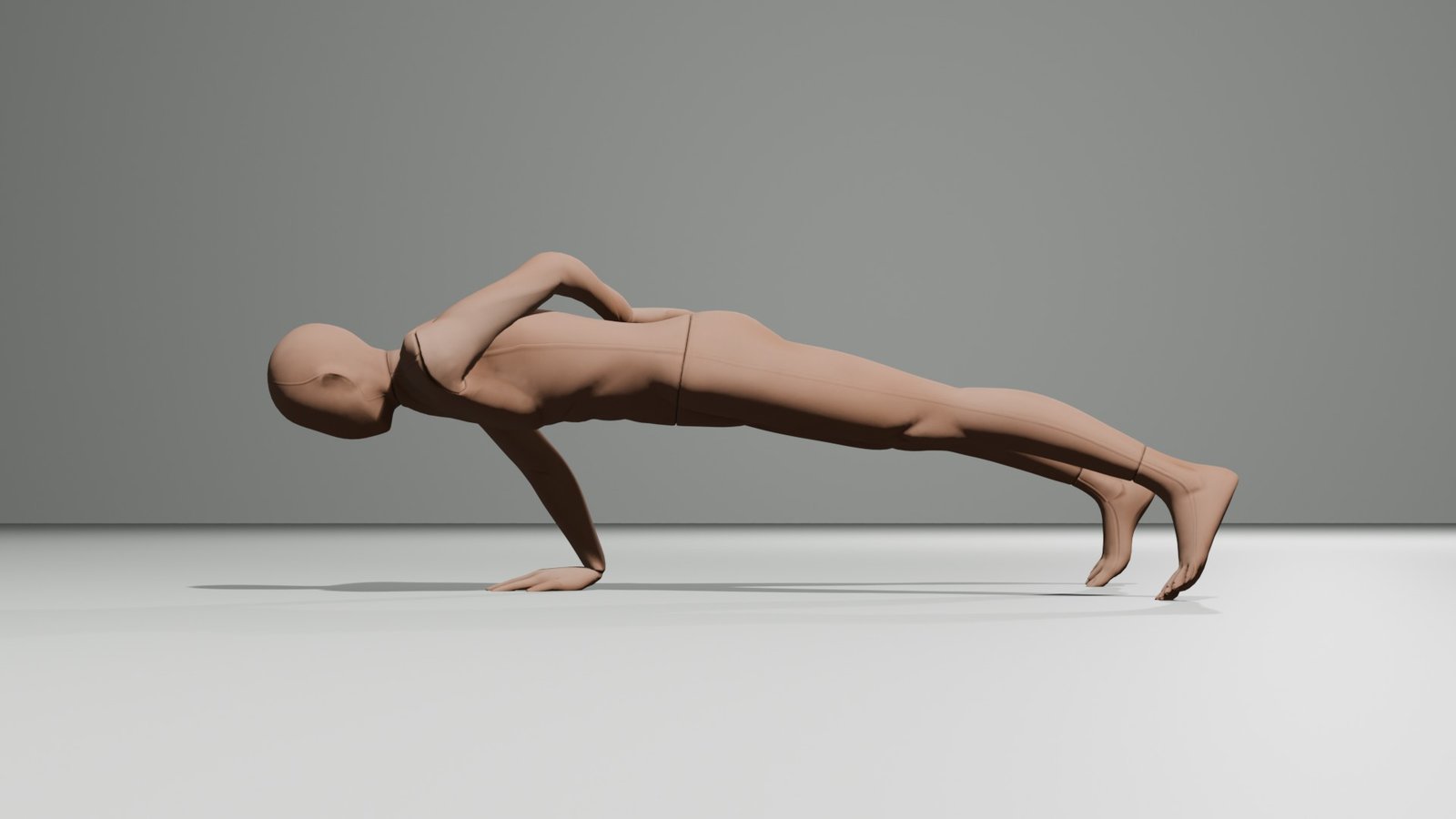
- Setup & Grip: Place one hand on the floor centered under your chest, spread feet wider than shoulder-width for balance, and place the non-working arm behind your back.
- Execution & Tempo: Lower your chest toward the floor under total anti-rotational core control. Drive through the working palm to push back up, keeping shoulders parallel to the floor.
- Common Mistakes: Rotating hips and shoulders sideways to cheat the movement, letting feet stay too narrow, or sagging the middle body.
Targeted Muscle Groups
Performing a push-up on one arm completely changes the stability requirements, turning a standard chest exercise into a total-body tension skill:
- Pectoralis Major & Anterior Deltoids: Heavily isolated to press your entire bodyweight without bilateral assistance.
- Triceps Brachii: Drives the lockout against significant torque and mechanical disadvantage.
- Obliques & Core Stabilizers: Works at peak intensity to prevent your hips and torso from twisting toward the floor.
- Glutes & Quadriceps: Maintains leg rigidity and counters rotational forces across the kinetic chain.
Step-by-Step Technique & Form
1. The Setup
- Place one hand flat on the floor directly beneath your chest or slightly inside shoulder-width.
- Spread your feet wide—roughly 2 to 3 feet apart—to establish a wide, stable base of support.
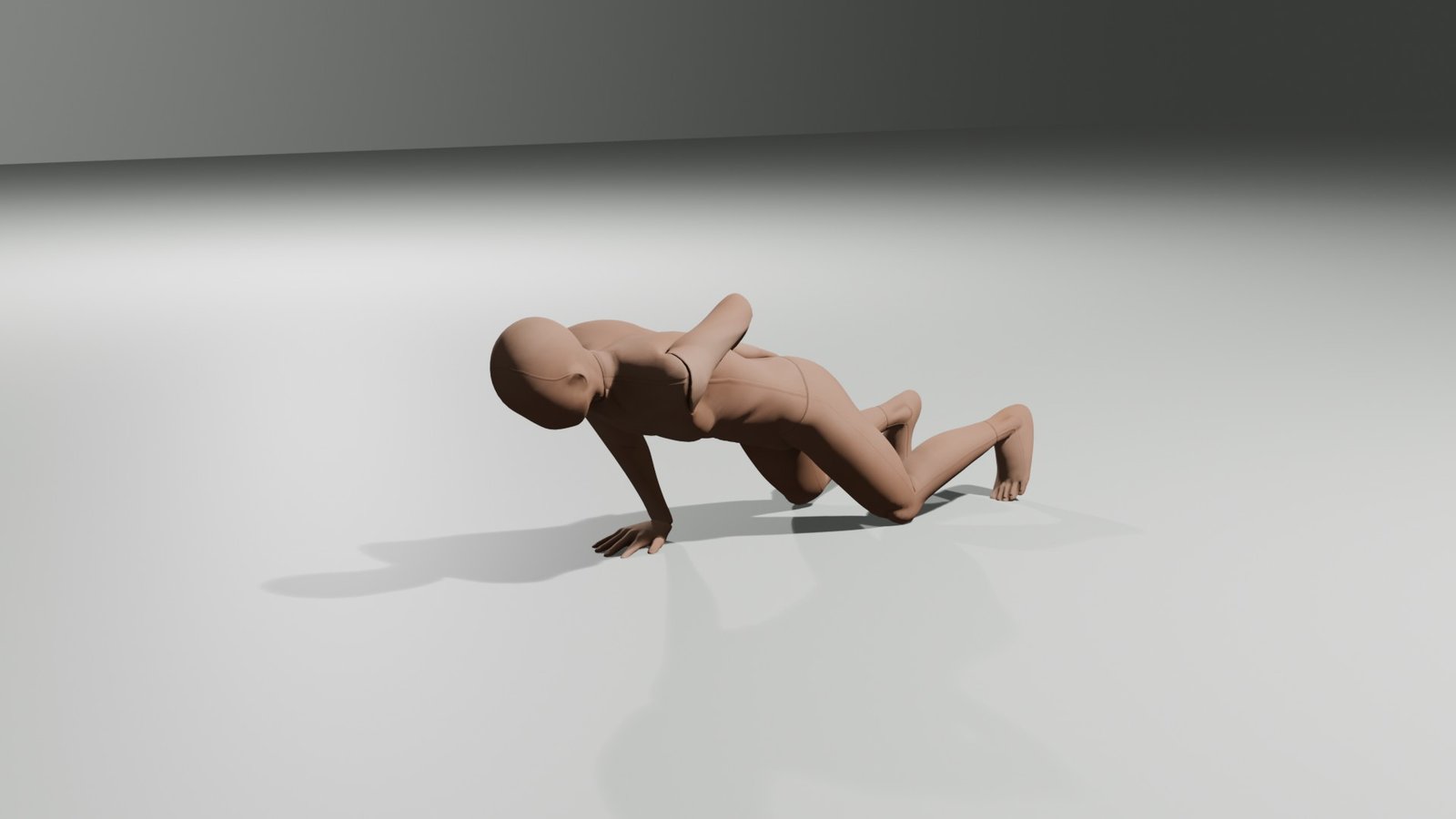
- Place your non-working arm behind your back or rest the back of your hand against your lower back.
2. Setting Tension
- Squeeze your glutes, lock your knees, and brace your core tightly to lock your entire body into a rigid, unified plank.
- Keep your hips level with the floor; avoid tilting your torso dramatically to one side.
3. The Descent
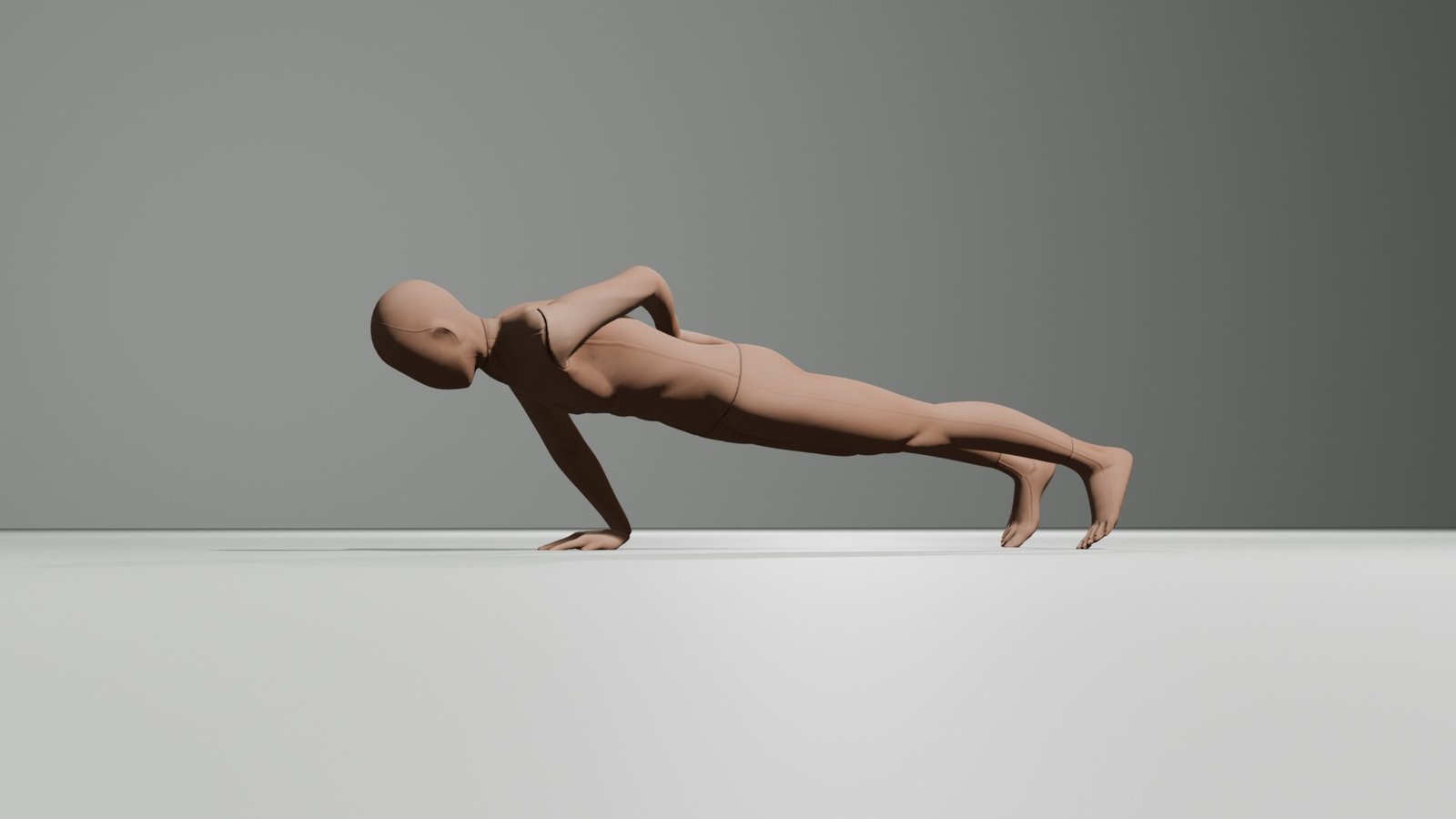
- Inhale as you lower your body with full control, keeping your working elbow tucked relative to your torso at roughly a 45-degree angle.
- Lower down until your chest hovers 1 to 2 inches off the floor.
4. The Press
- Exhale and drive forcefully through the palm of your working hand.
- Focus on keeping your shoulders and hips rising together at the exact same rate.
- Fully extend your arm at the top without allowing your hips to rotate open.
Common Errors & Fixes
- Excessive Hip Rotation: Opening your hips or twisting your torso sideways removes the anti-rotational core demand and cheats the rep. Keep your stance wide and focus on keeping both hip bones parallel to the floor.
- Narrow Stance: Placing your feet together like a standard push-up makes balancing almost impossible. Spread your feet wide to create a stable tripod base.
- Flaring the Working Elbow: Allowing your elbow to flare out at 90 degrees strains the shoulder joint. Keep it tucked close to your body for optimal biomechanical leverage.
How to Integrate and Progress
Before attempting a full one-arm push-up on the floor, you should comfortably complete 3 sets of 15 strict reps of regular push-ups and intermediate variations like diamond push-ups.
Build unilateral strength progressively using these intermediate variations:
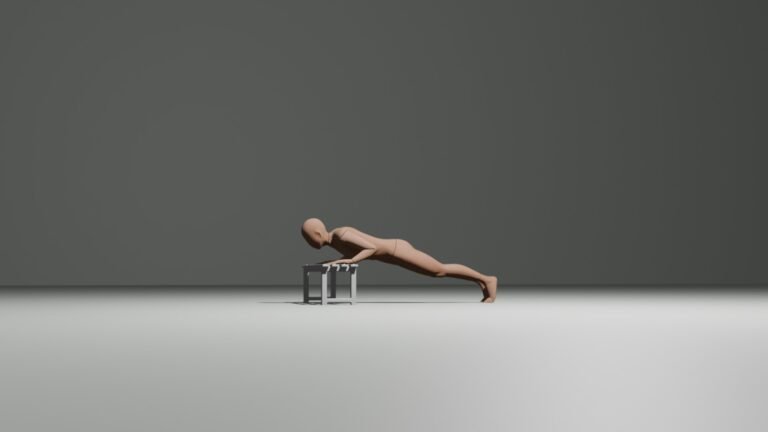
- Incline One-Arm Push-Ups: Elevate your working hand on a bench or wall to reduce the bodyweight load while learning the balance.
- Archer Push-Ups: Keep both hands on the floor, but extend one arm out to the side for assistance while driving primarily through the main pressing arm.
Once you master clean unilateral form, you can transition toward elite leverage skills like the pseudo planche push-up. To see how single-arm strength fits into the full bodyweight loading spectrum, check out our complete guide to push-ups.
Frequently Asked Questions (FAQ)
Why are my hips twisting so much during one-arm push-ups? Torso twisting happens when your anti-rotational core strength struggles against the unilateral load. To fix this, widen your foot stance, squeeze your glutes harder, or practice incline one-arm push-ups on a bench to build core stability first.
Should my feet be wider than normal for one-arm push-ups? Yes. Spreading your feet 2 to 3 feet apart creates a wide, stable base of support (a tripod stance) that allows you to press straight up without falling over or twisting excessively.
Which arm should I start training first? Always start your sets with your weaker arm while your central nervous system is fresh, then match that exact number of reps with your stronger arm to prevent asymmetrical strength imbalances.