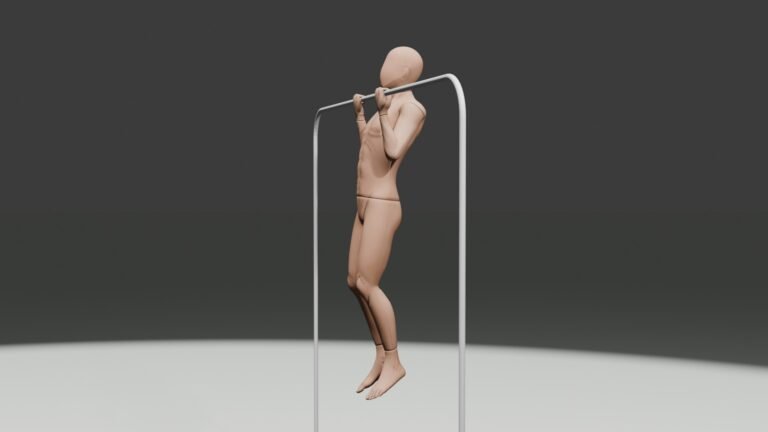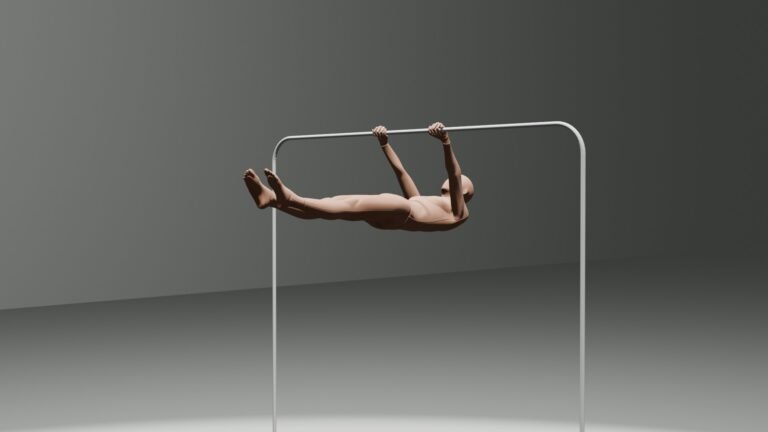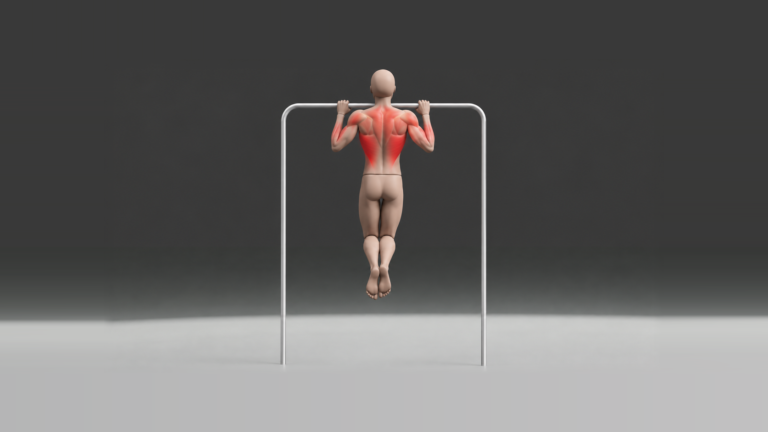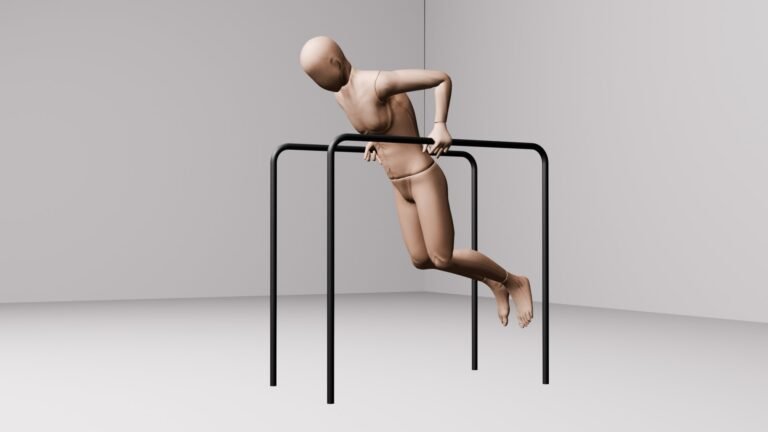

Hanging leg raises look simple: hang from a pull-up bar, lift your legs, and lower them again.
The difficult part is controlling everything between those movements.
Your grip needs to support your bodyweight, your shoulders need to remain stable, and your abdominal muscles have to control your pelvis while your hip flexors lift your legs. Without that coordination, it’s easy to start swinging or performing repetitions that feel more like hip-flexor exercises.
The key is to control both your legs and your pelvis, rather than simply trying to raise your feet as high as possible.
If you’re new to hanging core exercises, start with bent-knee raises. You can straighten your legs gradually as your strength and control improve.
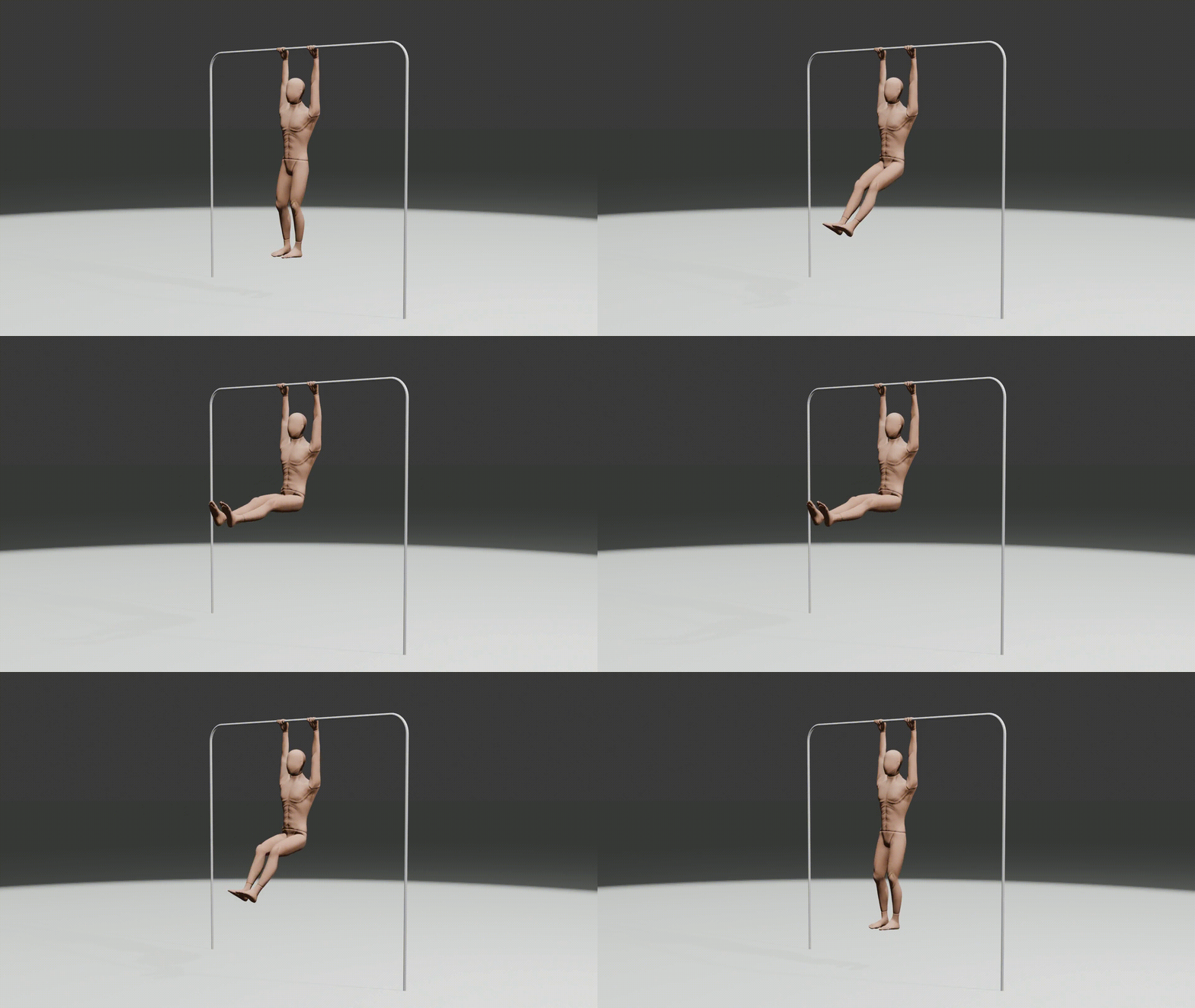
Hanging Leg Raise Form: The Quick Version
Before your next set, check these five things:
- Grip: Hold a secure overhead bar with your hands approximately shoulder-width apart.
- Shoulders: Support your body in a comfortable, controlled hanging position.
- Core: Brace your abs and gently tuck your pelvis.
- Raise: Lift your legs without kicking or creating excessive momentum.
- Lower: Return slowly enough that your body doesn’t swing into the next repetition.
One cue worth remembering: Think about bringing your pelvis toward your ribs as your legs rise. This helps you add abdominal movement rather than relying only on hip flexion.
What Goes Wrong During Hanging Leg Raises?
| What you notice | What to try |
|---|---|
| Your whole body swings | Bend your knees, slow down, and reset between repetitions |
| You mainly feel your hip flexors | Add a gentle pelvic curl as your thighs rise |
| Your grip fails before your abs | Use shorter sets or develop hanging endurance separately |
| You can’t lift straight legs to parallel | Start with hanging knee raises |
| Your lower back arches excessively | Reduce the difficulty and practice pelvic control |
| You can raise your legs but can’t lower them slowly | Shorten the range or bend your knees |
| You can’t maintain a stable hanging position | Practice comfortable supported hangs first |
Don’t try to correct every problem at once. Identify what’s limiting your repetitions and make one adjustment.
How to Do Hanging Leg Raises Step by Step
These instructions describe a controlled straight-leg raise toward hip height. Bent-knee raises use the same basic setup with a shorter, easier lever.
1. Start From a Secure Hang
Grip a pull-up bar with your palms facing away and your hands approximately shoulder-width apart.
Use a stable step to reach the bar if needed. Make sure there’s enough space for your legs to move without striking the floor or nearby equipment.
Let your arms extend comfortably and maintain control through your shoulders. You don’t need to force your shoulder blades into an exaggerated down-and-back position.
Before lifting, allow your body to settle so you’re not already swinging.
2. Brace Your Abs and Control Your Pelvis
Gently tighten your abdominal muscles.
Think about bringing your belt buckle slightly toward your ribs. This creates a small posterior pelvic tilt, which is useful for controlling the position of your lower back and pelvis.
You don’t need to force a dramatic spinal curl before starting. The important thing is that you’re not allowing your torso to swing or your lower back to arch uncontrollably.
3. Raise Your Legs Without Kicking
Lift both legs together using a smooth, controlled motion.
If you’re performing straight-leg raises, keep your knees extended through a comfortable range. A slight knee bend is fine if your flexibility or strength limits the movement.
Aim to bring your legs toward parallel with the floor.
Avoid leaning backward aggressively or using a swing to throw your legs upward.
4. Add a Controlled Pelvic Curl
As your legs rise, try curling your pelvis slightly upward rather than stopping the movement at the hips alone.
This is an important distinction.
Raising your thighs involves your hip flexors. Curling your pelvis toward your rib cage adds movement controlled by your abdominal muscles.
You don’t need to raise your feet all the way to the bar. A smaller movement with deliberate pelvic control can be more appropriate than a higher repetition created through momentum.
5. Lower Your Legs and Reset
Lower your legs smoothly.
Don’t simply release the tension and let them fall.
As you approach the bottom, prevent your legs from swinging far behind you. Allow any remaining movement to settle before starting another repetition.
If you can only control three repetitions, perform three.
That’s a more useful starting point than forcing ten repetitions that become progressively less controlled.
Hanging Knee Raises vs. Straight-Leg Raises
These exercises use similar mechanics, but straightening the legs changes the leverage.
| Variation | Main advantage | Main limitation |
|---|---|---|
| Hanging knee raise | Shorter lever makes control easier | Less demanding than straight-leg versions |
| Partially extended leg raise | Lets you increase difficulty gradually | Harder to keep the knee angle consistent |
| Straight-leg raise | Greater leverage challenge | Requires more strength and control |
| Higher-range hanging raise | Adds more pelvic and trunk movement | May be difficult to perform without swinging |
Start With Hanging Knee Raises
Bend your knees and lift them toward your chest.
At the top, gently curl your pelvis upward rather than merely lifting your thighs.
Lower until your body is controlled again.
This is a useful starting variation because bending your knees reduces the resistance created by the weight of your legs.
Progress by Straightening Your Legs
Once knee raises feel manageable, experiment with a smaller knee bend.
For example, you might perform several repetitions with your knees moderately bent instead of tightly tucked.
Gradually straighten them as you develop control.
There’s no requirement to perform exactly 15 or 20 knee raises before attempting a harder version.
Choose the next variation when you can maintain a reasonably consistent range of motion without relying on momentum.
Are You Actually Training Your Abs or Just Your Hip Flexors?
Both muscle groups contribute, and that’s normal.
The hip flexors help raise your thighs toward your torso. Your abdominal muscles stabilize your trunk and control the position of your pelvis.
When you deliberately curl your pelvis upward, your abs contribute more directly to that movement.
This is why the exercise can feel different depending on how you perform it.
Think of two related actions:
- Bringing your legs toward your torso involves hip flexion.
- Curling your pelvis toward your rib cage involves abdominal control.
You don’t need to eliminate hip-flexor involvement. You couldn’t perform the movement without it.
Instead, learn to coordinate both actions.
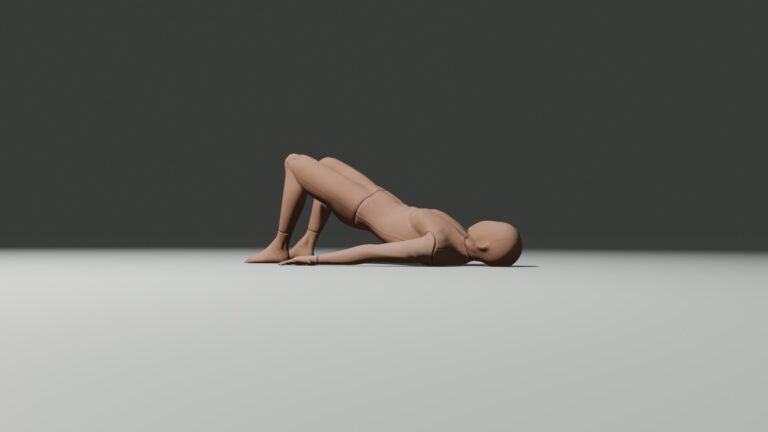
For another way to practice pelvic positioning without hanging from a bar, see our Hollow Body Hold Guide.
What Muscles Do Hanging Leg Raises Work?
| Muscle group | Role during the exercise |
|---|---|
| Rectus abdominis | Controls trunk position and helps curl the pelvis |
| Obliques | Assist trunk and pelvic control |
| Hip flexors, including iliopsoas | Lift the thighs toward the torso |
| Forearm and hand muscles | Maintain your grip |
| Shoulder and upper-back muscles | Help stabilize the hanging position |
Do Hanging Leg Raises Target the Lower Abs?
You’ll often see hanging leg raises described as a lower-ab exercise.
That terminology is understandable, but it can be misleading.
The rectus abdominis is a continuous muscle extending along the front of your abdomen. Different exercises can change the muscular demands and where you feel the effort, but you can’t completely isolate a separate lower-ab muscle.
Hanging leg raises can train your abs effectively, particularly when you control pelvic movement.
They also don’t selectively burn fat from your lower stomach. Visible abdominal definition depends on factors beyond the exercise itself.
Hanging Leg Raise Progressions: What Should You Practice Next?
Rather than following a rigid beginner-to-advanced checklist, use your current limitation to choose the next exercise.
If hanging is the hardest part: Practice comfortable hangs with assistance from a stable platform when necessary. Build your ability to support your weight before adding demanding repetitions.
If you can hang but can’t raise your legs: Start with hanging knee raises. Keep the repetitions short and controlled.
If knee raises are getting easier: Gradually open the knee angle while maintaining pelvic control.
If straight-leg raises are manageable: Work toward consistent repetitions, pauses, or a slightly higher controlled range.
If you can raise your legs to parallel without swinging: Experiment with bringing them higher while actively curling your pelvis.
If you’re ready for a separate advanced skill: Explore strict Toes-to-Bar progressions. Kipping toes-to-bar is a different technique and shouldn’t be confused with a controlled hanging leg raise.
You can move between variations within the same workout. There’s no need to abandon knee raises permanently once you can perform straight-leg repetitions.
A Simple Hanging Leg Raise Workout
For most people, two or three focused core sessions per week provide a reasonable starting point.
Choose one main variation that allows several technically consistent repetitions.
| Exercise | Sets | Reps |
|---|---|---|
| Hanging knee or leg raises | 3 | 5–10 |
| Hollow body hold, optional | 2 | 10–20 sec |
Rest approximately 60–120 seconds between sets, or longer if your grip and shoulders need more recovery.
Here’s one way to progress:
Start with three sets of five hanging knee raises. When those become comfortable, gradually add repetitions or use a slightly straighter leg position.
If straight-leg raises are too challenging, there’s nothing wrong with mixing variations:
- Set 1: Straight-leg raises while you’re fresh.
- Sets 2–3: Bent-knee raises for additional controlled practice.
Don’t force every set to failure. Stop when your control breaks down, particularly if your body begins swinging.
Where Should Hanging Leg Raises Go in Your Workout?
If you’re also training pull-ups or chin-ups, remember that all three exercises require grip and hanging endurance.
Perform your most important exercise first.
For example, if improving pull-ups is your main goal, you may prefer to complete your pulling sets before doing hanging leg raises.
If your primary goal is improving hanging core strength, practice leg raises while you’re relatively fresh.
There’s no need to train hanging leg raises in every workout.
Can’t Stop Swinging? Fix the Cause, Not Just the Movement
Swinging is one of the most common problems with hanging leg raises.
A small amount of natural body movement isn’t unusual. The problem is when momentum starts doing most of the work.
Three adjustments are particularly useful.
Shorten the Lever
Bend your knees.
Straight legs create a greater leverage challenge, which can make it harder to control the lowering phase.
You can return to straighter legs as your control improves.
Slow the Descent
Don’t rush to get your feet back down.
Try lowering your knees or legs smoothly until you’re back in a stable hanging position.
If you can’t control the descent, reduce your range of motion or change to an easier variation.
Pause Before the Next Rep
You don’t need to begin another repetition immediately.
Allow your body to settle before raising your legs again.
If you notice that every repetition swings higher than the previous one, your current variation is probably too difficult to perform consistently.
Controlled repetitions are a better measure of progress than how high you can swing your feet.
What If Your Grip Fails Before Your Abs?
Hanging leg raises challenge more than your core.
Your hands and forearms must support your full bodyweight while your shoulders help stabilize the hanging position.
If your grip gives out first, your abdominals may not receive as much training as you intended.
There are several options.
Use shorter sets. Three controlled repetitions can be worthwhile.
Build hanging endurance separately. Our Dead Hang Guide explains how to practice supporting yourself from a bar.
Try a supported variation. A properly designed captain’s-chair knee raise station supports your body through your forearms and removes much of the gripping demand.
Use a floor-based core exercise when necessary. Reverse crunches or hollow body variations let you train abdominal control without hanging.
You don’t need to buy equipment if your gym already has a suitable setup.
If you’re thinking about getting a home pull-up bar, prioritize secure installation, adequate clearance, and compatibility with the space. Our Home Pull-Up Setup Guide covers the practical differences.
Frequently Asked Questions
Are Hanging Leg Raises Good for Beginners?
They can be, but the straight-leg version is demanding.
Hanging knee raises or supported variations are usually more manageable starting points.
You don’t need to pass a specific hanging-time test before trying an appropriately scaled variation.
Should Your Legs Reach 90 Degrees?
Raising straight legs until they’re roughly parallel with the floor is a common target.
However, a shorter controlled range can be appropriate while you’re building strength.
If abdominal movement is your focus, pay attention to pelvic control as well as leg height.
Is It Normal to Feel Hanging Leg Raises in Your Hip Flexors?
Yes. Hip flexors are responsible for much of the leg-lifting movement.
Try adding a small, controlled pelvic curl if you want to emphasize abdominal movement more clearly.
Persistent pain is different from normal muscular effort and shouldn’t be ignored.
Are Straight Legs Always Better?
No.
Straightening your legs makes the exercise harder, but that isn’t useful if you can’t maintain control.
Bent-knee raises can remain an effective part of your training.
Do Hanging Leg Raises Help With Toes-to-Bar?
They develop relevant hanging control, grip endurance, hip-flexor strength, and abdominal coordination.
However, toes-to-bar also requires additional range of motion and specific technique.
You don’t automatically master it by completing a certain number of leg raises.
Can Hanging Leg Raises Replace Sit-Ups?
They can serve as a core-training alternative, but the exercises have different demands.
Hanging leg raises require grip and overhead support, while floor exercises are easier to perform without equipment.
Choose according to your goals, comfort, and available setup.
Final Advice: Control the Movement Before Making It Harder
Hanging leg raises are valuable because they challenge abdominal control while your body is suspended from a bar.
But performing them well requires more than lifting your feet.
You need a secure grip, a stable hanging position, and enough control to raise and lower your legs without relying on momentum.
Start with bent knees if necessary. Learn to control your pelvis, then gradually increase the leverage by straightening your legs.
The next progression should make your muscles work harder—not simply make the movement look more advanced.
Once you can perform consistent straight-leg repetitions, explore higher-range variations or continue building strength with our Hollow Body Hold Guide and Toes-to-Bar Guide.
This guide provides general exercise education. Stop movements that cause pain and seek professional guidance for persistent symptoms.