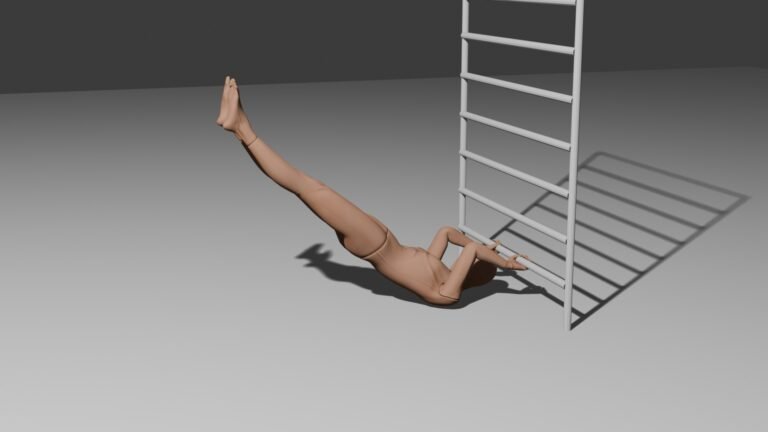

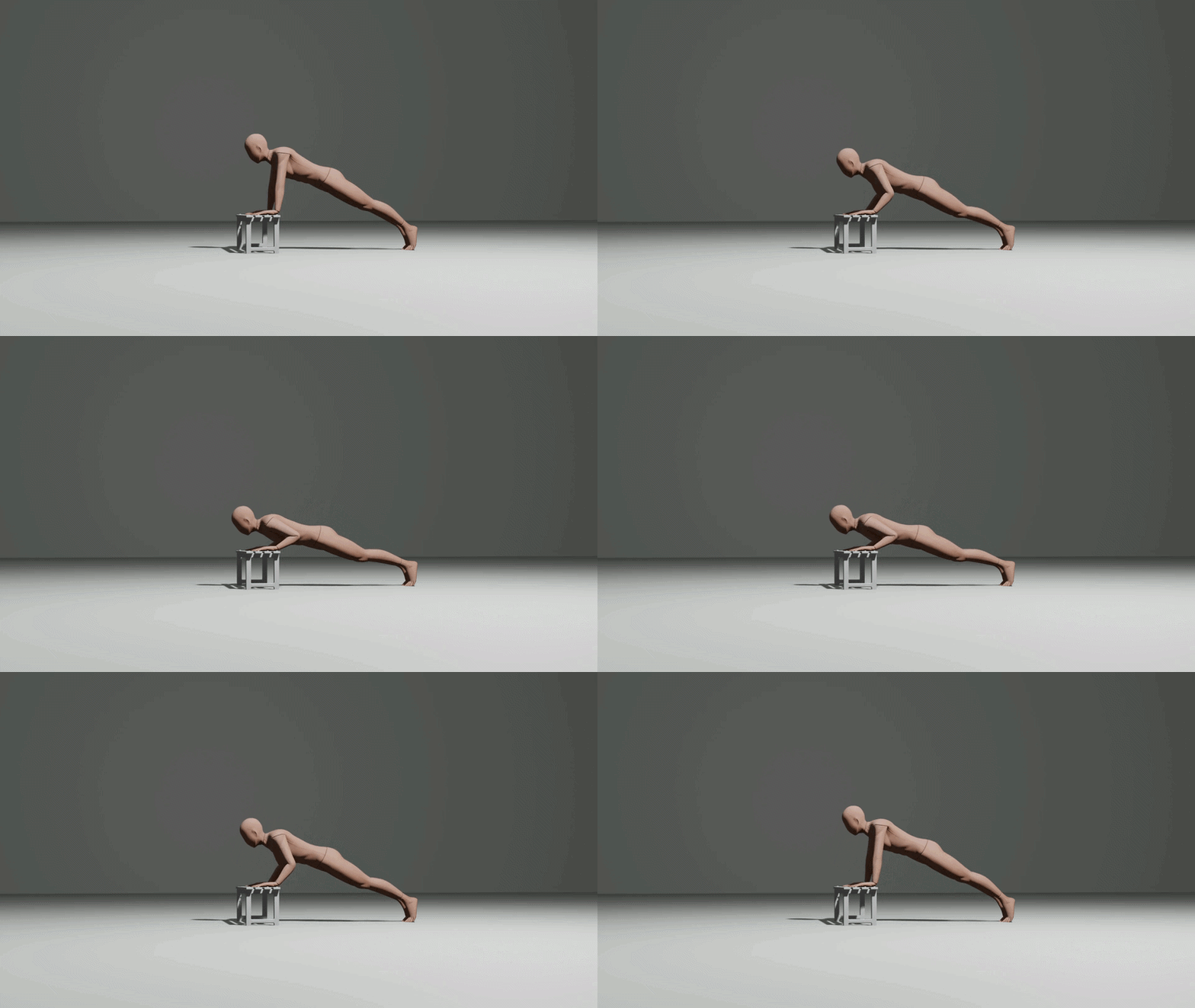
Incline push ups are an easier version of push ups where your hands are placed on an elevated surface.
- Primary Muscles: Lower/Mid Chest (Pectoralis Major)
- Secondary Muscles: Front Deltoids (Shoulders), Triceps Brachii, Core
- Setup & Grip: Place hands shoulder-width apart on an elevated surface (bench, box, or sturdy rail), extending legs back so your body forms a straight diagonal line.
- Execution & Tempo: Lower your chest to touch the edge of the elevated platform, maintaining a tight core and glutes. Press firmly through your hands to return to top position.
- Common Mistakes: Allowing hips to dip toward the bench, shrugging shoulders during the press, or rushing the descent without control.
Incline push ups help beginners build strength and are one of the best ways to progress toward full push ups.
What are incline push ups?
Incline push ups are a variation of push ups where your upper body is raised by placing your hands on a surface like:
- A chair
- A bench
- A table
- A wall (easiest version)
This reduces the amount of body weight you need to lift, making the exercise easier.
Why incline push ups are great for beginners
Incline push ups are one of the best starting points because they:
- Reduce difficulty compared to regular push ups
- Help you learn proper form
- Build strength gradually
- Lower the risk of injury
They allow you to train the same muscles as push ups, but at a level that matches your current strength.
What muscles do incline push ups work?
Incline push ups train the same muscles as regular push ups:
- Chest
- Shoulders
- Triceps
- Core
As the incline gets lower, the exercise becomes more challenging.
How to do incline push ups correctly
Follow these steps:
1. Place your hands on an elevated surface
2. Keep your body in a straight line
3. Lower your chest toward the surface
4. Keep your elbows slightly tucked
5. Push back up with control
Focus on slow and controlled movement.
Common mistakes
Avoid these common errors:
- Letting your hips drop
- Bending your back
- Flaring your elbows too much
- Rushing the movement
Good form is more important than doing more reps.
How many incline push ups should beginners do?
A simple starting point:
- 8-15 reps per set
- 2-4 sets per workout
- 2-3 times per week
Choose a height where you can complete your reps with good form.
How to progress toward real push ups
The key to progression is gradually making the exercise harder.
Step 1: Start with a higher surface
Use something like a wall or high table.
Step 2: Lower the incline over time
Move to:
- Chair
- Bench
- Lower surface
The lower the surface, the harder the push up.
Step 3: Transition to full push ups
Once you can do:
10-15 clean incline push ups on a low surface
You’re ready to try full push ups on the floor.
Should you skip incline push ups?
No — skipping them often slows down progress.
Many beginners struggle with full push ups because they don’t build strength gradually.
Incline push ups are one of the best exercises for beginners working toward real push ups.
They are simple, effective, and easy to adjust based on your level.
Stay consistent, lower the incline over time, and you’ll build the strength needed for full push ups. For a full guide on push up technique, check out my post on how to do push ups correctly.
How long does it take to progress?
Most beginners can move toward full push ups in:
- 2–6 weeks with consistent training
Progress depends on your starting strength and consistency.