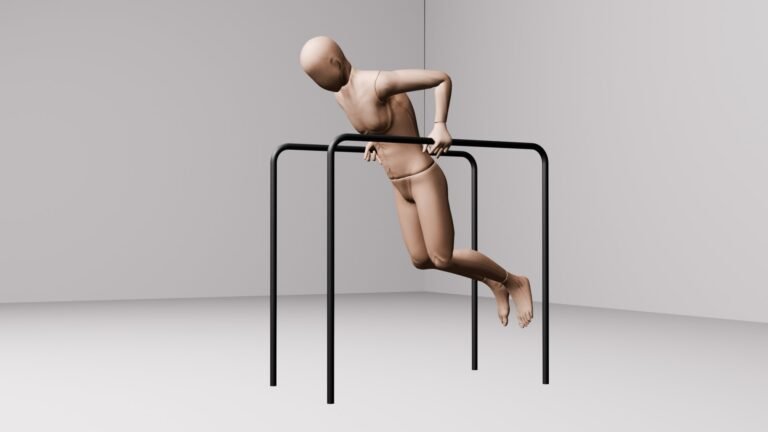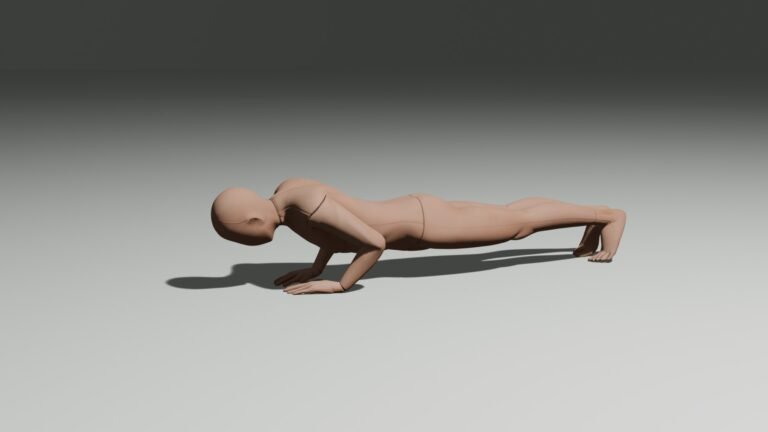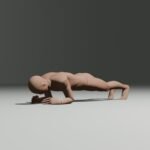

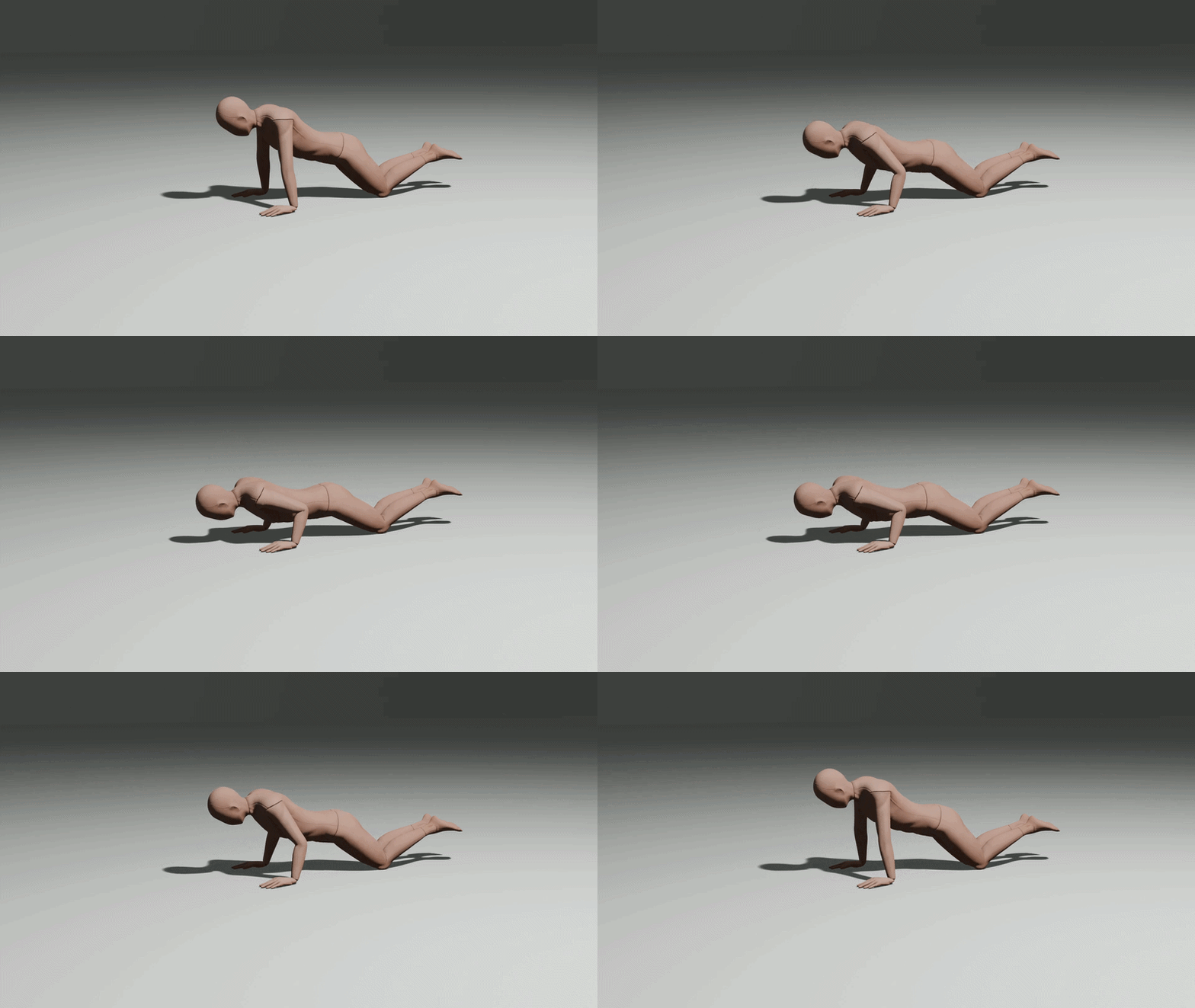
If you cannot complete standard push-ups with strict form yet, knee push-ups bridge the gap. Performing the exercise on your knees drops your body weight load from 64% to about 49%. This load reduction helps you build baseline chest and arm strength while training your core, ensuring a smooth progression toward full push-ups.
- Primary Muscles: Chest (Pectoralis Major)
- Secondary Muscles: Front Deltoids (Shoulders), Triceps Brachii, Core (Rectus Abdominis)
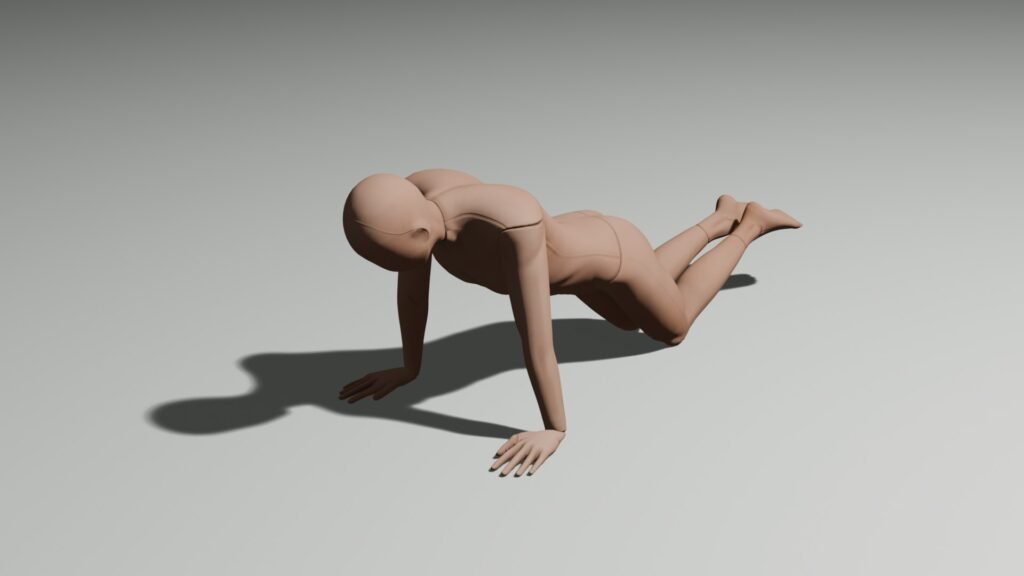
- Setup & Grip: Place knees on the ground and hands slightly wider than shoulder-width. Cross ankles or rest feet lightly on the floor, forming a straight line from head to knees.
- Execution & Tempo: Lower your chest until it nearly touches the floor over 2 seconds while keeping elbows tucked at a 45-degree angle. Exhale and push back up to arm lockout.
- Common Mistakes: Piking hips backward (turning it into a table-top stance), letting the lower back arch downward, and flaring elbows out to 90 degrees.
Targeted Muscle Groups
Despite the common misconception that knee push-ups are “too easy” to build real strength, they recruit the exact same muscle groups as standard push-ups:
- Pectoralis Major (Chest): Acts as the primary mover, responsible for pushing your body mass up from the floor.
- Anterior Deltoids (Front Shoulders): Assists in horizontal adduction and stabilizes the shoulder joint during the movement.
- Triceps Brachii: Drives the final lockout phase at the top of every rep.
- Rectus Abdominis & Transverse Abdominis (Core): Maintains a rigid plank, preventing your spine from sagging or arching under load.
Step-by-Step Technique & Form
1. The Setup
- Kneel on an exercise mat or padded surface to protect your knee joints.
- Place your hands on the floor slightly wider than shoulder-width apart.
- Position your palms flat, fingers pointing straight ahead or turned slightly outward to relieve wrist pressure.
2. Aligning Your Body
- Walk your hands forward until your body forms a straight, rigid line from your head down to your knees.
- Cross your ankles in the air or keep your feet flat on the floor—whichever feels most stable.
- Engage your glutes and draw your belly button toward your spine to set a neutral pelvic tilt.
3. The Descent
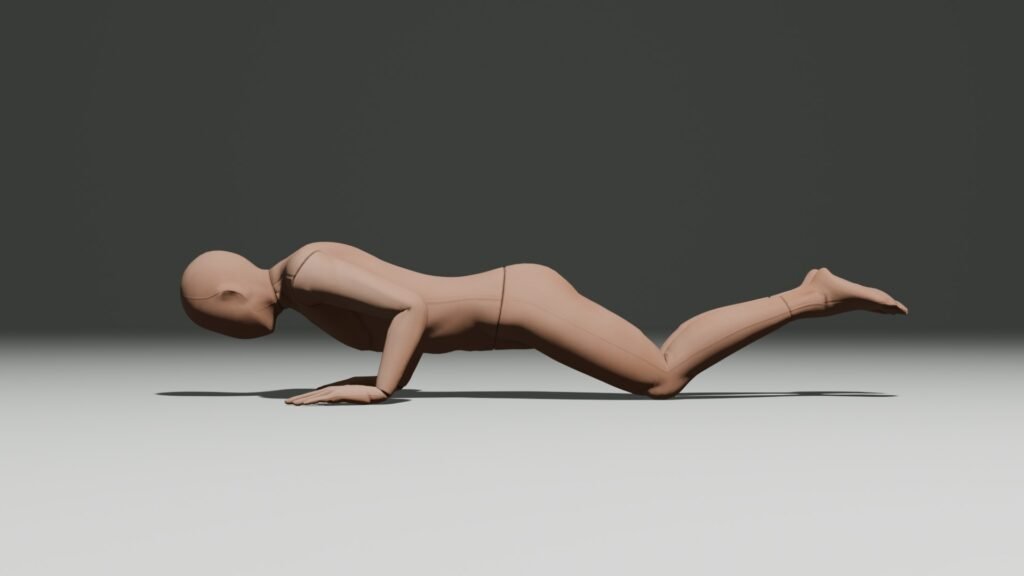
- Inhale as you lower your body toward the floor with full control.
- Keep your elbows angled back at roughly 45 degrees relative to your torso (forming an arrow shape rather than a T-shape).
- Lower down until your chest is roughly 1–2 inches above the ground.
4. The Drive
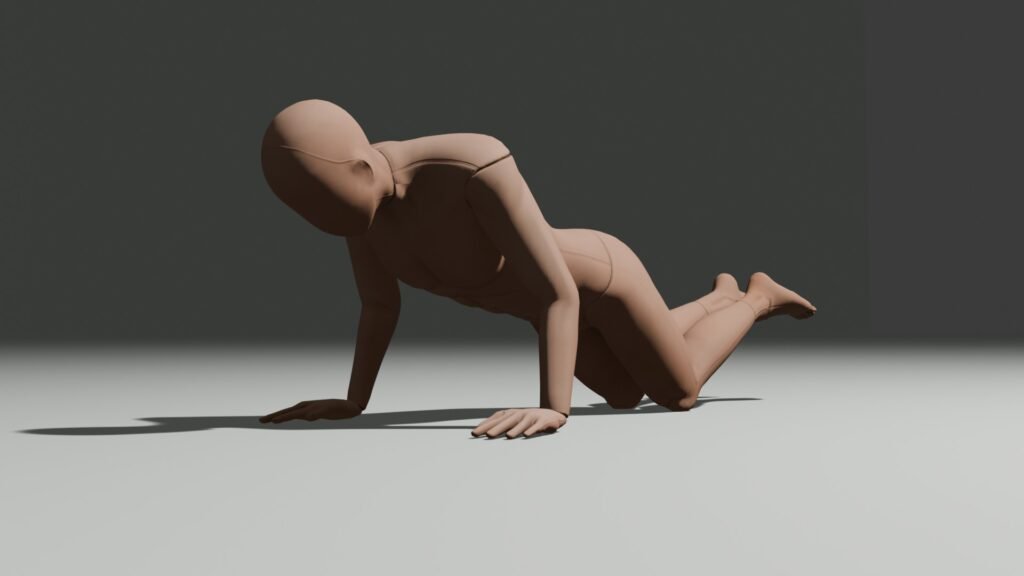
- Exhale as you push firmly through the center of your palms to extend your arms.
- Press up evenly so your shoulders and hips rise at the exact same time.
- Finish at full arm extension without locking out your elbows violently.
Common Mistakes & Troubleshooting
- Sagging Hips or Arched Back: This happens when the core disengages, placing unnecessary shear stress on the lower back. Focus on squeezing your glutes as hard as possible throughout every rep.
- Piking (Butt in the Air): Raising your hips turns the move into a vertical push, shifting work away from your chest. Walk your hands further forward until your body forms a straight ramp.
- Flaring Elbows Wide: Allowing your elbows to flare to 90 degrees puts your shoulder joints in an impingement position. Keep your shoulder blades pulled down and back.
How to Integrate Knee Push-Ups into Your Routine
- For Beginners: Complete 3 sets of 8 to 12 repetitions, resting 60–90 seconds between sets. Focus strictly on control during the descent.
- For High-Volume Work: Advanced lifters can use knee push-ups as a burn-out set at the end of a heavy chest workout to push muscles to complete failure safely.
Once you can easily complete 3 sets of 15 strict repetitions, you are ready to start loading more body weight. Check out our complete guide to push-ups to see how knee push-ups fit into the broader spectrum of push-up variations, weight-loading percentages, and long-term strength progressions.