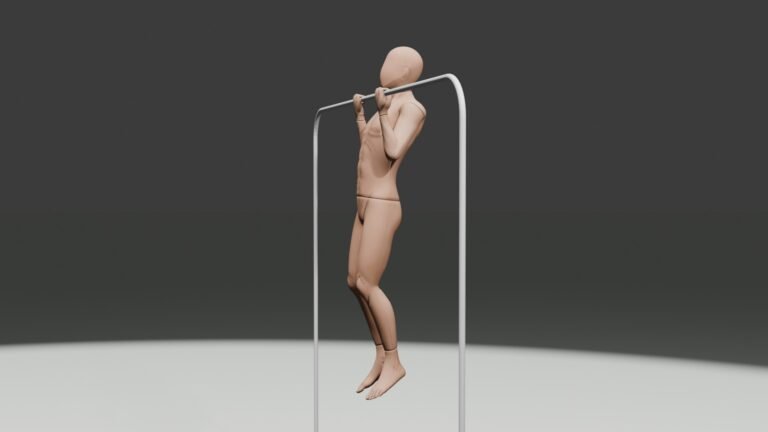

Want to increase your pull-up repetitions without doing exhausting workouts every day?
Greasing the Groove (GTG) is a training method built around practicing an exercise frequently while staying well away from failure.
Instead of completing one demanding pull-up workout, you perform several short, relatively easy sets spread throughout the day.
The idea is simple: practice a movement regularly, maintain good technique, and gradually become better at performing it.
For example, someone who can perform 6 strict pull-ups might practice sets of just 2 repetitions several times throughout the day.
Those repetitions should feel manageable rather than exhausting.
GTG can be a useful option for improving pull-up performance, especially if you have easy access to a pull-up bar.
However, it isn’t a shortcut that guarantees you’ll double your repetitions in a few weeks.
Quick answer: How to use Greasing the Groove for pull-ups
- Know approximately how many strict pull-ups you can currently perform.
- Choose an easy set of about one-third to one-half of that number.
- Perform 3–4 short sets spread throughout the day.
- Begin with 3 training days per week.
- Avoid failure, maintain consistent technique, and increase your workload gradually.
Table of Contents
What Does Greasing the Groove Mean?
The name sounds unusual, but the concept is fairly straightforward.
Greasing the Groove is a phrase popularized by strength coach Pavel Tsatsouline.
The expression uses a mechanical metaphor.
Imagine a piece of machinery moving repeatedly along a track or groove. Lubricating that groove helps the machinery move more smoothly.
In strength training, the groove represents the movement pattern you’re practicing.
Greasing it means repeating that movement frequently enough that performing it becomes more familiar and coordinated.
For pull-ups, this involves practicing clean repetitions regularly rather than waiting until your next exhausting workout.
Why Is It Called a Groove?
When you learn a movement, your nervous system must coordinate the muscles involved.
As you gain experience, your coordination and ability to produce force can improve.
GTG emphasizes this movement-specific practice.
Think about learning to play an instrument.
Practicing a short piece several times while you’re fresh may be more productive for learning the movements than playing continuously until your hands are exhausted.
GTG applies a similar idea to strength exercises.
The important distinction: Greasing the Groove isn’t a literal process of lubricating neural pathways. It’s a memorable name for frequent, manageable practice.
The method became particularly popular for exercises such as pull-ups and push-ups because they can be practiced in short sets with relatively little setup.
For background on its origins, see Craig Marker’s explanation of Greasing the Groove.
How Does Greasing the Groove Work?
Traditional pull-up workouts usually involve performing multiple sets during one training session.
For example:
- 3 sets of 5 pull-ups.
- Rest between sets.
- Finish the workout.
- Recover before your next session.
GTG spreads some of that practice across a longer period.
Instead of completing all your repetitions together, you might perform:
- 2 pull-ups in the morning.
- 2 pull-ups a few hours later.
- 2 pull-ups in the afternoon.
- 2 pull-ups in the evening.
Each set is intentionally easy.
The approach may help through a combination of movement practice, increased training opportunities, and manageable repetitions.
Is GTG Scientifically Proven to Be Better?
Research supports the idea that you can build strength without taking every set to muscular failure.
A systematic review and meta-analysis found that training to failure generally wasn’t necessary to achieve improvements in strength or muscle size.
Research on resistance-training frequency also suggests that training more frequently doesn’t automatically produce greater strength gains when total training volume is similar.
For example, a 2018 systematic review found that much of the apparent benefit of higher training frequency was related to differences in training volume.
These findings support some principles used in GTG, but they don’t directly prove that a specific pull-up GTG program is superior to traditional training.
The practical benefit of GTG is that it can make frequent, high-quality pull-up practice easier to organize.
Who Should Try Greasing the Groove?
GTG is most practical for people who can already perform several controlled pull-ups.
| Your current ability | Suggested approach |
|---|---|
| 0 unassisted pull-ups | Start with assisted pull-up progressions |
| 1-3 pull-ups | Focus on building basic strength with assisted sets |
| 4-5 clean pull-ups | GTG may be possible, but keep sets very easy |
| 6-10 clean pull-ups | Good starting range for experimenting with GTG |
| 10+ clean pull-ups | GTG can be used for additional practice and repetition development |
These are practical guidelines, not mandatory strength benchmarks.
If you haven’t achieved your first pull-up yet, the Beginner Pull-Up Progression Guide is a better starting point.
You’ll benefit from building the movement with assistance rather than repeatedly attempting difficult repetitions.
GTG also works best when you have regular access to a secure pull-up bar.
If you only visit a gym a few times per week, a conventional pull-up program may be more convenient.
How to Start Greasing the Groove for Pull-Ups
You don’t need a complicated formula to begin.
The goal is to practice several easy sets while managing your overall training workload.
Step 1: Find Your Current Pull-Up Level
First, establish roughly how many strict pull-ups you can perform.
Use the same technique each time:
- Grip a secure pull-up bar with an overhand grip.
- Begin with your arms extended and your body controlled.
- Pull until your chin clears the bar.
- Lower under control.
- Stop when you can no longer maintain your normal technique.
If you’ve recently tested your pull-up maximum, you can use that number instead of immediately testing again.
If you need help with technique, see our Complete Pull-Up Form Guide.
Step 2: Choose an Easy Repetition Target
A useful starting point is approximately one-third to one-half of your usual maximum repetitions, rounded down.
For example:
| Your maximum pull-ups | Example GTG set |
|---|---|
| 4-5 reps | 1-2 reps |
| 6-7 reps | 2 reps |
| 8-10 reps | 3-4 reps |
| 11-12 reps | 4-5 reps |
These aren’t strict rules.
The correct number is one you can perform confidently with several repetitions still available.
If a set feels challenging, reduce the repetitions.
GTG is not intended to turn every short practice session into a difficult workout.
Step 3: Spread Your Sets Throughout the Day
Instead of performing your sets one after another, separate them by substantial periods of rest.
You might perform one short set in the morning, another around lunchtime, and another later in the afternoon.
There is no scientifically established minimum interval that everyone must follow.
An hour or several hours between sets can be practical, depending on your schedule.
The main idea is to begin each set feeling reasonably recovered.
Step 4: Start With a Manageable Weekly Schedule
You don’t need to begin with eight sets every day.
Start conservatively.
A reasonable initial experiment is:
- 3 short sets per day.
- 3 days per week.
- Several hours between sets when possible.
- No repetitions taken to failure.
Once you’ve established how well you recover, you can consider adding more practice.
Step 5: Track Your Progress
Record your repetitions and training days.
For example:
| Date | Sets completed | Reps per set | Total reps |
|---|---|---|---|
| Monday | 3 | 2 | 6 |
| Wednesday | 3 | 2 | 6 |
| Friday | 3 | 2 | 6 |
You don’t need a complicated training application.
The important thing is knowing how much work you’re performing so you don’t accidentally increase your volume too quickly.
Example: Four-Week Greasing the Groove Pull-Up Plan
Let’s assume you can currently perform 6 strict pull-ups.
We’ll use 2 repetitions per set.
This is an example starting plan, not a guaranteed or universally optimal routine.
| Week | Training days | Sets per day | Reps per set |
|---|---|---|---|
| 1 | 3 | 3 | 2 |
| 2 | 3 | 4 | 2 |
| 3 | 3-4 | 4 | 2 |
| 4 | Adjust based on recovery | 3-4 | 2 |
Week 1: Establish the Habit
Practice 3 sets of 2 pull-ups on Monday, Wednesday, and Friday.
Keep the sets separated throughout the day.
Your goal isn’t to accumulate as many repetitions as possible.
It’s to find out whether you can complete the practice without negatively affecting your other workouts.
Week 2: Add a Little Practice
If you’re recovering well, try increasing to 4 short sets on each training day.
Keep the repetitions at 2 per set.
You’re increasing total practice without increasing the difficulty of individual sets.
Week 3: Evaluate Your Recovery
If the sets continue to feel easy, you could add another practice day.
Alternatively, stay with three days and continue building consistency.
You don’t have to increase your training frequency every week.
Week 4: Review Your Progress
Continue at a manageable level or reduce your practice slightly if you’re feeling fatigued.
After some recovery, you can test your maximum controlled pull-up repetitions again if you want to assess progress.
Use the same grip and technique as your original test.
You might improve your repetition count, or you might find that you need more training time.
Both outcomes provide useful information.
Don’t force the next progression simply because you’ve reached a particular week.
How to Know When to Increase Your GTG Repetitions
The first thing to increase doesn’t necessarily have to be the repetitions within each set.
You have several options:
- Add one extra short set to a practice day.
- Add a practice day if recovery allows.
- Increase each set by one repetition when the current sets are consistently easy.
- Keep the same workload while improving technique.
Avoid increasing everything at once.
For example, if you’re currently performing four sets of two repetitions, you might eventually progress to four sets of three.
But only make that change if three repetitions still feel comfortably below your limit.
The goal is to accumulate manageable, controlled practice—not to turn GTG into repeated maximum-effort testing.
Can Greasing the Groove Double Your Pull-Up Reps?
It’s possible to make substantial progress in pull-up repetitions, particularly when starting from a relatively low number.
However, there is no reliable evidence that GTG guarantees you’ll double your maximum pull-ups within four weeks.
A jump from 3 to 6 pull-ups is a 100% improvement.
A jump from 15 to 30 pull-ups is also a 100% improvement, but it’s a very different training challenge.
Your results will depend on factors such as:
- Your current strength.
- Your training experience.
- Your total weekly workload.
- Your bodyweight.
- Your recovery.
- Your consistency.
- Your pull-up technique.
Instead of expecting a specific percentage improvement, focus on whether you’re gradually developing your ability to perform controlled pull-ups.
If your repetitions stop improving, reassess your training volume and recovery rather than automatically adding more GTG sets.
Can You Combine GTG With Regular Pull-Up Workouts?
Yes, but you need to consider your total pulling volume.
GTG repetitions still count as training.
Even if each individual set feels easy, repeated sets throughout the week can accumulate meaningful fatigue.
If you already train pull-ups, chin-ups, and rows several times per week, adding GTG on top of everything may be more work than you need.
For example, someone might replace part of their usual pull-up training with GTG rather than adding every GTG set to their existing program.
You don’t necessarily have to eliminate rows, chin-ups, or other back exercises.
Instead, monitor how your overall training affects your performance and recovery.
If your normal workouts start getting worse, consider reducing your GTG volume.
GTG should support your pulling strength, not make the rest of your training unnecessarily difficult.
What If You Don’t Have a Pull-Up Bar at Home?
This is one of the biggest practical limitations of the GTG method.
If you only have access to a pull-up bar when visiting the gym, completing several short sets throughout the day may not be realistic.
And that’s perfectly fine.
You do not need to practice Greasing the Groove to improve your pull-ups.
Option 1: Continue With Regular Pull-Up Workouts
You can build strength with conventional workouts two or three times per week.
For example:
| Exercise | Sets and reps |
|---|---|
| Pull-Ups | 3 × 4-8 |
| Chin-Ups or Inverted Rows | 2-3 × 6-10 |
Adjust the repetitions or use assistance to match your current ability.
This approach is often much easier to follow if you train at a gym.
Option 2: Use a Public or Outdoor Pull-Up Bar
If you have convenient access to an outdoor exercise area, you could perform short practice sessions there.
However, don’t feel obligated to travel somewhere several times a day just to follow GTG.
A method only makes sense if it fits your schedule.
Option 3: Consider a Home Pull-Up Bar
If frequent pull-up practice is something you genuinely want to incorporate, having a secure bar at home can make it much more convenient.
A suitable home bar allows you to complete a few repetitions without making a separate trip to the gym.
However, you should check the installation requirements, weight rating, doorway or wall compatibility, and available space before buying one.
Not every doorway is suitable for a pull-up bar.
For help choosing between different options, read our Best Home Pull-Up Setup Guide.
You don’t need to purchase equipment solely for GTG. Traditional pull-up training remains a perfectly valid option.
If you’re unable to access a pull-up bar at all, our Pull-Up Alternatives Guide explains other ways to develop pulling strength.
Common Greasing the Groove Mistakes
1. Performing Too Many Repetitions Per Set
If your maximum is 6 pull-ups, practicing sets of 5 throughout the day may be too demanding.
Choose a lower repetition target so you can maintain consistent technique and manage fatigue.
2. Starting With Too Many Daily Sets
Some GTG examples recommend performing numerous sets every day.
That may be more volume than you’re ready to handle.
Start with fewer sets and gradually increase only when you’re recovering well.
3. Ignoring Your Other Training
GTG isn’t separate from your overall workout program.
If you’re already completing heavy pull-up workouts, chin-ups, rows, or other demanding pulling exercises, account for that workload before adding more repetitions.
4. Rushing Repetitions
You don’t need to perform every pull-up explosively.
Focus on controlled, consistent technique.
A rushed repetition that uses excessive momentum isn’t necessarily more beneficial than a slower, technically sound one.
5. Testing Your Maximum Too Frequently
Maximum-repetition tests can be tiring.
You don’t need to test your maximum every time you practice.
Perform most GTG sets comfortably below your limit and assess your progress periodically.
6. Training Through Joint Pain
Frequent pulling can increase stress on your elbows, shoulders, wrists, and gripping muscles.
GTG does not guarantee that you’ll avoid soreness or overuse problems.
If discomfort begins developing, reduce or stop the aggravating activity rather than continuing to add repetitions.
If pain is persistent or worsening, seek guidance from an appropriate healthcare professional.
See our Elbow and Shoulder Pain During Pull-Ups Guide for more information.
Greasing the Groove vs. Traditional Pull-Up Training
Both approaches can be useful.
The difference is primarily how you organize your practice.
| Feature | Greasing the Groove | Traditional training |
|---|---|---|
| Set difficulty | Usually easy | Easy to challenging |
| Training schedule | Short sets spread through the day | Sets grouped into workouts |
| Training frequency | Often more frequent | Usually fewer sessions |
| Equipment access | Frequent access is helpful | Gym access may be sufficient |
| Main appeal | Frequent movement practice | Convenient, structured workouts |
| Potential drawback | Harder to manage total volume | Fewer opportunities for practice |
GTG may fit someone who works from home and has a secure pull-up bar nearby.
Traditional workouts may be better for someone who trains at a gym three times per week.
Neither approach is automatically superior.
Frequently Asked Questions
Can Beginners Do Greasing the Groove?
Yes, but it depends on their current strength and exercise selection.
If you can’t yet perform controlled bodyweight pull-ups, assisted variations are usually a more practical way to build your initial strength.
Should I Do Greasing the Groove Every Day?
Not necessarily.
Although GTG emphasizes frequent practice, daily training isn’t a requirement.
Start with a manageable schedule and adjust based on your recovery and overall workload.
How Many Pull-Ups Should I Do Per GTG Set?
Choose a repetition target comfortably below your maximum.
Approximately one-third to one-half of your usual maximum is a practical starting guideline, but the set should feel easy enough that several clean repetitions remain available.
How Long Should I Rest Between GTG Sets?
Sets are generally separated by long breaks rather than standard workout rest periods.
An hour or several hours can work, depending on your schedule.
There isn’t one mandatory interval that everyone must follow.
Does Greasing the Groove Build Muscle?
It can contribute to strength and muscle development because the repetitions still create a training stimulus.
However, GTG isn’t necessarily the most efficient approach if maximizing muscle size is your main goal.
A structured resistance-training program with appropriate volume, progressive overload, and recovery may be easier to manage for hypertrophy.
Can I Use GTG for Chin-Ups or Push-Ups?
Yes.
The same general principle can be applied to other exercises.
Choose one movement you want to improve and perform manageable, technically consistent sets without constantly approaching failure.
Is GTG Better Than Training to Failure?
Training to failure is not necessary for every strength-training set.
However, that doesn’t mean GTG is always more effective.
Your results depend on total training volume, exercise difficulty, recovery, and how the program is organized.
How Soon Will I Notice Results?
There isn’t a reliable timeline.
Some people may see early improvements in repetitions or movement confidence, while others require more time.
Evaluate your progress over several weeks rather than expecting dramatic changes after only a few days.
Final Thoughts: Is Greasing the Groove Worth Trying?
Greasing the Groove is an interesting training approach because it emphasizes something simple: frequent practice without constant exhaustion.
Instead of treating every pull-up set as a maximum-effort challenge, you spread manageable repetitions throughout the day.
This can make sense if you already have a few clean pull-ups and convenient access to a bar.
But GTG isn’t magic, and it isn’t essential for getting stronger.
You can improve your pull-ups with conventional workouts, assisted progressions, and other well-structured training approaches.
If GTG fits your schedule, start conservatively, pay attention to recovery, and track your progress.
If it doesn’t fit your schedule, there’s no need to force it.
The best pull-up program is one you can follow consistently while gradually improving your strength and technique.
For the fundamentals of pull-up form, progressions, and programming, see our Complete Pull-Up Guide.
References and Further Reading
- Craig Marker — How Does Greasing the Groove Work? — Background on Pavel Tsatsouline’s method and its training principles.
- Grgic et al. (2018) — Effect of Resistance Training Frequency on Strength — Systematic review and meta-analysis examining training frequency and strength development.
- Grgic et al. — Training to Failure vs. Non-Failure — Systematic review and meta-analysis examining strength and hypertrophy outcomes.
Disclaimer: This article provides general fitness education rather than individualized medical or rehabilitation advice.