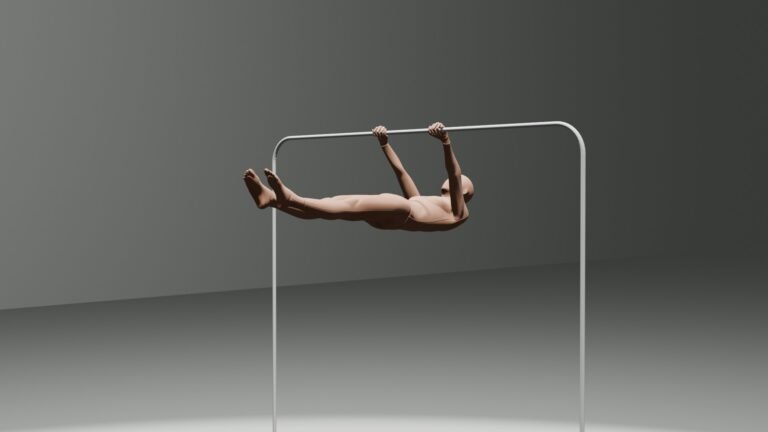

Pull-ups are one of the most effective bodyweight exercises for developing upper-body pulling strength. But which muscles actually do the work?
Most people know that pull-ups train the back, but the movement involves much more than just your lats. Your biceps, upper back, forearms, and core all contribute to lifting and controlling your body.
Quick answer: Pull-ups primarily work the latissimus dorsi (lats), biceps, brachialis, brachioradialis, and other upper-back muscles. Your forearms maintain your grip, while your core helps stabilize your body.
The exact muscles you feel most can vary depending on your grip, technique, strength, and experience.
In this guide, we’ll break down the muscles involved, compare different pull-up grips, and explain why you might feel pull-ups more in your arms than in your back.
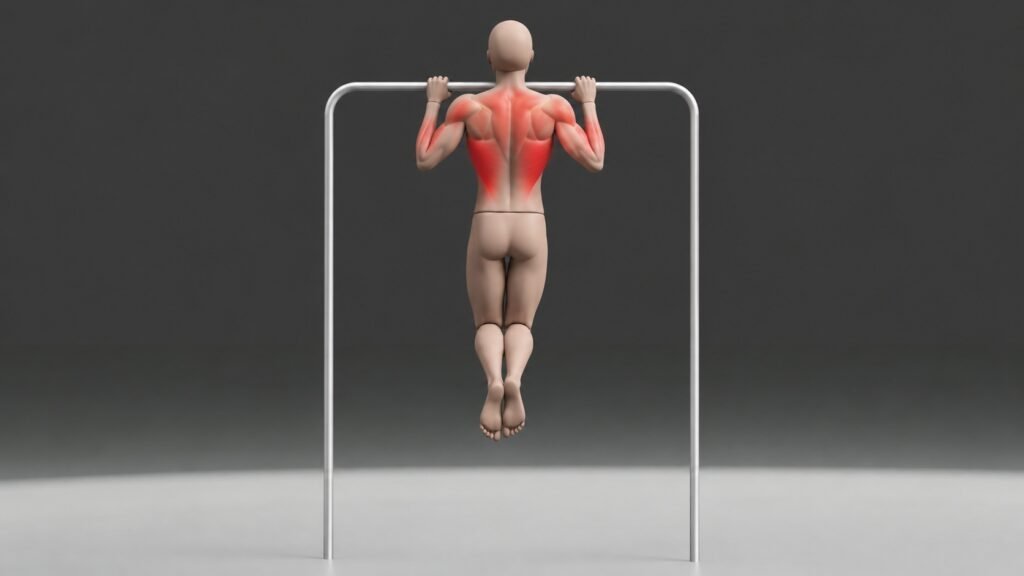
Main muscles involved in a pull-up, illustrated with red highlights. The colors indicate muscle involvement rather than precisely measured activation levels.
Table of Contents
What Are the Main Muscles Worked in Pull-Ups?
Pull-ups are a compound exercise, meaning several muscle groups work together during each repetition.
The main muscles involved are:
- Latissimus dorsi (lats): Major pulling muscles of the back.
- Biceps brachii: Help bend the elbows.
- Brachialis and brachioradialis: Assist elbow flexion during pulling.
- Rhomboids: Help control shoulder-blade movement.
- Trapezius: Supports shoulder-blade movement and upper-back control.
- Rear deltoids: Assist shoulder movement.
- Forearms and grip muscles: Maintain your hold on the bar.
- Core muscles: Help stabilize your body and prevent excessive swinging.
Some muscles are responsible for producing much of the movement, while others help stabilize your joints and body position.
Let’s look at each muscle group more closely.
1. Latissimus Dorsi (Lats)
The latissimus dorsi, commonly called the lats, are large muscles extending along the sides of your back.
They play an important role in pulling your upper arms downward and toward your torso.
During a pull-up, your lats help move your body upward toward the bar.
Because the lats contribute significantly to upper-body pulling movements, pull-ups can be an effective exercise for developing back strength and muscle.
Where Should You Feel Your Lats During Pull-Ups?
You may notice muscular effort around:
- The outer sides of your upper back.
- The area beneath your armpits.
- The sides of your torso.
However, not feeling your lats strongly doesn’t mean they aren’t working.
Some beginners notice much more fatigue in their arms or grip, even though the lats remain involved in the movement.
Focus on performing controlled repetitions rather than trying to force a particular muscular sensation.
2. Biceps Brachii
Your biceps help bend your elbows as you pull yourself upward.
Although pull-ups are commonly described as a back exercise, the elbow-flexing muscles contribute significantly to the movement.
This is one reason why your arms may become tired during challenging pull-up sets.
Your biceps work alongside other muscles rather than lifting your entire body independently.
Do Chin-Ups Work the Biceps More?
Chin-ups use an underhand grip, with your palms facing toward you.
This changes your arm and shoulder positions and can make the movement feel more biceps-focused for some people.
However, both pull-ups and chin-ups train the back and arms.
If your goal is general upper-body strength, both are useful exercises.
3. Brachialis and Brachioradialis
The brachialis and brachioradialis are additional muscles involved in bending your elbows.
Brachialis: Located underneath the biceps, this muscle contributes to elbow flexion regardless of whether your palms face forward or backward.
Brachioradialis: Located in the forearm, this muscle assists with bending the elbow and contributes to pulling movements.
These muscles work with the biceps throughout the pull-up.
They help explain why pull-ups can be demanding for your entire arm, not only your upper back.
4. Rhomboids and Upper-Back Muscles
The rhomboids are muscles located between your spine and shoulder blades.
They help control the position and movement of your shoulder blades during upper-body exercises.
Pull-ups involve coordinated movement of the shoulders and shoulder blades, so the rhomboids contribute to that process.
They are not the primary muscles responsible for lifting your body, but they are part of the overall pulling movement.
Developing upper-back strength can support your performance in pull-ups, rows, and other pulling exercises.
5. Trapezius
The trapezius is a large muscle extending across the upper back and neck.
Different portions of the trapezius perform different functions.
During pull-ups, the middle and lower portions contribute to shoulder-blade control and stability.
Your shoulder blades should be allowed to move naturally throughout the repetition rather than being held forcefully in one position.
The trapezius works together with other upper-back and shoulder muscles to coordinate this movement.
6. Rear Deltoids
The rear deltoids are located on the back of your shoulders.
They assist certain shoulder movements involved in pulling exercises.
Their contribution during a pull-up depends on the movement and shoulder position.
While pull-ups can involve the rear delts, they are not primarily a rear-shoulder isolation exercise.
If developing your rear delts is a major training goal, you may also benefit from rows or dedicated rear-delt exercises.
7. Forearms and Grip Muscles
Your grip starts working before you perform your first pull-up repetition.
The muscles of your hands and forearms must maintain a secure hold on the bar while the rest of your upper body performs the pulling movement.
For some beginners, grip endurance becomes a limiting factor.
You may notice that your hands or forearms become tired before your back muscles feel completely exhausted.
Pull-ups can help develop grip endurance through repeated practice.
If holding onto the bar is particularly difficult, try shorter hanging sets or feet-assisted hangs.
Read the Dead Hang Guide for more information about building hanging confidence and grip endurance.
8. Core Muscles
Pull-ups primarily train your upper-body pulling muscles, but your core is also involved.
Your abdominal muscles and other trunk stabilizers help control your body position.
Maintaining appropriate trunk tension can reduce unnecessary swinging and make the exercise easier to control.
However, pull-ups are not a complete replacement for dedicated abdominal exercises.
Think of core engagement as an important supporting part of the movement.
Pull-Up Muscles Worked: Summary Table
| Muscle group | Role during a pull-up |
|---|---|
| Latissimus dorsi | Helps pull the upper arms downward toward the body |
| Biceps brachii | Assists elbow flexion |
| Brachialis and brachioradialis | Help bend the elbows during pulling |
| Rhomboids | Contribute to shoulder-blade control |
| Trapezius | Supports shoulder-blade movement and stability |
| Rear deltoids | Assist shoulder movement |
| Forearms and hand muscles | Maintain grip on the bar |
| Abdominals and trunk muscles | Stabilize body position and limit swinging |
The main takeaway is that pull-ups are a back-focused compound exercise with substantial arm involvement.
The movement trains several muscle groups together rather than isolating one specific muscle.
Do Pull-Ups Work the Back or Arms More?
Pull-ups work both your back and arms.
The lats play a major role in moving your upper arms, while your biceps, brachialis, and brachioradialis help bend your elbows.
Both actions are necessary to lift your body toward the bar.
Which muscles feel more fatigued may depend on your individual strength, grip, technique, and training experience.
For example, someone with relatively weak grip endurance may feel their forearms becoming tired before their back.
Someone else may notice their biceps more.
Feeling one muscle more strongly doesn’t necessarily mean that muscle is doing most of the work.
Rather than worrying too much about which muscle you feel, focus on controlled repetitions, a suitable range of motion, and gradually improving your pulling strength.
How Does Pull-Up Grip Change the Muscles Worked?
Different pull-up grips change your hand, elbow, and shoulder positions.
This can influence the movement mechanics, available range of motion, and how comfortable the exercise feels.
However, changing your grip does not completely change which muscles are trained.
All standard pull-up variations involve the back, arms, and grip.
| Pull-up variation | Hand position | Main difference |
|---|---|---|
| Standard Pull-Up | Overhand, around shoulder-width | Balanced upper-body pulling |
| Wide-Grip Pull-Up | Overhand, wider than shoulders | Changes shoulder position and range of motion |
| Narrow-Grip Pull-Up | Overhand, hands closer together | Changes elbow and shoulder mechanics |
| Chin-Up | Underhand, palms toward you | Different elbow mechanics, often feels more arm-focused |
| Neutral-Grip Pull-Up | Palms facing each other | Alternative wrist, elbow, and shoulder positioning |
Standard Overhand Pull-Ups
The standard pull-up uses an overhand grip with your hands around shoulder-width apart or slightly wider.
This is a useful starting variation because it allows you to practice a consistent pulling movement.
It trains the lats, upper back, biceps, forearms, and supporting muscles.
Wide-Grip Pull-Ups
Wide-grip pull-ups use a hand position wider than your shoulders.
This changes the shoulder position and typically reduces the available range of motion compared with some narrower grips.
Some people feel wide-grip pull-ups more in their upper back, but that does not automatically mean they produce better muscle growth.
You don’t need an extremely wide grip to train your lats effectively.
Choose a width that allows comfortable, controlled repetitions.
Narrow-Grip Pull-Ups
Narrow-grip pull-ups place your hands closer together.
This changes the pulling mechanics and may feel more natural for certain people.
A narrow grip is not inherently better or worse than a standard grip.
Both can be useful when performed comfortably.
Chin-Ups
Chin-ups use an underhand grip, with your palms facing toward you.
Many people find this variation easier than overhand pull-ups, although that varies from person to person.
Chin-ups still work your lats and upper back, while the different arm position can make your biceps feel more involved.
Neutral-Grip Pull-Ups
Neutral-grip pull-ups use parallel handles with your palms facing each other.
Some people find this grip more comfortable for their wrists, elbows, or shoulders.
However, no single grip is guaranteed to be the safest for everyone.
The best starting grip is generally one you can use comfortably with good control.
For more detail, read Chin-Ups vs. Pull-Ups vs. Neutral Grip.
Do Pull-Ups Work the Lats Better Than Rows?
Pull-ups and rows both train the back, but they use different movement patterns.
Pull-ups are primarily vertical pulling exercises.
Rows are primarily horizontal pulling exercises.
Both involve the lats and several upper-back muscles, but their joint movements and muscle demands differ.
| Exercise | Movement pattern | Main training emphasis |
|---|---|---|
| Pull-Ups | Vertical pull | Lats, elbow flexors, upper-body pulling |
| Inverted Rows | Horizontal pull | Upper back, lats, elbow flexors |
| Chin-Ups | Vertical pull, underhand grip | Back and arm pulling |
| Lat Pulldowns | Vertical pull with adjustable resistance | Back and elbow flexors |
There isn’t a universal winner for building your back.
Including both vertical and horizontal pulling exercises can provide a more varied strength-training routine.
If you train without weights, inverted rows are a useful complement to pull-ups.
Do Pull-Ups Work Your Chest?
Pull-ups are not primarily a chest exercise.
Although some muscles around the chest and shoulders can contribute to certain portions of upper-body movements, pull-ups mainly train the back and elbow-flexing muscles.
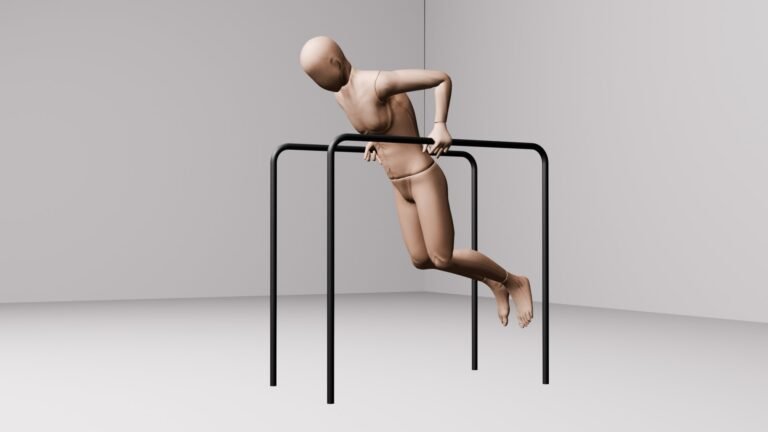
If your goal is to strengthen or build your chest, consider exercises such as push-ups and dips.
Combining pushing and pulling exercises can help you build a more balanced upper-body training routine.
Why Don’t I Feel Pull-Ups in My Back?
This is a common question, especially among beginners.
You might feel pull-ups primarily in your arms or forearms rather than your lats.
Several factors can contribute:
- You’re still learning the pull-up movement.
- Your grip fatigues before your back muscles.
- Your elbow-flexing muscles are a limiting factor.
- Your current technique makes the exercise difficult to control.
- You’re attempting repetitions that are too challenging for your current strength.
However, not feeling your lats strongly does not mean they aren’t being trained.
Your lats contribute to the movement even when you notice more effort in your arms.
How to Improve Your Pull-Up Technique
If your pull-ups feel difficult to control, try the following:
- Use an appropriate grip width. Start around shoulder-width and adjust for comfort.
- Avoid excessive swinging. Maintain enough trunk control to keep the movement steady.
- Think about bringing your elbows downward. This can be a useful pulling cue.
- Use a consistent range of motion. Pull until your chin clears the bar without excessively stretching your neck.
- Use assistance when needed. Resistance bands or an assisted pull-up machine can make quality repetitions more achievable.
Don’t force your shoulder blades into one fixed position throughout the exercise.
Allow them to move naturally as you pull yourself upward and lower under control.
For the complete technique breakdown, see How to Do Pull-Ups With Proper Form.
My Experience: Why Gym Back Training Didn’t Automatically Make Pull-Ups Easy
When I first started practicing pull-ups, I could barely lift myself.
That surprised me because I already had experience training my back with weights at the gym.
I had performed plenty of back exercises, but that strength didn’t immediately translate into being able to pull up my entire bodyweight.
Looking back, I think both technique and exercise-specific strength were important.
Pull-ups require coordination between your back, arms, shoulders, grip, and core, and the movement can feel quite different from exercises such as machine rows or lat pulldowns.
How I Built My Pull-Up Strength
I started with strong resistance bands that provided substantial assistance.
Initially, I could perform around 3 sets of 5 repetitions.
As my strength improved, I gradually increased that to 3 sets of 8 repetitions.
Then I moved to bands that provided less assistance and continued progressing.
Eventually, I achieved a couple of pull-ups without bands.
Once I reached that point, I started my workouts with unassisted pull-ups, performing as many clean repetitions as I could manage.
Afterward, I used resistance bands to complete additional sets.
What Helped Me Progress Most
One thing I noticed was that my progress seemed better when I focused on quality repetitions rather than simply increasing the number of repetitions.
Sometimes that meant completing fewer reps.
I concentrated on controlling my body, using a consistent range of motion, and avoiding unnecessary swinging.
Over approximately one year, I progressed from being unable to complete a pull-up to performing 3 sets of 8 regular pull-ups without assistance.
Today, I alternate between different grips and chin-ups depending on what I want to train.
I also practice explosive high pull-ups as part of my muscle-up training.
This is my personal experience, not proof that everyone needs to follow the same approach.
But it demonstrates something useful: being strong in gym back exercises doesn’t automatically mean you will be strong at pull-ups immediately.
Learning the movement and progressively developing strength in that specific exercise can make a big difference.
Are Pull-Ups Enough for Back Training?
Pull-ups can form an important part of a back-training routine, especially if you primarily train with bodyweight exercises.
They challenge the lats, arms, grip, and several supporting muscles.
However, whether they are enough depends on your goals.
For general upper-body strength, pull-ups may provide plenty of useful training.
For more comprehensive back development, you may also want to include horizontal pulling exercises such as rows.
A simple bodyweight pulling routine might include:
| Exercise | Sets | Reps |
|---|---|---|
| Pull-Ups or Assisted Pull-Ups | 3 | 5-8 |
| Inverted Rows | 3 | 8-12 |
| Chin-Ups or an Easier Pulling Variation | 2 | 5-8 |
Adjust the exercises to your current ability and avoid forcing repetitions after your technique breaks down.
You don’t need to perform every exercise in every session, particularly if you’re just starting.
Common Misconceptions About Pull-Up Muscles
1. Pull-Ups Only Work the Lats
The lats are important, but pull-ups also involve the biceps, other elbow flexors, upper back, forearms, and core.
2. Feeling Pull-Ups in Your Biceps Means You’re Doing Them Wrong
Not necessarily.
Your biceps naturally contribute to elbow flexion during pull-ups.
Feeling them work is normal and doesn’t automatically indicate poor technique.
3. Wide-Grip Pull-Ups Are Always Better for Back Growth
A wider grip changes the movement but isn’t automatically superior for developing your lats.
Comfortable technique and progressive training are more important than using the widest possible grip.
4. You Must Feel Your Lats Burning for Pull-Ups to Be Effective
Muscle sensation alone isn’t a reliable measure of training effectiveness.
Focus on controlled movement, suitable difficulty, and improvements over time.
5. Gym Back Exercises Guarantee Strong Pull-Ups
Gym back exercises can help develop the necessary muscles, but pull-ups also require movement-specific coordination and the strength to lift your bodyweight.
Frequently Asked Questions
Do Pull-Ups Work Biceps or Back More?
Pull-ups train both. They are generally considered a back-focused compound movement, with significant involvement from the biceps and other elbow-flexing muscles.
Do Pull-Ups Work Forearms?
Yes. Your forearms and hand muscles work throughout the exercise to maintain your grip on the bar.
Do Pull-Ups Work Abs?
Your abdominal muscles help stabilize your body and reduce swinging. However, pull-ups primarily train the upper-body pulling muscles rather than isolating the abs.
Do Pull-Ups Work Rear Delts?
The rear delts can contribute to shoulder movement during pull-ups, but they are not the main muscles targeted.
Are Chin-Ups Better for Biceps?
Chin-ups may allow greater or more comfortable biceps involvement for some people because of their underhand grip. Both chin-ups and pull-ups train the arms and back effectively.
Are Wide-Grip Pull-Ups Better for Lats?
Not automatically. A wide grip changes shoulder mechanics and range of motion, but there’s no reason to assume the widest grip will always produce the best lat development.
Why Do I Feel Pull-Ups Mostly in My Arms?
Your arms may be the first muscles to fatigue, especially if you’re new to pull-ups or your grip endurance is limited. Your back muscles are still involved even if you don’t feel them as strongly.
Can Pull-Ups Build a Bigger Back?
Yes. Pull-ups can contribute to back muscle growth when performed with sufficient effort, suitable training volume, and progressive overload.
Results also depend on your nutrition, recovery, and overall training program.
Should I Alternate Pull-Ups and Chin-Ups?
You can. Both exercises train similar muscle groups through slightly different mechanics.
Alternating variations can add variety and may help you find comfortable pulling positions, but it’s not mandatory.
Final Answer: What Muscles Do Pull-Ups Work?
Pull-ups primarily train the muscles responsible for lifting and controlling your upper body.
The most important muscles include:
- Lats, which help pull your upper arms downward.
- Biceps and other elbow flexors, which help bend your arms.
- Upper-back muscles, which coordinate and control shoulder-blade movement.
- Forearms and grip muscles, which keep you attached to the bar.
- Core muscles, which help stabilize your body.
Together, these muscles make pull-ups a highly effective compound exercise for developing upper-body strength.
Different grips can change the movement and how it feels, but the overall muscle groups remain largely similar.
If you’re currently struggling with pull-ups, don’t worry too much about feeling every individual back muscle.
Focus on controlled repetitions, appropriate assistance, and gradual improvement.
And if you want to learn the movement step by step, visit the complete How to Do Pull-Ups Guide.
Disclaimer: This article provides general fitness education and isn’t individualized medical or rehabilitation advice.