
With bodyweight squats, lunges are one of the best bodyweight exercises for building leg strength, improving balance, and developing muscle without any equipment. But many beginners either avoid them or do them incorrectly.
The good news is that lunges are simple once you understand the correct technique.
In this guide, you’ll learn how to do lunges step by step, how many reps to do, and the most common mistakes to avoid.
What Muscles Do Lunges Target?
Lunges are a lower-body exercise that trains multiple muscles at the same time.
They mainly work:
- Quadriceps (front of the thighs)
- Glutes (butt muscles)
- Hamstrings
- Calves
- Core (for balance and stability)
That’s why lunges are one of the best exercises for building strong legs at home.
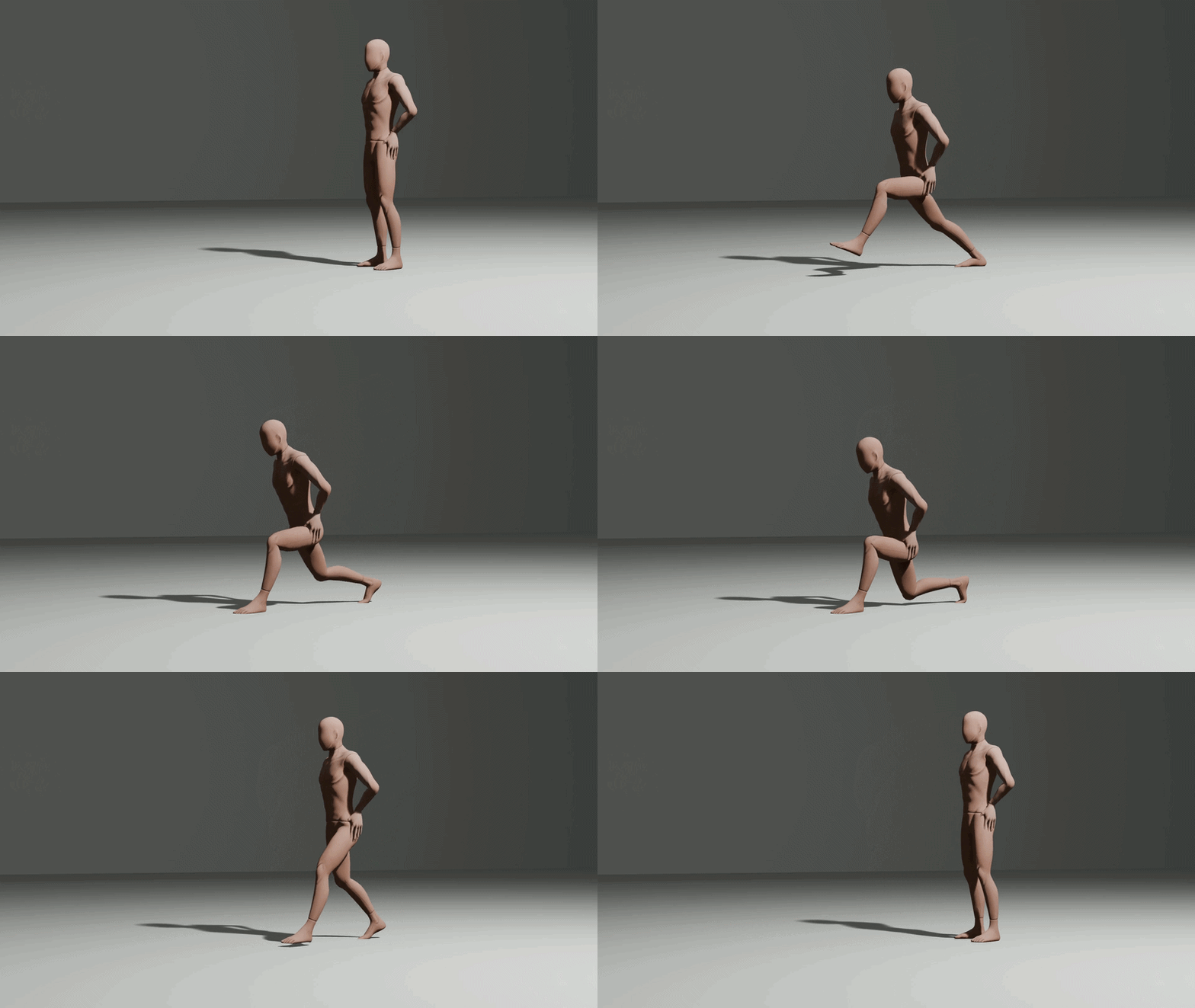
How To Do Lunges Step By Step
Follow these steps slowly the first time you try them:
Step 1: Stand straight with your feet about shoulder-width apart.
Step 2: Step forward with one leg.
Step 3: Lower your body until both knees are bent.
Step 4: Your front knee should stay above your foot (not too far forward).
Step 5: Push through your front leg and return to the starting position.
Step 6: Repeat with the other leg.
Focus more on control than speed. Slow, controlled lunges are much more effective than fast ones.
How Deep Lunges?
A good beginner goal is to lower yourself until:
- Your front thigh is almost parallel to the floor
- Your back knee is close to the ground
You don’t need to go extremely deep. Just go as low as you can while keeping good balance and control.
Restricted hip movement can place extra stress on the lower back, knees, and surrounding muscles during exercise. Improving flexibility in the hip flexors may help movement feel smoother and more comfortable. Read our article on how to loosen tight hip flexors for step-by-step guidance.
How Many Lunges Should Beginners Do?
If you’re just starting, keep it simple.
Try this:
- 3 sets of 8–10 reps per leg
- 60–90 seconds rest between sets
- 2–3 times per week
As you get stronger, you can slowly increase the reps.
Common Lunge Mistakes
Many beginners think lunges are hard because they make small mistakes that affect balance and strength.
The most common mistakes are:
- Taking steps that are too small
- Letting the front knee move too far forward
- Leaning too far forward
- Rushing the movement
- Losing balance too quickly
Fixing these mistakes makes lunges much easier and more effective.
Can You Do Lunges At Home?
Yes — lunges are perfect for home workouts because you don’t need any equipment.
You only need:
- A small amount of space
- Comfortable shoes (optional)
- A stable surface
You can also add lunges to:
- Home workout plans
- Beginner calisthenics routines
- Leg workout days
When Will You See Results?
If you do lunges regularly, most beginners start feeling stronger legs within 2–3 weeks.
After a few weeks, you may notice:
- Better balance
- Stronger legs
- Easier squats
- More endurance during workouts
Consistency matters more than doing a huge number of reps.
Improve Your Results With Proper Training
If you’re doing lunges as part of your training, make sure you’re also focusing on proper form, progression, and consistency.
Most beginners struggle not because the exercise is bad, but because they’re missing the basics. If you are just starting out and looking to learn the basics of bodyweight training without equipment, this Beginner No Equipment Bodyweight Training Guide will get your started easily and you will make your workouts so much better and see result in no time!
Once you have the basics down, you can try this very simple Beginner Bodyweight Workout Plan to stay on track until you want to move onto some more advanced exercises.
If you are struggling with bad form, injuries or lack of motivation, you can also check these: