
Crunches are the ultimate foundational core exercise for building abdominal strength and muscle definition. Unlike complex calisthenics skills, they require zero equipment, can be done anywhere, and deliver immediate isolation for your front core muscles.
However, despite their simplicity, over 80% of beginners perform crunches incorrectly—relying on neck straining, lumbar arching, and momentum rather than true abdominal compression.
This ultimate step-by-step guide covers proper crunch form, muscle anatomy, common injury traps, and a realistic 4-Week Core Strength Block to help you build a solid midsection safely.
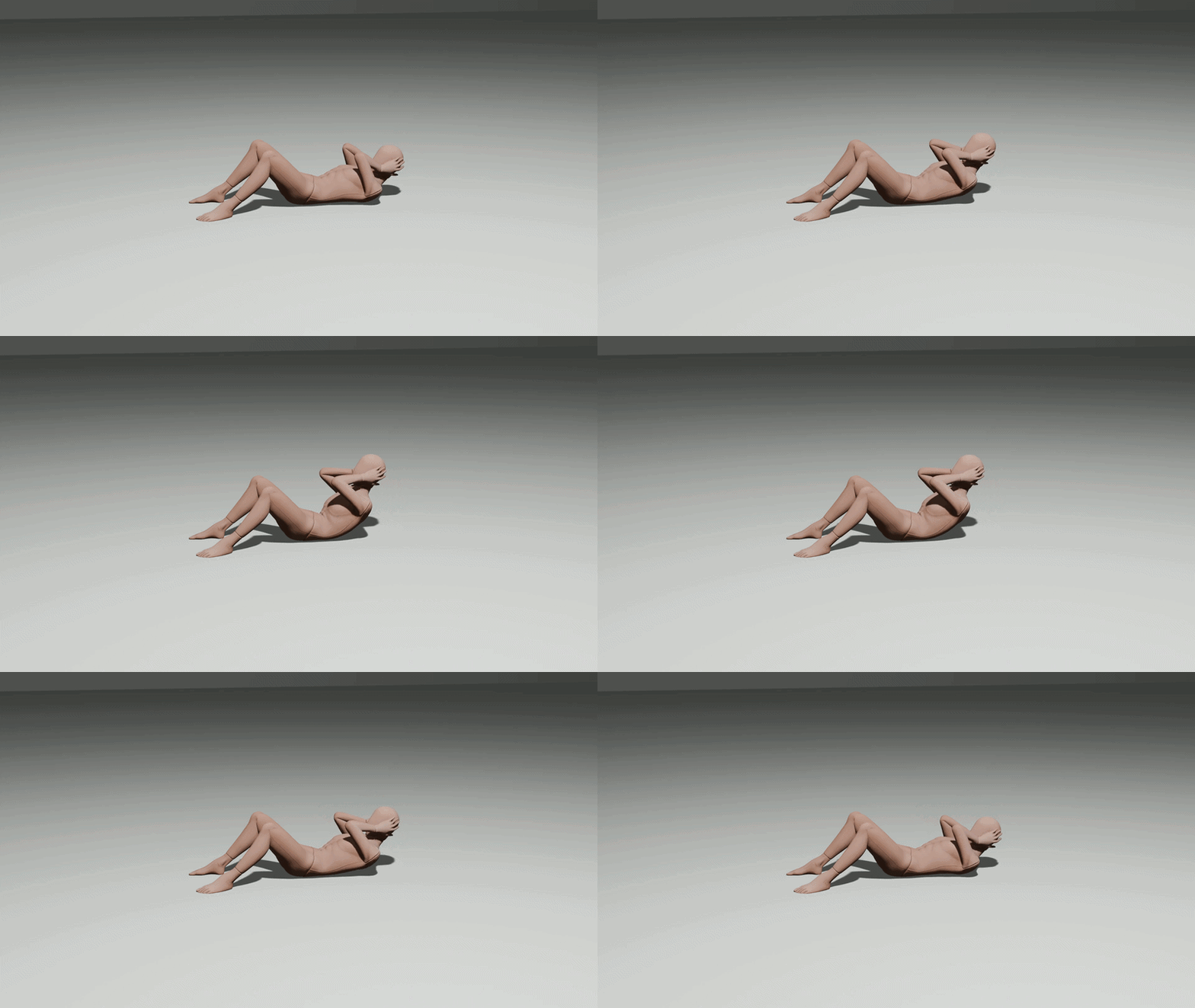
What Are Crunches? (Crunch vs. Sit-Up Defined)
A crunch is a bodyweight abdominal exercise where you flex your spine to lift your upper back and shoulder blades a few inches off the floor while keeping your lower back firmly pressed into the ground.
Because crunches utilize a short, controlled range of motion, they isolate the abdominal wall far better than traditional sit-ups without overtaxing your hip flexors or lower back.
To learn how to do sit-ups with correct form read our beginner guide on sit-ups.
Crunches vs. Sit-Ups: Quick Comparison
| Feature | Abdominal Crunch | Traditional Sit-Up |
| Primary Muscle Target | Upper Abs (Rectus Abdominis) | Hip Flexors & Abs |
| Lower Back Position | Pressed Flat into the Floor | Lifts Completely off the Floor |
| Range of Motion | Short & Controlled (3–5 inches) | Full Range (Floor to Knees) |
| Spinal Strain | Very Low | High (Potential Lumbar Shear) |
| Best For | Direct Ab Isolation & Beginners | General Trunk Flexion & Hip Strength |
Muscle Anatomy: What Muscles Do Crunches Work?
Understanding which muscles fire during a crunch helps build a stronger mind-muscle connection, ensuring your abs do the work rather than your neck or hips.
Lower Rectus
Side Stabilizers
- Primary Mover (Rectus Abdominis): Your “six-pack” muscle running vertically down your torso. Crunches flex the spine forward, bringing your ribcage toward your pelvis to heavily contract the upper portion of the rectus abdominis.
- Secondary Stabilizers (Obliques): The muscles running along the sides of your waist. They contract statically to keep your torso balanced during the movement.
- Deep Core Stabilizers (Transverse Abdominis): Your body’s internal weight belt. Engaging this deep muscle layer keeps your stomach flat and prevents your spine from arching.
How to Do Crunches Correctly: Step-by-Step Form
To maximize muscle activation and protect your cervical spine, follow this 4-step execution guide:
Step 1: The Setup
- Lie flat on your back on an exercise mat.
- Bend your knees at a 90-degree angle with your feet flat on the floor, hip-width apart.
- Place your hands lightly behind your head (touching your fingertips to your ears) or cross your arms over your chest.
💡 Form Tip: Press your lower back completely flat against the floor before you begin. You should not be able to slide a hand under your lower spine.
Step 2: The Abdominal Engagement
Take a deep breath in. As you exhale, pull your belly button toward your spine to engage your deep core. Imagine bringing your bottom ribs down toward your hip bones.
Step 3: The Controlled Crunch (Ascent)
- Curl your upper back and shoulder blades off the floor (roughly 3 to 5 inches).
- Keep your chin tucked slightly as if holding an apple between your chin and chest.
- Pause for 1 full second at the top position and hard-squeeze your abs.
Step 4: The Eccentric Lowering (Descent)
Inhale as you slowly lower your shoulder blades back to the mat over a 2-second count. Maintain slight tension in your abs—do not relax completely at the bottom between reps.
4 Common Crunch Mistakes (And How to Fix Them)
Avoid these frequent technique errors to ensure maximum results and prevent injuries:
1. Pulling on Your Neck
- The Mistake: Yanking your head forward with your hands, placing extreme strain on your cervical spine.
- The Fix: Lightly touch your fingertips to the side of your head or cross your arms over your chest. Focus on lifting your chest toward the ceiling, not bringing your chin to your knees.
2. Lifting Too High
- The Mistake: Raising your lower back off the floor to turn the crunch into a sit-up.
- The Fix: Keep the movement small. Once your shoulder blades leave the floor, you have reached full abdominal contraction.
3. Using Momentum & Speed
- The Mistake: Bouncing up and down rapidly without controlling the muscle contraction.
- The Fix: Follow a strict tempo: 2 seconds up, 1-second pause at the top, 2 seconds down.
4. Holding Your Breath
- The Mistake: Blocking your airway (Valsalva maneuver), which increases blood pressure and restricts core compression.
- The Fix: Exhale forcefully on the way up as you squeeze your abs, and inhale as you lower down.
The 4-Week Beginner Crunch Progression Block
To build core endurance and muscle tone without overtraining, follow this 4-Week Repeatable Block System. Once you can complete Week 4 with strict tempo and perfect form, transition to advanced variations or increase your rep counts.
Prerequisite Check: Make sure you can hold a 30-second hollow body plank or standard floor plank before adding volume.
Resting is Key: Rest 60 to 90 seconds between sets to allow your abs to recover for maximum quality reps.
| Week | Training Focus | Workout 1 | Workout 2 | Workout 3 |
| 1 | Form & Muscle Control | 3 sets of 10–12 reps | 3 sets of 12 reps | 3 sets of 12 reps |
| 2 | Volume Accumulation | 3 sets of 15 reps | 4 sets of 12 reps | 4 sets of 15 reps |
| 3 | Isometric Squeezes | 4 sets of 12 reps (2-sec hold at top) | 3 sets of 15 reps | 4 sets of 15 reps (2-sec hold at top) |
| 4 | Mastery & Deload | 3 sets of 20 reps | 3 sets of 10 reps (Light tempo) | Test Day: Test your maximum strict, tempo-controlled reps in a single set! |
3 Best Crunch Variations for Progression
Once standard crunches become easy (able to complete 20+ reps with strict form), introduce these targeted variations:
1. Reverse Crunches (Targeting Lower Abs)
- How to Do It: Lie on your back, lift your knees to a 90-degree angle, and use your lower abs to curl your hips off the floor toward your chest.
- Best For: Balancing upper ab development with lower abdominal strength.
2. Bicycle Crunches (Targeting Obliques)
- How to Do It: Alternate bringing your right elbow to your left knee while extending your right leg straight out, then switch sides in a pedaling motion.
- Best For: Rotational core strength and side-ab definition.
3. Declined / Weighted Crunches
- How to Do It: Perform crunches on a decline bench or hold a light weight plate across your chest.
- Best For: Intermediate to advanced lifters looking to add progressive overload.
Frequently Asked Questions (FAQ)
Do crunches burn belly fat?
No exercise can spot-reduce fat from a specific area of your body. Crunches strengthen and build the abdominal muscles underneath, but losing belly fat requires a consistent caloric deficit through proper nutrition and overall activity.
How often should I do crunches?
Because the abs are a smaller muscle group that recovers quickly, training them 2 to 4 times per week is ideal. Avoid doing core workouts every single day—your abs need rest to grow and repair just like any other muscle.
Are crunches bad for your spine or lower back?
When performed correctly (keeping your lower back pressed flat into the floor and avoiding neck pulling), crunches are very safe. However, if you have existing herniated discs or lower back pain, isometric core exercises like planks or hollow body holds may be a safer alternative.
Next Steps to Build a Complete Core Routine
Crunches are a phenomenal exercise for direct upper ab isolation, but a balanced core routine requires vertical pulling, pushing, and isometric stability.
To take your bodyweight training to the next level:
- Pair your flexed core training with isometric stability using our Beginner Hollow Body Core Guide.
- Balance your abdominal flexors with anti-extension work like L-Sit Progressions or Dragon Flags.
- Ensure your entire body stays balanced by checking out our Beginner Calisthenics Routine.