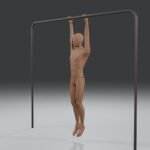
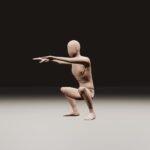
If you spend most of your day sitting at a desk, driving, or relaxing on the couch, your body is likely holding onto more tension than you realize.
If you frequently experience:
Constant stiffness when standing up straight
Dull, annoying discomfort in your lower back
Pinching or tightness in the front of your hips during deep squats
Poor posture or an overly arched lower back
There is a very high chance your hip flexors are chronically tight. Most people suffer through this without ever realizing the root cause. Here is exactly why tight hips ruin your movement patterns and how to loosen tight hip flexors safely using a proven hip flexor stretch routine and targeted recovery tools.
What Are Hip Flexors and What Causes Them to Tighten?
Your hip flexors are a powerful group of deep muscles that connect your lower spine to your upper legs. Think of them as the “hinges” of your lower body. Their primary job is to lift your knees up toward your chest and keep your core stable whenever you walk, run, or jump.
When you sit for hours at a desk or in a car, these muscles are stuck in a shortened, bunched-up position. Over time, they adapt to this shape and physically stiffen.
When your hip flexors tighten up, it triggers a nasty domino effect throughout your whole body:
Your posture suffers: The tight muscles pull your pelvis forward, forcing your belly out and causing your lower back to arch excessively (a habit known as “duck posture” or a forward pelvic tilt).
Your glutes “turn off”: Because your hip muscles are stuck in overdrive, your brain temporarily forgets how to activate your butt muscles. They become weak, sleepy, and inactive.
Your lower back takes the hit: With your butt muscles asleep and your pelvis pulled out of alignment, your lower back is forced to do all the heavy lifting, leading to that brutal, dull ache after a long day.
This structural tightness is one of the main reasons deep compression movements like the L-sit feel impossibly heavy, and it can severely ruin your depth when trying to execute proper squats.
Warning Signs Your Hip Flexors Are Locked Up
You don’t need an MRI to tell you if your hips are locked up. Watch out for these common warning signs during your daily life and training sessions:
A deep, tight pull in the front of your thighs when performing lunges.
Your lower back arching wildly or taking over the lifting load during bodyweight training.
A feeling of stiffness or “catching” in the hip socket when walking or running.
The 30-Second Test: Are Your Hips Actually Tight?
Before you start stretching, you can objectively test your mobility at home using a classic physical therapy assessment called The Thomas Test.
Sit right on the very edge of a sturdy table or the end of your bed.
Pull both knees up toward your chest, and slowly roll backward onto your back so your spine is flat.
Keep holding your left knee tightly against your chest, and let your right leg completely relax, lowering it down toward the floor.
How to read your results:
Normal Mobility: Your right thigh lowers all the way down until it is completely parallel with the table/bed, and your knee hangs at a 90-degree angle.
Tight Hip Flexors: Your right thigh remains lifted in the air, angled up toward the ceiling. Your hips are physically too tight to let the leg drop flat!
4 Best Stretches for Hip Flexor Relief
To permanently fix tight hips, you need a systematic approach. Below is our complete, step-by-step blueprint featuring the four best hip-opening movements, complete with tips to avoid injury and a quick 5-minute daily cheat sheet.
Incorporate these foundational movements into your daily routine. Focus on slow, controlled breathing and active muscle engagement.
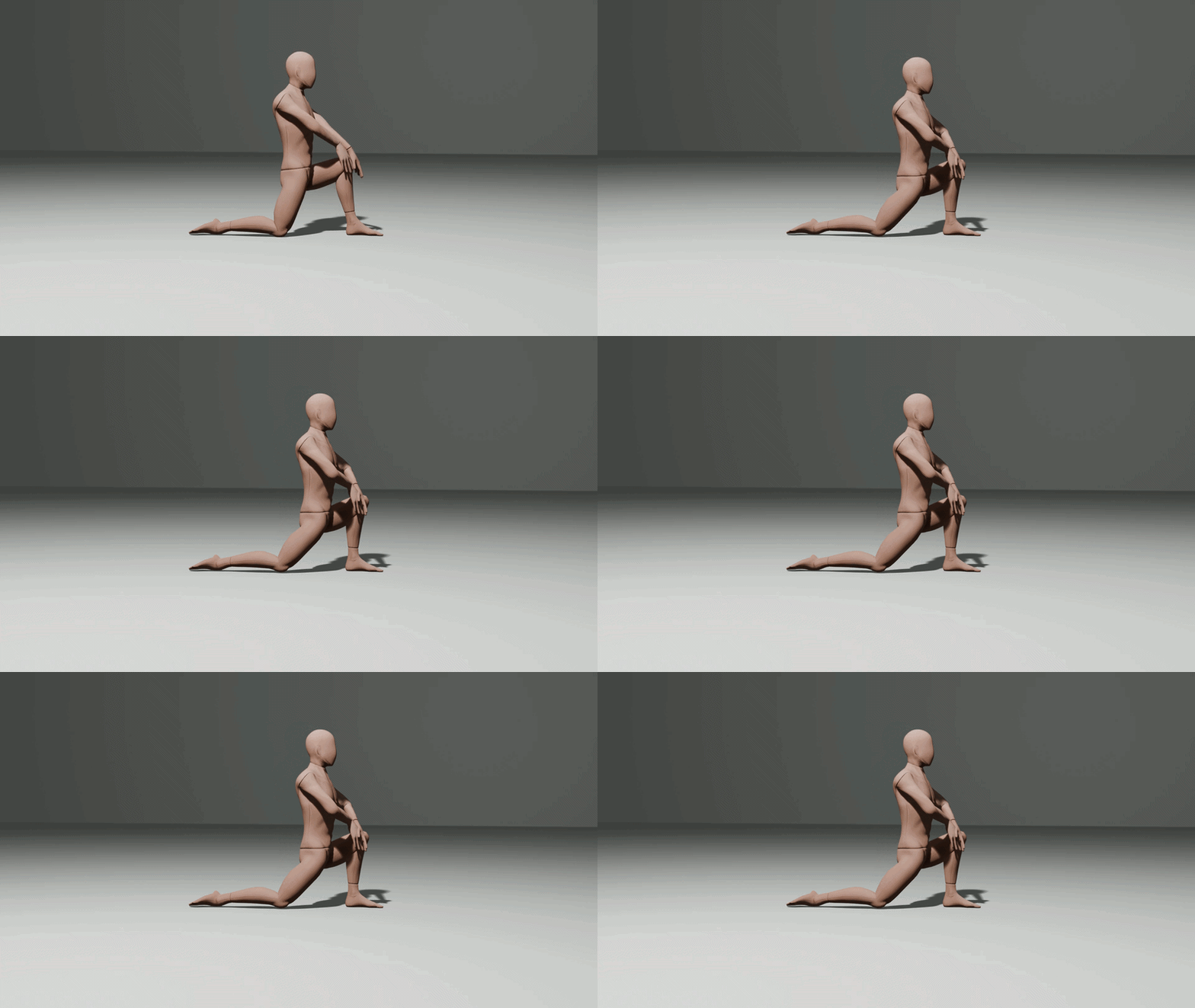
1. The Half-Kneeling Hip Flexor Stretch
How to do it: Start in a half-kneeling position with one knee down on a mat and your opposite foot flat on the floor in front of you. Squeeze your glutes and tuck your pelvis slightly underneath you (a posterior pelvic tilt). Gently drive your hips forward an inch or two without letting your lower back arch.
Extra tip: Keep your torso completely upright. For a deeper, more complete stretch along the entire lateral chain, raise the arm on your trailing-knee side straight up toward the ceiling.
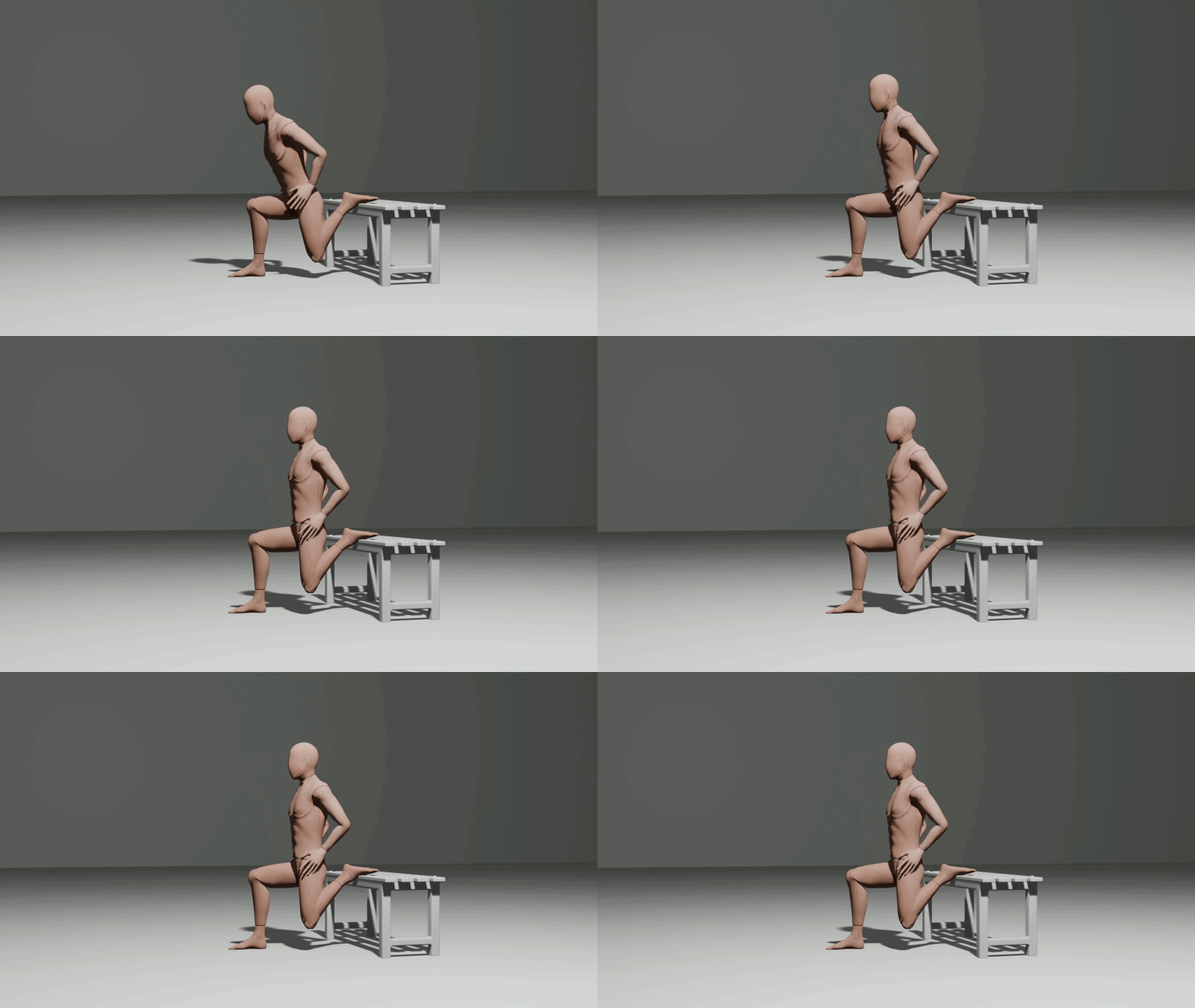
2. The Couch Stretch (Advanced Quad & Hip Opener)
How to do it: Place your back knee on a cushion directly against a wall or the front of a couch, with your shin running vertically up the surface. Place your front leg forward into a sturdy lunge position. Drive your torso upright and squeeze your glutes intensely.
Extra Tip: This stretch is incredibly intense and can feel brutal at first. Ease into it slowly. The couch stretch is the ultimate tool if you struggle to maintain an upright chest during squats.
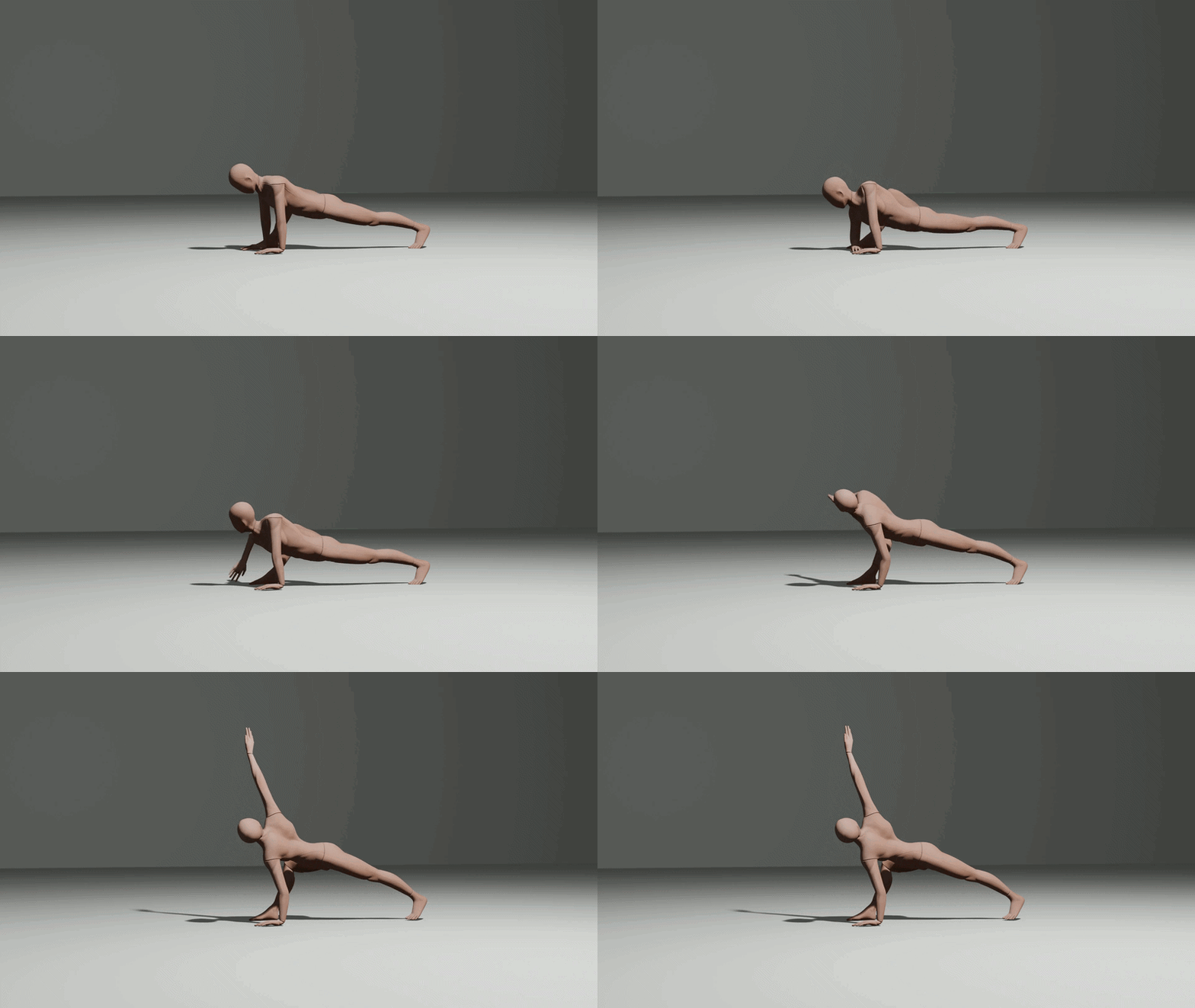
3. The Spiderman Lunge Also Known As The World’s Greatest Stretch
How to do it: Step forward into a deep, long lunge and place both hands flat on the floor on the inside of your front foot. Keeping your back leg fully extended and active, lift your inside hand off the floor and rotate your chest up toward the ceiling, reaching your fingers toward the sky.
Extra Tip: Exhale fully as you rotate. This movement is incredible for unlocking total hip mobility while simultaneously freeing up a stiff mid-back.
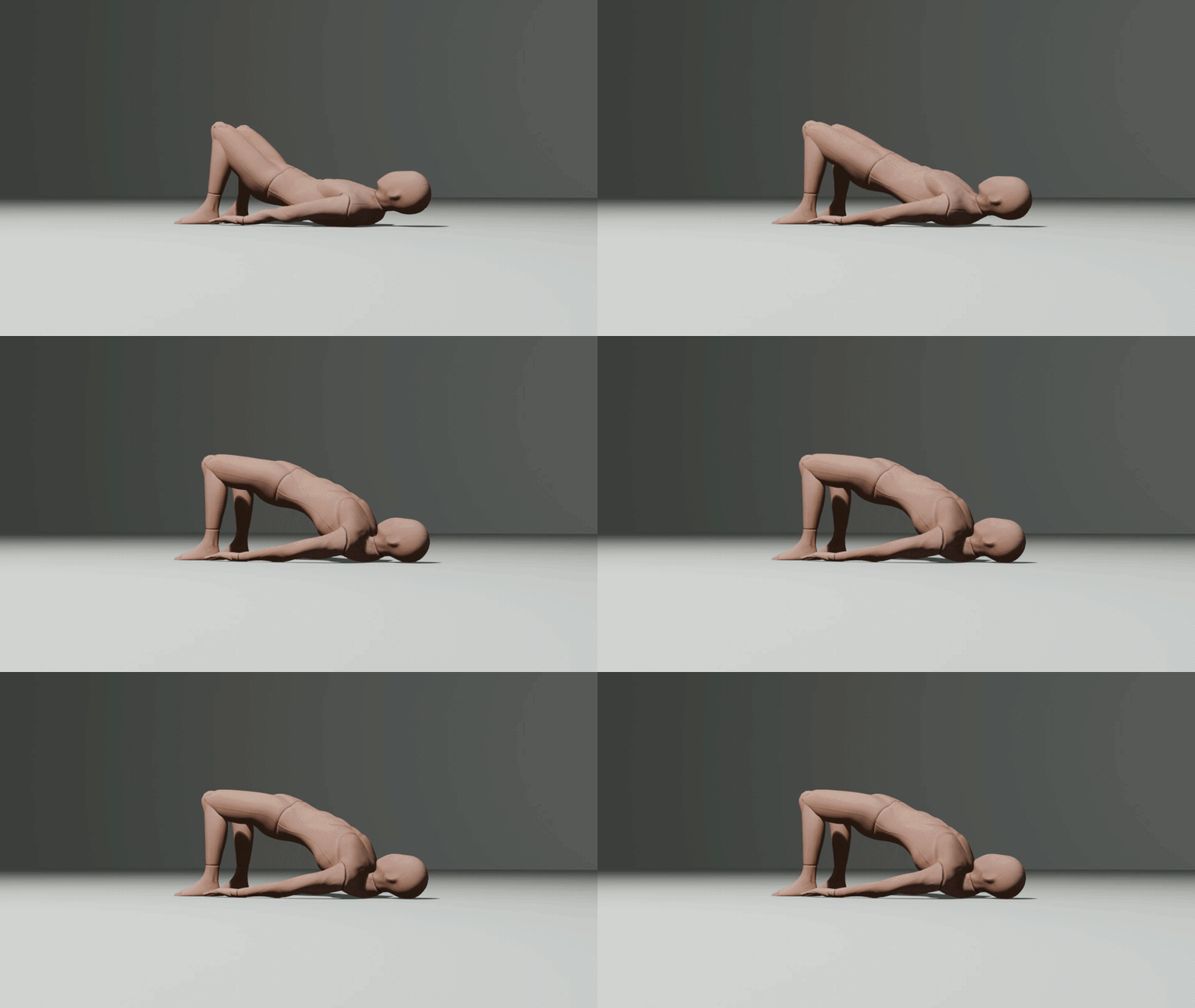
4. The Glute Bridge (Active Hip Extension)
How to do it: Lie flat on your back with your knees bent and feet flat on the floor, about hip-width apart. Driving through your heels, push your hips up toward the ceiling while aggressively squeezing your glutes at the top. Keep your ribcage down to avoid hyperextending your spine.
Extra Tip: To truly release a tight muscle, you must strengthen the muscle on the opposite side. The glute bridge wakes up your backside, forcing the front of your hips to open up and relax naturally.
Your Daily 5-Minute Hip Flexor Stretch Routine
Consistency will always beat intensity when dealing with stubborn muscle tightness. Instead of stretching once a week until it hurts, perform this quick routine once per day:
Exercise
Duration / Reps
Focus
Half-Kneeling Stretch
45 seconds per side
Posterior pelvic tilt, light tension
Couch Stretch
45 seconds per side
Deep breathing, active glute squeeze
Spiderman Lunge + Rotation
6 reps per side
Fluid, continuous movement
Glute Bridges
3 sets of 12 steady reps
Solid mind-muscle connection in glutes
Why Stretching Alone Isn’t Fixing Your Hips
Many people get trapped in a frustrating loop: they stretch their hips, feel loose for an hour, sit back down at their desks, and wake up the next morning feeling completely locked up again.
Stretching only addresses the temporary length of the muscle tissue. To fix the problem permanently, you must combine daily mobility work with a structured training program. Balanced bodyweight training naturally strengthens your core, wakes up your glutes, and moves your joints through their full, natural ranges of motion.
Tight Hip Flexors Quick Fix: Deep Tissue Psoas Release
If you want an effective, localized “quick fix” to supplement your active stretching, targeting the deep tissue directly is a game-changer.
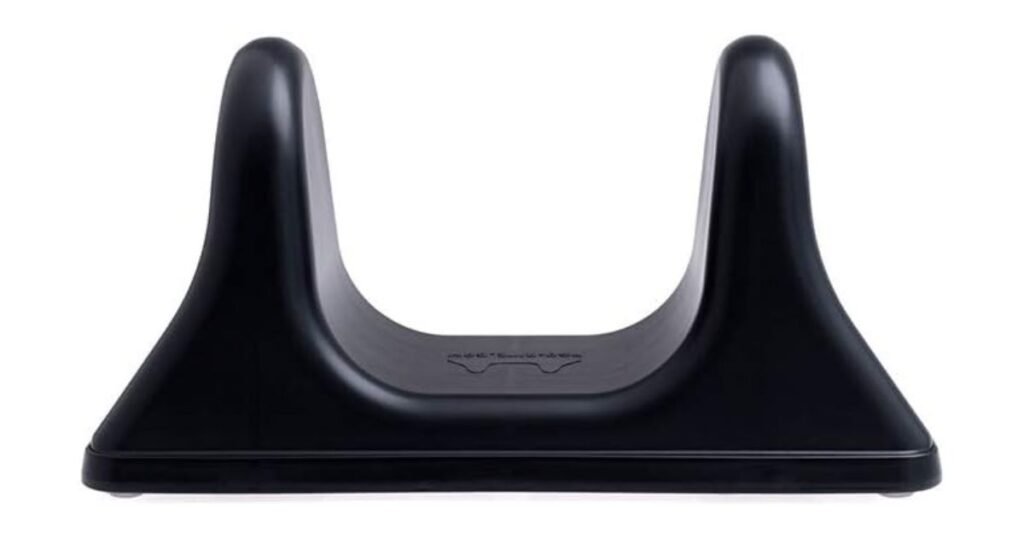
Because the main hip flexor muscle sits deep behind your abdominal wall, standard foam rollers and lacrosse balls can’t quite reach it. That is where a specialized psoas muscle release tool, or a deep tissue hip massagers comes into play. It mimics the exact shape of a physical therapist’s fingers or elbow, allowing you to break up stubborn knots safely.
Tired of Stiff Hips? Melt Tension in Under 2 Minutes
If you’re struggling to dig into those hard-to-reach core tissues, a targeted release device is the ultimate shortcut to instant relief.
Precision Trigger Point Pressure: Sculpted to mimic a physical therapist’s fingers or elbow to safely target the deep psoas.
Versatile Deep Tissue Relief: Works wonders for breaking up stubborn knots in the glutes, lower back, and hamstrings.
Built to Last: Premium, body-safe materials that won’t give out under full body weight. Compact enough to toss in a gym bag.
Gently lay face down over the device, placing the trigger points just inside your hip bones. Take deep, slow breaths, allowing your body weight to sink over the nodes to melt away deep-seated muscular tension.
Why Your Hip Flexors Stay Tight (The Weakness Trap)
If you have been stretching your hips daily but find they lock right back up an hour later, you are likely falling into a common fitness trap: your hips aren’t actually tight—they are weak.
When a muscle group is chronically weak and underworked, your brain forces it into a state of constant, protective tension to keep your pelvis stable. If you keep aggressively stretching a weak muscle, your body will just lock it down tighter to defend itself.
To break the cycle, you must pair your daily stretching with targeted strengthening exercises. Try adding Standing Banded Knee Raises or Seated Leg Lifts to your routine. By building strength in that shortened range of motion, your nervous system will finally feel safe enough to let the muscles fully relax.
Is It a Tight Muscle or Hip Impingement? How to Tell
There is a big difference between a muscle that needs to be stretched and a joint that is physically pinching.
If you feel a deep, bony “pinch” or block in the front of your hip socket—especially at the very bottom of a deep squat or when pulling your knee aggressively up toward your chest—you might be dealing with Femoroacetabular Impingement (FAI) rather than simple muscle stiffness.
Muscular Tightness: Feels like a dull, pulling stretch across the front of the thigh that improves as you warm up and move.
Hip Impingement: Feels like a sharp, localized pinch inside the joint itself. If it’s impingement, forcing yourself into deep stretches like the Couch Stretch can actually worsen the irritation. If a pinch persists despite stretching, skip the aggressive lunges and consult a physical therapist.
How Long Does It Take to Loosen Tight Hip Flexors?
Because your hip flexors likely spent months or years adapting to a seated position, they won’t permanently open up overnight.
Immediate Relief: You will feel a noticeable decrease in tension and a reduction in lower back aches immediately following your first 5-minute routine.
Lasting Mobility: It typically takes 2 to 4 weeks of consistent, daily stretching and movement to start fundamentally changing the resting length of the tissue and improving your natural standing posture.
The secret is frequency. Your hips will respond much faster to a quick, 5-minute daily routine than a grueling 45-minute stretching session once a week.
Is Your Sleeping Position Making Your Hips Tighter?
You can do all the stretching you want during the day, but if you spend eight hours at night locked in a poor sleeping position, you will wake up right back at square one.
The Fetal Position Danger: Sleeping curled up tightly on your side keeps your hips bent at a sharp 90-degree angle all night. This mimics the exact shape of sitting in an office chair, keeping the muscles shortened and bunched up for hours.
The Side-Sleeper Fix: If you must sleep on your side, place a thick pillow between your knees. This keeps your pelvis stacked symmetrically and stops your top leg from twisting forward and straining the hip joint.
The Back-Sleeper Trick: Sleeping flat on your back is ideal for open hips, but if your hip flexors are already tight, they will pull your lower back off the mattress into a painful arch. Place a small pillow underneath your knees to take the mechanical stress off your spine while you rest.
Frequently Asked Questions About Tight Hips
Can tight hip flexors cause knee pain?
Yes. When your hip flexors tighten and pull your pelvis out of alignment, it changes the way your thigh bone tracks. This forces your quadriceps muscles to overwork, causing uneven pulling and localized pain right around the kneecap.
Does walking help loosen tight hip flexors?
A brisk walk helps bring blood flow and movement to the area, but generic walking isn’t enough to permanently lengthen chronically stiff tissues. Use walking as a dynamic warm-up before you dive into targeted stretches like the Couch Stretch.
Should I roll my hip flexors with a foam roller?
Standard foam rollers are too wide and flat to bypass your hip bone and abdominal wall. While rolling your front thighs (quads) feels great and provides indirect relief, you need a targeted device or a physical therapist’s elbow to accurately compress the deep psoas muscle.
My Final Take: Move More, Sit Less
Most fitness enthusiasts completely underestimate how much locked hips hold back their overall strength, vertical power output, and athletic posture. When your hips are glued shut, your body restricts your movement to protect your spine. Taking just five to ten minutes a day to actively open up your lower body will make an immediate, noticeable difference in how you walk, lift, and feel.
Remember, releasing the tension with a deep tissue massage tool or a quick stretch is only the first step. To make sure your hip flexors stop tightening up altogether, you have to retrain your body to move through its full range of motion. The best way to do that is with structured, balanced bodyweight movements that simultaneously wake up your sleepy glutes and force your hips to expand.
Don’t let desk stiffness sabotage your fitness gains. Use a massage tool to break up those chronic, stubborn knots today, and then anchor that newfound mobility with simple bodyweight workouts at home by following our Train At Home Without A Gym -guide.
Building functional, bulletproof core strength at home is the ultimate secret to keeping your hips loose, your posture upright, and your lower back completely pain-free for the long haul!
Murphy
I'm Murphy, the creator of TrainToStaySane.
I've been training for several years, starting with weightlifting before becoming increasingly interested in bodyweight training and calisthenics.
I create practical exercise guides and original Blender animations to help people understand exercise technique, build strength, and progress toward new skills.
My own training has included working from assisted pull-ups toward my first muscle-up, and I enjoy sharing what I've learned along the way.
My goal is to make calisthenics accessible, understandable, and enjoyable for beginners and more experienced athletes alike.