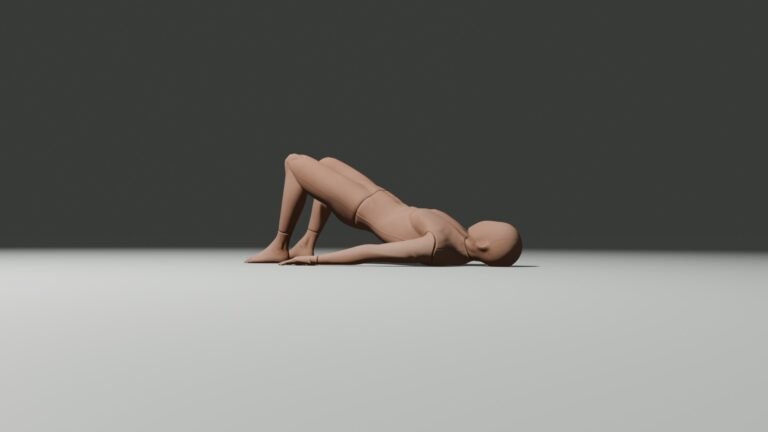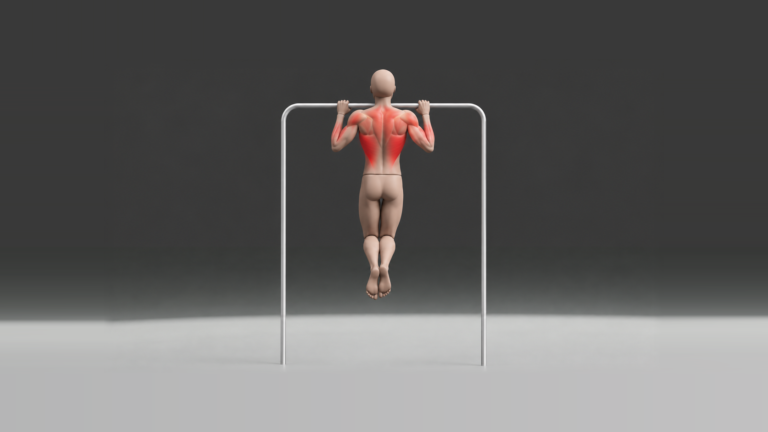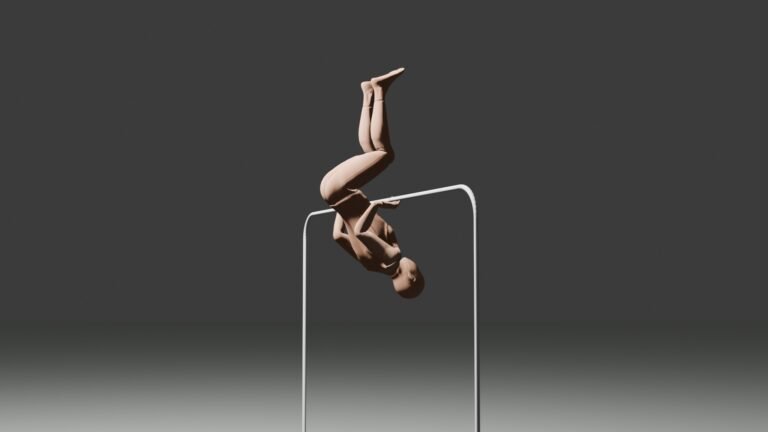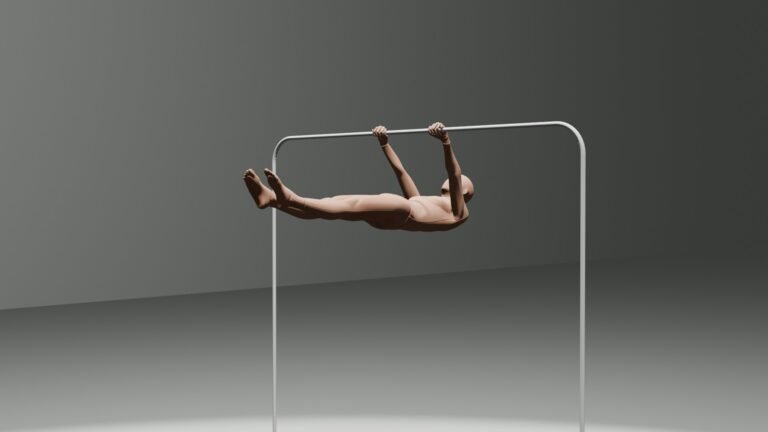

The German Hang and Skin the Cat are closely related calisthenics exercises, but they’re not exactly the same thing.
The German Hang is a position. Skin the Cat is the movement that takes you into and out of it.
Both involve supporting your bodyweight while your shoulders move into extension, with your arms positioned behind your torso. This can make them useful for developing shoulder control and preparing for skills such as the back lever.
The difficult part isn’t necessarily getting upside down. It’s controlling how far you lower, supporting your shoulders in an unfamiliar position, and knowing how to get back out.
If you’re just starting, don’t rush into a full rotation. Learn the German Hang with some of your weight supported first.
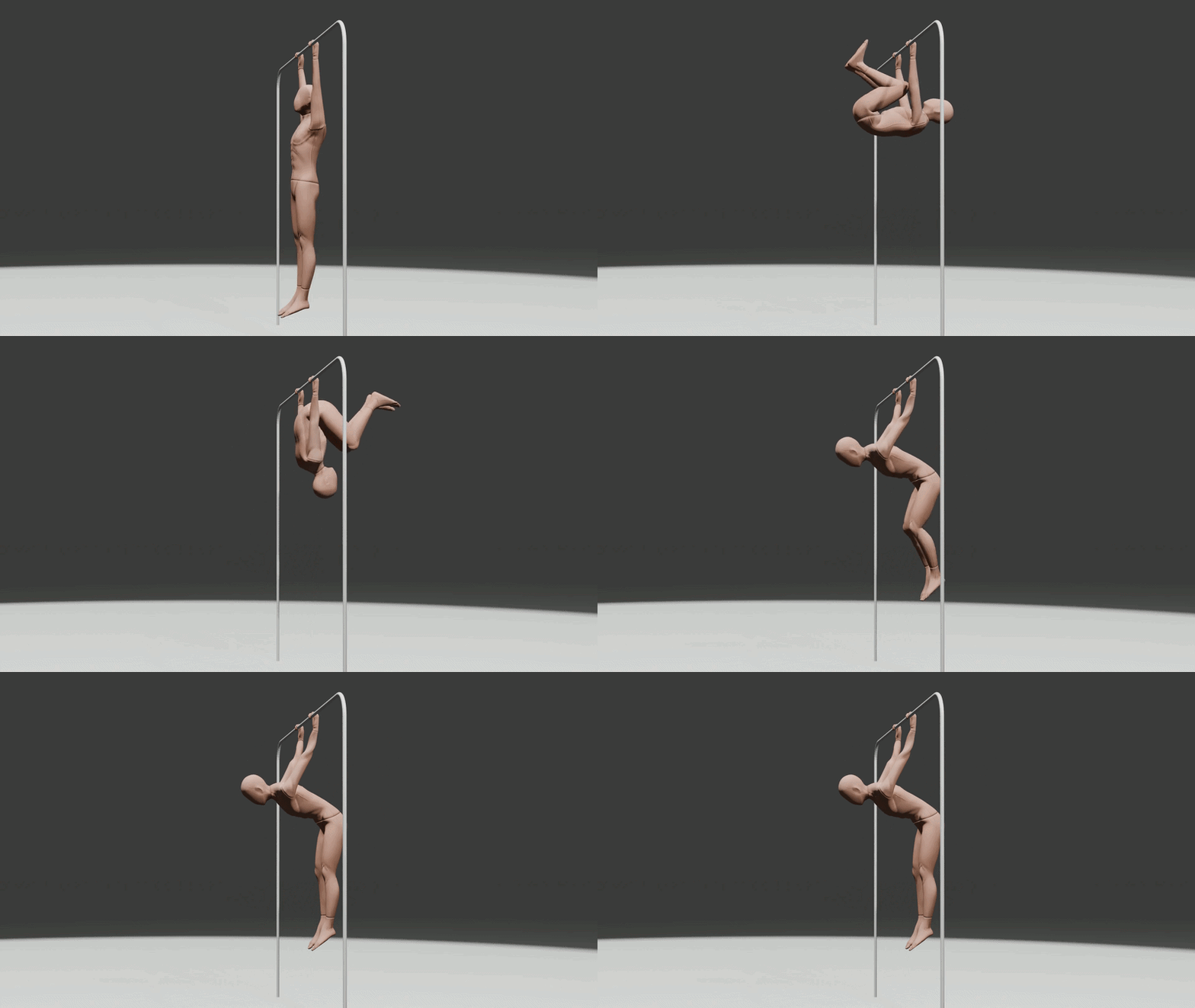
What’s the Difference Between German Hang and Skin the Cat?
| German Hang | Skin the Cat | |
|---|---|---|
| Exercise type | Static hold | Controlled rotational movement |
| Main challenge | Supporting and controlling shoulder extension | Moving into and out of the extended position |
| Typical movement | Hold with arms behind the torso | Hang → inverted hang → German Hang → return |
| Easier version | Feet-supported German Hang | Partial tucked rotation |
| Main training purpose | Loaded shoulder mobility and positional control | Shoulder control, core compression, and rotational strength |
The easiest way to remember the difference is that a German Hang can be performed without completing a Skin the Cat, but a full Skin the Cat normally passes through the German Hang position.
That distinction also helps when planning your progressions.
You can become comfortable holding a supported German Hang before attempting an unsupported rotation. Later, you can develop the strength to reverse the movement instead of relying on your feet for assistance.
How to Do a German Hang
In a German Hang, your hands support your body while your arms extend behind you.
The front of your shoulders, chest, and upper arms may experience a strong stretch. At the same time, your upper-body muscles must control how much weight you place into the position.
Your goal is not to hang as deeply as possible. It’s to find a range you can enter, maintain, and leave without losing control.
Start With a Feet-Supported German Hang
Low gymnastics rings are especially useful for learning because you can adjust their height and use the floor for assistance.
- Set the rings low enough that your feet can remain supported as you explore the position. Check that the rings and their anchors are secure.
- With your feet on the floor, hold the rings behind your torso and carefully position your arms backward.
- Keep some weight through your feet as you gently move into shoulder extension.
- Stop at a comfortable, controlled range. Don’t force your arms farther behind you.
- Hold briefly, then use your feet to return to a normal standing position.
Your feet should support as much of your weight as necessary.
At first, you might only explore a small amount of shoulder extension. That’s fine. You don’t need an unsupported hang to make the practice worthwhile.
Progress Toward an Unsupported German Hang
As the supported position becomes more comfortable, you can gradually reduce the assistance from your feet.
Alternatively, use a controlled tucked inversion on rings or a suitable bar, then lower only partway toward the German Hang.
Keep your knees tucked and avoid dropping quickly into the lowest position.
The deeper you descend, the more demanding the shoulder position becomes. Increasing depth isn’t automatically better.
Only use a range that you can leave safely. If you can’t reverse the rotation yet, practise close enough to a stable floor or support that you can place your feet down under control.
How to Do Skin the Cat Step by Step
Once you can support your weight, control an inverted tuck, and tolerate an assisted German Hang position comfortably, you can start connecting the movements.
A full Skin the Cat involves rotating backward from a hang, lowering into the German Hang, and reversing the movement to the starting position.
1. Begin in a Controlled Hang
Grip a secure pull-up bar or gymnastics rings.
Use a grip width that allows comfortable, symmetrical shoulder movement. On a fixed bar, an approximately shoulder-width overhand grip is a reasonable starting point.
Allow your body to settle before beginning. Avoid using a running jump or swinging into the movement.
2. Bring Your Knees Toward Your Chest
Tuck your knees and lift them toward your torso.
As your hips rise, begin rotating backward while maintaining control through your grip and shoulders.
Keeping your knees close to your chest reduces the leverage and generally makes the rotation easier.
If you cannot reach an inverted position without kicking, practise hanging knee raises and controlled inverted-tuck progressions separately.
3. Rotate Into an Inverted Hang
Continue rotating until your hips rise above your shoulders and your body reaches an inverted position.
Stay compact rather than straightening your legs immediately.
Pause briefly if you’re able to maintain control.
If reaching this position already requires most of your strength, stop here and reverse back to the starting hang. You don’t need to continue into a German Hang yet.
4. Lower Toward the German Hang
From the inverted position, gradually lower your hips and legs behind your body.
Your arms now move into a position behind your torso.
This is where shoulder extension becomes especially demanding.
Lower only as far as you can comfortably control. Keep a small tuck if necessary, and avoid suddenly allowing gravity to pull you deeper.
You may briefly hold a controlled German Hang before returning.
5. Reverse the Movement
Bring your knees back toward your chest and rotate upward through the inverted position.
Then slowly lower your legs to return to your starting hang.
For many people, this reverse movement is the hardest part of Skin the Cat.
It requires enough strength and coordination to move your body against gravity from a demanding shoulder position.
If you’re unable to return reliably, practise with low rings and foot assistance instead of attempting a deeper unsupported repetition.
My First Experience With Skin the Cat
The first time I tried Skin the Cat, the movement felt strange, but also surprisingly fun. I expected it to be more difficult, yet I could perform the rotation slowly and with control. I think the strength I’d already developed through pull-ups helped quite a bit.
The German Hang position was actually the intimidating part. Hanging with my arms behind my body felt a little scary at first, although the stretch through my shoulders felt really good.
What surprised me most was how easily I could reverse the movement. Even after spending some time in the German Hang and starting to feel fatigued, I could still pull myself back through the rotation without much difficulty.
That’s just my experience, though. Having a good foundation of pulling strength probably helped, and I wouldn’t recommend assuming the reverse movement will be easy before you’ve tested it with assistance.
German Hang and Skin the Cat Progressions
You don’t need a strict timetable to learn these skills.
The most useful progression is the one that addresses your current limitation.
| Progression | What to practise | Move on when… |
|---|---|---|
| 1. Supported shoulder extension | Gentle German Hang positioning with feet firmly supported | You can enter and exit a comfortable range |
| 2. Feet-assisted German Hang | Brief holds with gradually less assistance | You can maintain the position without uncontrolled sinking |
| 3. Tucked inverted hang | Rotating backward to an inverted position | You can reach and leave the inversion under control |
| 4. Partial Skin the Cat | Lowering partway beyond the inverted position | You can reverse the movement without swinging |
| 5. Assisted Skin the Cat | Entering a shallow German Hang with foot or spotter assistance | Your entry and exit remain controlled |
| 6. Full tucked Skin the Cat | Rotating into a German Hang and returning without assistance | You can complete the movement consistently |
You don’t necessarily have to follow these steps in an exact sequence. Some people will find the inverted tuck easier than supporting themselves in shoulder extension, while others experience the opposite.
Practise whichever limitation is preventing you from completing the movement.
Straightening your legs can make later variations more demanding, but it isn’t necessary to rush toward that progression.
Why Can’t You Pull Back Out of the German Hang?
This is one of the most useful distinctions between the two exercises.
Lowering into a German Hang and reversing back through an inverted tuck require different amounts of effort.
Gravity assists your descent. Returning requires you to actively move your body upward.
If you can lower into the position but struggle to return, you may need to improve your pulling strength, shoulder control, or ability to maintain a compact tuck.
Try these adjustments:
- Keep your knees tucked. A compact position is generally easier to rotate.
- Reduce the depth. Practise a shallower German Hang that you can reverse.
- Use low rings. Your feet can assist the upward portion of the movement.
- Practise the inverted position separately. You don’t need to descend into the German Hang on every attempt.
The important thing is to plan your exit before lowering.
Don’t use an unsupported German Hang as a test of whether you can somehow pull yourself back out afterward.
Common Problems and What to Change
| Problem | What to try |
|---|---|
| The front of your shoulders feels painfully pinched | Stop; don’t force the position or stretch through pain |
| You drop quickly into the bottom | Use a shallower range and more foot assistance |
| You can’t return from the German Hang | Keep a tighter tuck and practise partial rotations |
| You need to kick to get inverted | Develop a controlled hanging tuck first |
| Your elbows bend unexpectedly | Reduce the load and practise a comfortable straight-arm position |
| One shoulder moves differently from the other | Reduce the range and avoid forcing symmetry |
| Your grip becomes unreliable | Shorten the set and improve hanging control separately |
There’s a difference between feeling a manageable stretch and experiencing pain.
Sharp pain, tingling, numbness, a sensation of instability, or lingering shoulder or elbow discomfort are reasons to stop rather than attempt another repetition. If symptoms persist, seek guidance from a qualified healthcare professional.
Is Skin the Cat Easier on Rings or a Pull-Up Bar?
Both are useful, but they feel different.
Gymnastics Rings
Rings can rotate independently, allowing your hands to adjust as your shoulders move.
Their height is also adjustable, which makes them practical for assisted German Hangs and Skin the Cat progressions.
However, independently moving handles introduce an additional control demand.
Fixed Pull-Up Bar
A fixed bar provides a stable hand position and doesn’t move independently.
However, your hands cannot rotate freely as you move into shoulder extension.
Some people may find that position less comfortable, depending on their individual mobility and the bar setup.
Neither option is automatically safer or easier for everyone.
For beginners, the most important considerations are having a secure apparatus, enough room to rotate, and a reliable way to use assistance or return to the ground.
What Muscles Do These Exercises Work?
Both exercises involve more than one muscle group.
The German Hang primarily challenges control in shoulder extension, while Skin the Cat adds an active rotational movement.
| Muscle group | Role |
|---|---|
| Shoulders and rotator cuff | Help control and stabilize the shoulder position |
| Chest and biceps | Experience loading and tension as the arms extend behind the torso |
| Lats and other upper-back muscles | Contribute to upper-body control during the rotation |
| Abdominals and hip flexors | Help bring the legs into a tuck and control inversion |
| Forearms and hands | Maintain grip throughout the exercise |
It’s tempting to describe these exercises as a way to strengthen your tendons or prevent shoulder injuries, but those outcomes shouldn’t be guaranteed.
A more realistic goal is to gradually become stronger and more controlled within a range of motion that’s appropriate for you.
A Simple German Hang and Skin the Cat Practice Session
These exercises require attention to technique, so I’d practise them while your shoulders and grip are reasonably fresh.
Warm up with comfortable shoulder movements and easier hanging variations first.
Then choose the session that matches your current ability.
If You’re Learning the German Hang
| Exercise | Sets | Amount |
|---|---|---|
| Feet-assisted German Hang | 2–3 | 5–10-second controlled holds |
| Tucked inverted hang practice, if appropriate | 2–3 | Brief controlled attempts |
If You’re Learning Skin the Cat
| Exercise | Sets | Amount |
|---|---|---|
| Partial or assisted Skin the Cat | 2–3 | 2–4 controlled reps |
| Feet-assisted German Hang | 2 | 5–10-second holds |
These numbers are suggested starting points, not prerequisites or mandatory targets.
One or two sessions per week may be enough initially, especially if you’re also doing pull-ups, ring exercises, or back lever training.
You can increase your practice gradually as you establish how your shoulders respond.
The aim isn’t to exhaust yourself. It’s to improve the movement while maintaining enough control to exit every repetition.
Do German Hangs Help With the Back Lever?
They can be useful preparation.
The back lever requires you to support your body in a horizontal position with your arms behind your torso.
German Hangs introduce loaded shoulder extension, while Skin the Cat helps you practise moving through an inverted position.
However, neither exercise replaces the specific straight-arm strength required to hold a back lever.
If that’s your eventual goal, treat German Hangs and Skin the Cat as preparatory skills rather than proof that you’re ready for the full back lever.
Frequently Asked Questions
Do You Need to Master Skin the Cat Before Doing a German Hang?
No.
You can practise a feet-supported German Hang before you’re strong enough to complete a full Skin the Cat.
For many beginners, that’s a more manageable way to become familiar with the shoulder position.
Is the German Hang Dangerous?
It places substantial load on the shoulders in a position that may be unfamiliar.
That doesn’t mean everyone should avoid it, but it shouldn’t be approached as an ordinary relaxed stretch.
Use an appropriate range, progress gradually, and ensure you have a controlled exit. People with existing shoulder problems or instability should obtain individual guidance before attempting demanding versions.
Should Your Arms Be Straight?
Straight arms are characteristic of the conventional German Hang and strict Skin the Cat.
However, don’t force your elbows into an uncomfortable position under more load than you can control.
Use assistance and a shallower range while developing the required strength.
How Long Should You Hold a German Hang?
Start with a brief, manageable hold, perhaps around 5–10 seconds with foot assistance.
Increase only when your position remains controlled and comfortable.
Longer holds aren’t automatically more productive, especially if they encourage you to lose control near the end.
Can You Learn Skin the Cat Without Gymnastics Rings?
Yes. A suitable fixed bar can work.
The most important factors are enough clearance for the rotation, a reliable grip, and a safe way to exit.
Low rings are particularly convenient for assisted practice, but they’re not mandatory.
Final Advice: Learn the Position, Then the Movement
German Hang and Skin the Cat belong together because they teach related aspects of the same shoulder position.
The German Hang helps you practise controlling shoulder extension under load.
Skin the Cat adds the challenge of entering and leaving that position through a rotation.
If you’re not ready for a full Skin the Cat, don’t force it. Start with a supported German Hang and gradually develop your inverted control.
Being able to control the entry, hold, and exit matters much more than reaching the deepest possible stretch.
If you’re still developing your grip and hanging confidence, start with our Dead Hang Guide or practise controlled Hanging Leg Raises before moving into more demanding rotations.