
Decline Push-Up Guide
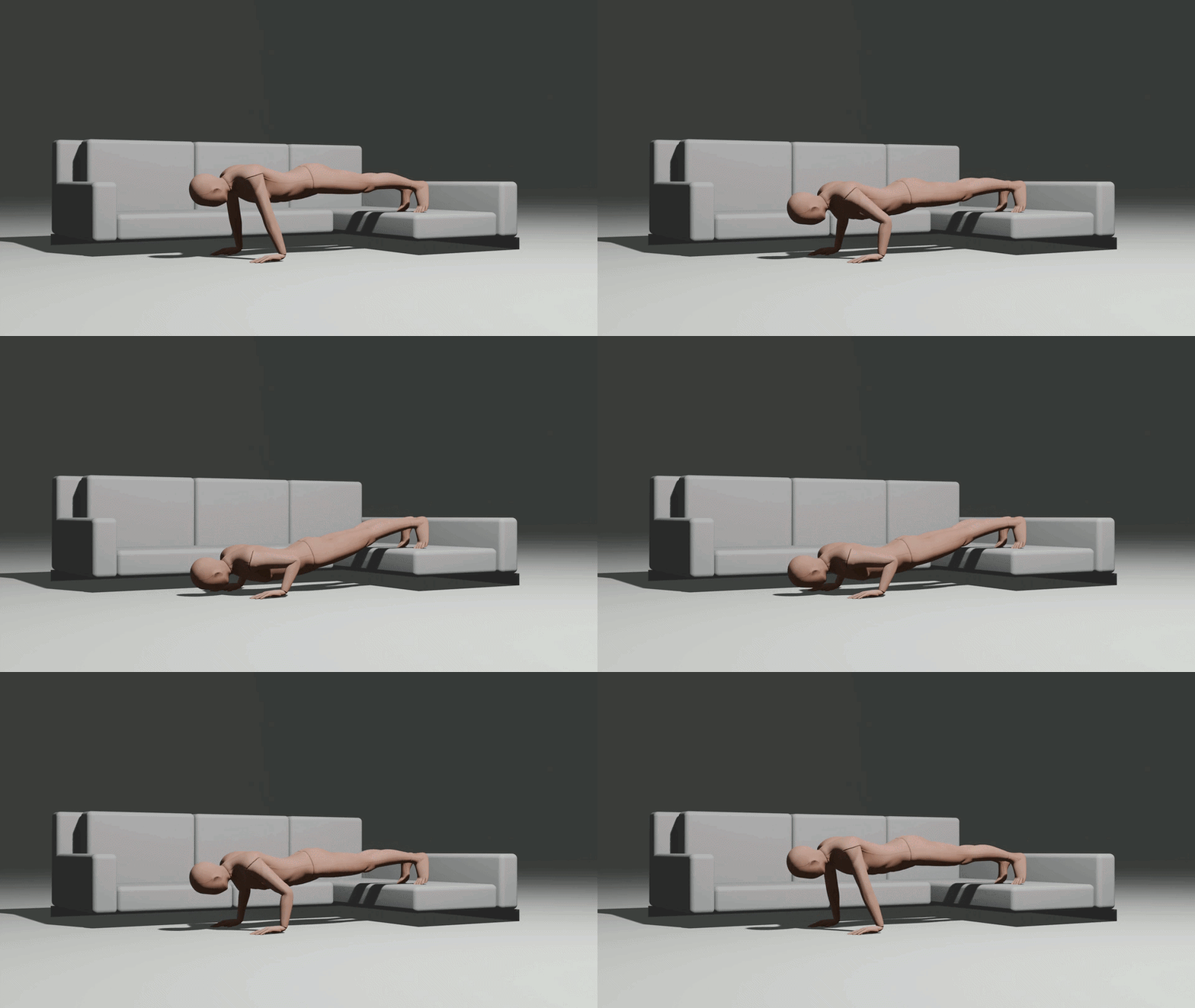
The decline push-up is an advanced bodyweight variation designed to target the upper chest and shoulders. By elevating your feet on a bench, chair, or plyo box, you shift your center of mass forward over your hands. This elevation increases the overall resistance to roughly 70% to 75% of your total body weight—compared to ~64% during a regular push-up.
Steepening the angle alters the line of push, making it the ideal bodyweight equivalent to an incline dumbbell or barbell bench press.
- Primary Muscles: Upper Chest (Pectoralis Major – Clavicular Head)
- Secondary Muscles: Front Deltoids (Shoulders), Triceps Brachii, Core
- Setup & Grip: Place feet up on an elevated box, bench, or chair with hands planted slightly wider than shoulder-width on the floor.
- Execution & Tempo: Lower your forehead/upper chest toward the floor with control, keeping a rigid plank. Push back up until arms reach full extension.
- Common Mistakes: Arching the lower back excessively to make the exercise easier, or letting the head drop forward out of alignment with the spine.
Targeted Muscle Groups
Elevating your feet changes the force vectors across your upper body, shifting recruitment higher up the chest wall:
- Pectoralis Major (Clavicular/Upper Head): The primary focus. The angled trajectory forces the upper chest fibers to do the heavy lifting.
- Anterior Deltoids (Front Shoulders): Takes on significantly more weight load compared to flat push-ups.
- Triceps Brachii: Works intensely during the lockout phase at the top of each rep.
- Core & Lower Back: Operates at max capacity to keep your hips elevated and prevent your spine from sagging toward the floor.
Step-by-Step Technique & Form
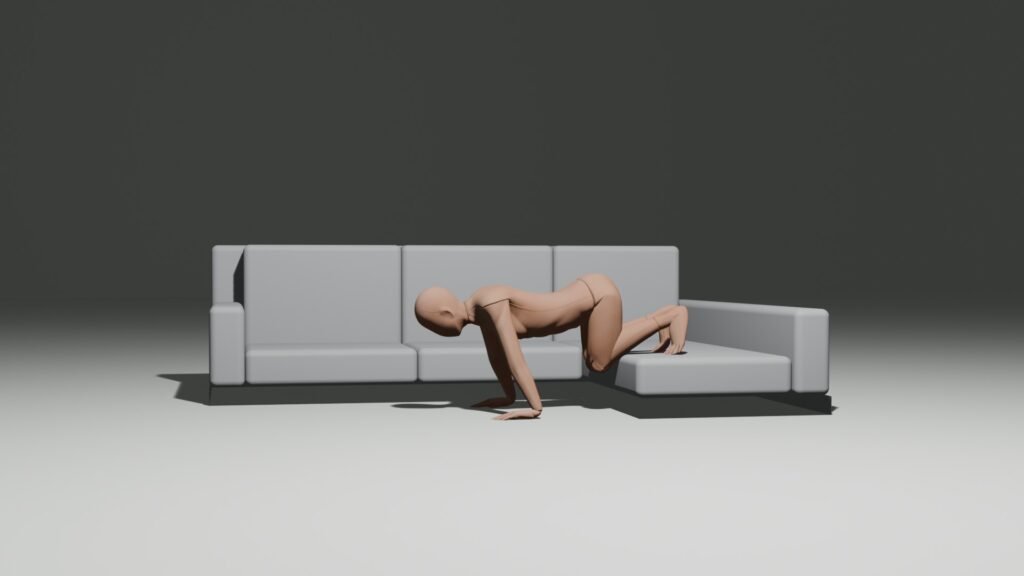
1. The Setup
- Place a sturdy bench, box, or chair behind you or use your couch (start with an elevation of 12 to 18 inches).
- Place your hands flat on the floor slightly wider than shoulder-width apart.
- Step your feet back one at a time onto the elevated surface, balancing on your toes.
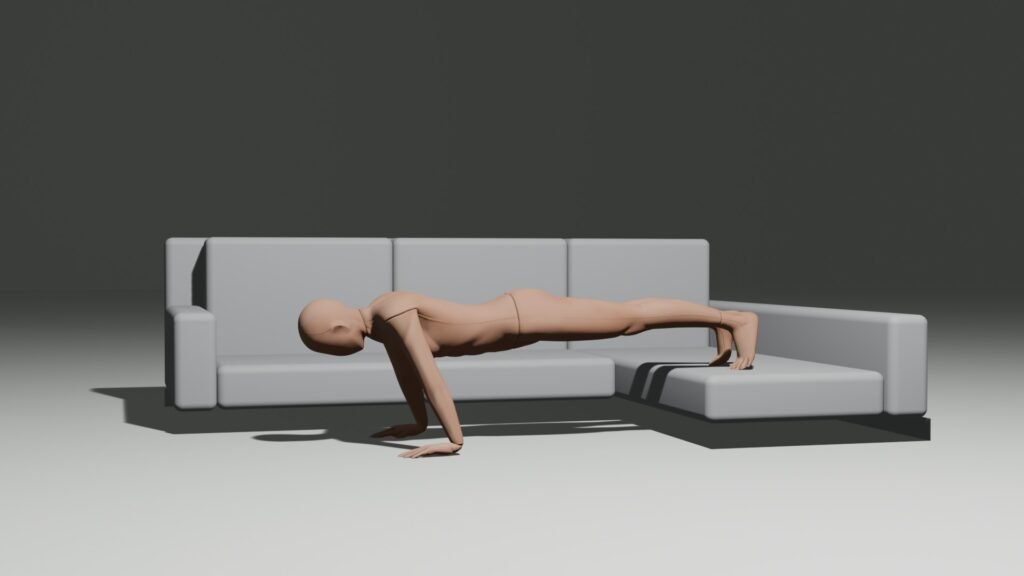
2. Aligning the Plank
- Walk your hands into position so your wrists sit directly underneath your shoulders.
- Squeeze your glutes, brace your core, and set a straight line from your ankles to your head.
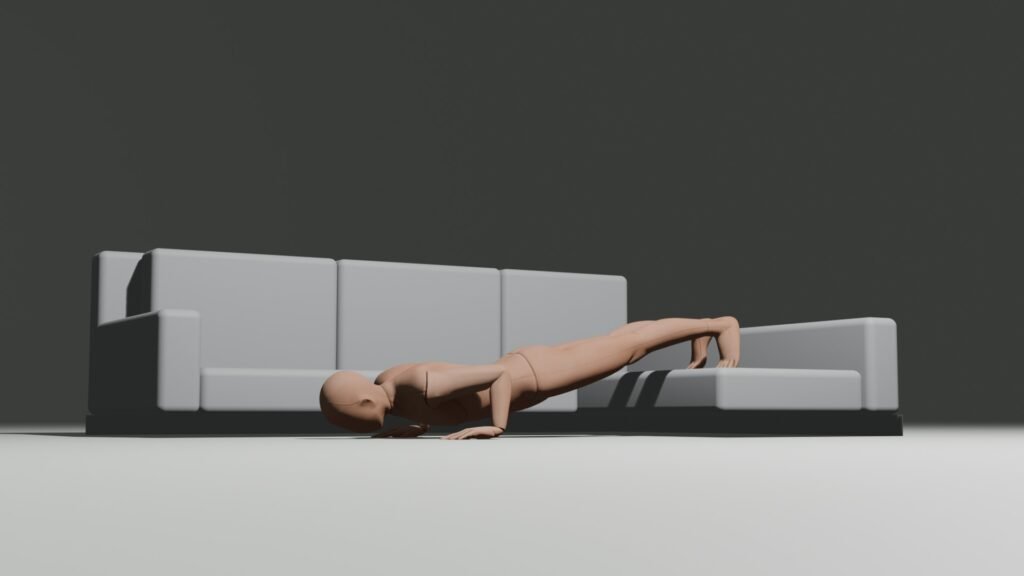
3. The Descent
- Inhale as you lower your chest toward the floor with full control.
- Keep your elbows tucked at roughly a 45-degree angle relative to your torso (forming an arrow shape, not a T-shape).
- Lower down until your chest hovers 1–2 inches off the ground.
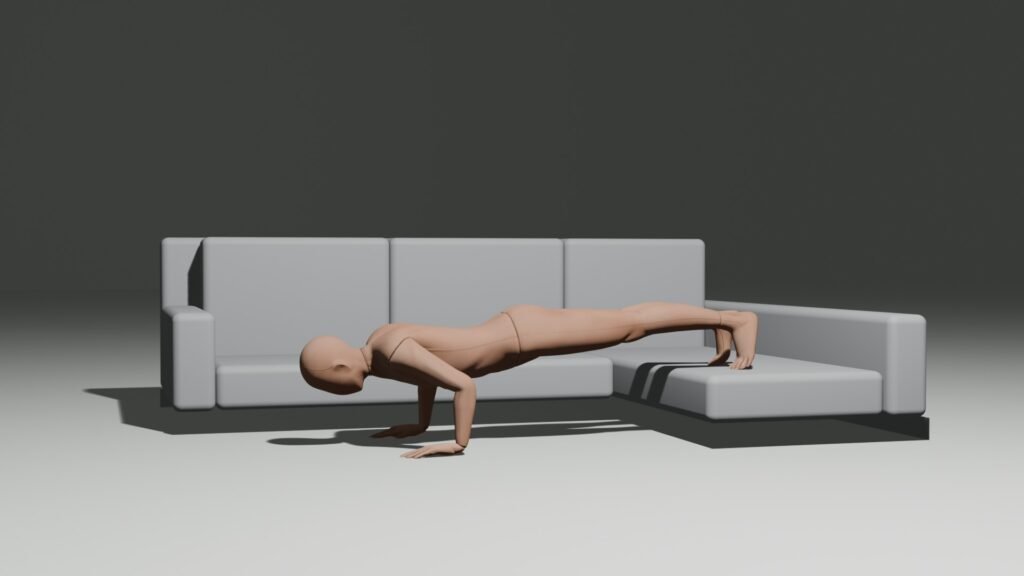
4. The Press
- Exhale and press firmly through the palms of your hands to push back to the top lockout.
- Keep your head in a neutral position—do not look up or reach down with your neck.
Common Errors & Fixes
- Elevating Feet Too High: Setting your feet on a high bench turns the move into a shoulder press and risks lower back hyperextension. Keep bench height around 12–18 inches for chest targeting.
- Sagging Midsection: Letting your hips dip creates a severe swayback position. Squeeze your glutes hard throughout the entire set.
- Reaching with the Face: Reaching your nose to the floor cuts your actual range of motion short. Focus on bringing your mid-chest down toward the ground.
How to Integrate and Progress
If elevating your feet feels too heavy on your shoulders, scale back down to a regular push-up to build your baseline strength first.
Once you master the decline push-up for 3 sets of 12 to 15 strict reps, your next logical step for shoulder strength is transitioning to vertical pressing moves like the pike push-up. To see how all these variations fit into a complete progressive workout plan, check out our complete guide to push-ups.