
When building a powerful lower body through calisthenics, you quickly realize you don’t have access to machines like a leg press or leg extensions. Instead, your legs must become the machine. The bodyweight squat is the absolute foundation of lower body calisthenics training. It is the most comprehensive, versatile compound movement you can perform using just your own body weight.
While some lifters assume you need a heavy barbell to build lower body strength and endurance, mastering the classic air squat unlocks incredible functional mobility, metabolic conditioning, and a massive runway for advanced calisthenics leg variations.
How to Do Bodyweight Squats with Perfect Form
The secret to maximizing the effectiveness of a squat lies entirely in your range of motion and joint tracking. Because there is no external load pushing you down, you must use deliberate control.
- The Stance: Stand tall with your chest up, spine neutral, and feet set roughly shoulder-width apart. Point your toes slightly outward (about 15 to 30 degrees) to allow your hips to open naturally.
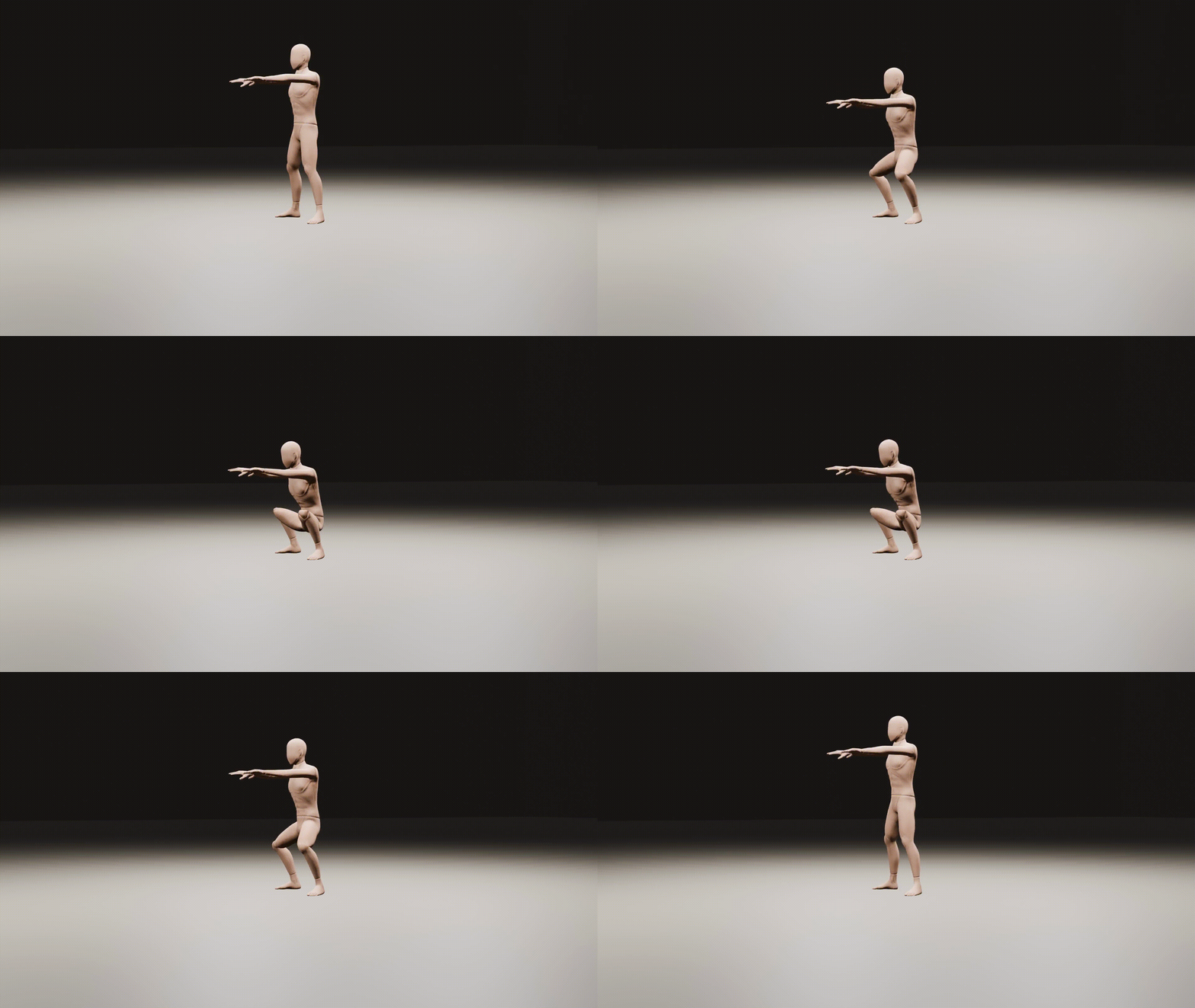
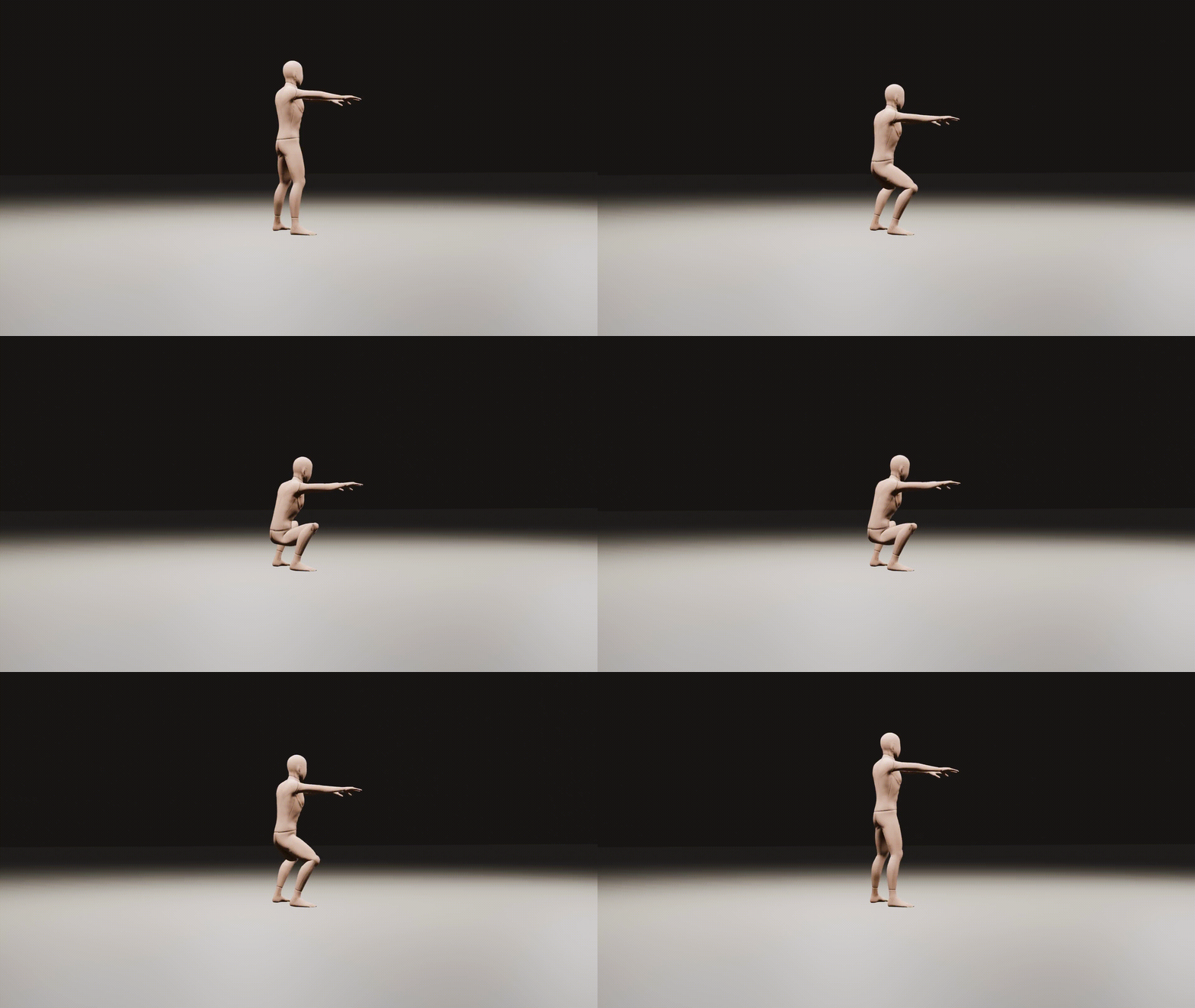
- The Descent: Push your hips back slightly as if sitting into an invisible chair, then bend your knees to lower your body. Keep your arms extended straight out in front of you to serve as a natural counterweight for balance.
- The Depth: Lower yourself until your thighs are at least parallel to the floor. If your mobility allows, go deeper bringing your butt close to the ground.
- The Drive: Press firmly through your entire foot, driving your hips upward while squeezing your glutes at the top of the movement.
How Deep Should You Go in a Bodyweight Squat?
Because bodyweight squats are highly accessible and gentle on the knee joints, you should strive to achieve a full range of motion. Aim to lower your body into the deep “third-world squat” a natural resting position for humans that modern desk lifestyle has made difficult to achieve. Hanging out in this deep squat position regularly is an incredible tool to actively restore your lower back, hip, and ankle mobility.
3 Crucial Squat Form Mistakes (And How to Fix Them)
Before loading your legs with endless repetitions, keeping your lower body aligned is vital. A deep bodyweight squat acts as a fantastic reset for your hips, knees, and ankles—but only if you avoid the common pitfalls that lead to joint strain.
When performing your reps, run through this structural checklist to ensure you aren’t making these common mistakes:
- Mistake 1: Rounding Your Lower Back. Never let your lower back curve or tuck under at the bottom of the movement (a mistake often called the “butt wink”). Keep your chest proud and your spine straight to distribute your weight evenly across your muscles.
- Mistake 2: Letting Your Knees Cave Inward. Never let your knees collapse toward each other as you push back up to standing. Your kneecaps must track in the exact same direction as your toes throughout the entire rep to protect your ligaments.
- Mistake 3: Lifting Your Heels Off the Ground. If your heels lift off the floor as you descend, your weight is shifting too far forward onto your toes. This places unnecessary shear stress on your kneecaps and usually means your ankles are tight.
How to Prevent Injuries While Squatting
Many beginners avoid squats entirely out of fear of hurting their knees or lower back. However, performing squats with proper form actually strengthens the ligaments, tendons, and connective tissues surrounding your lower body joints, protecting you from future harm.
To keep your joints perfectly safe, focus on these injury-prevention rules:
- Control the Tempo: Never drop down fast and bounce out of the bottom position. Lower yourself under a strict 2-to-3-second count to ensure your muscles—not your joints—are controlling the weight.
- Warm Up Dynamically: Before jumping into your working sets, wake up your lower body. Spend a few minutes walking, doing stair climbs, or performing light bodyweight lunges to lubricate your hip and knee joints.
- Follow a Safe Training Framework: Most injuries don’t happen because the exercise itself is bad; they happen because a trainee tries to progress too quickly without building a proper foundation. If you want to keep your joints completely safe while building your routine, make sure to follow our comprehensive guide on how to train without injuries.
The Top Benefits of Doing Bodyweight Squats Regularly
Integrating high-volume bodyweight squats into your routine yields major benefits for your athletic performance, daily life, and fat-loss goals:
- Balanced Muscle Development: Squats heavily recruit your quadriceps, hamstrings, glutes, and calves simultaneously.
- Metabolic Ignition: Because squats are a massive compound exercise recruiting the largest muscle groups in your body, they demand an immense amount of energy. This spikes your heart rate and boosts your metabolic rate, helping you burn more calories even while resting.
- Restored Lower Body Flexibility: Squatting through a full range of motion actively stretches tight hip flexors and increases ankle mobility. If your hips are chronically tight from sitting at a desk, learning how to release them is a game-changer. You can check out our full guide on hip flexor mobility exercises to unlock your lower body range of motion.
- Ultimate Workout Accessibility: You do not need a gym membership, a squat rack, or heavy weights to get an incredible workout. You train at home, in a hotel room, or at the office. This completely removes the friction of starting a workout, making it easy to stay consistent.
Common Bodyweight Squat Variations for Beginners
If standard bodyweight squats feel a bit monotonous, or if you need to alter the mechanical stress on your muscles, you can easily shift your foot positioning to emphasize different parts of your legs. Understanding how to do bodyweight squats correctly involves knowing how minor adjustments change the exercise:
- Sumo Squats: Take a much wider stance than normal and turn your toes out at a 45-degree angle. Descending into a sumo squat shifts the training emphasis toward your inner thighs (adductors) and glutes, while offering a deep stretch through the groin.
- Narrow Stance Squats: Place your feet inside shoulder-width, keeping them close together or even touching. This variation demands exceptional ankle mobility and shifts the primary workload straight onto the outer sweep of your quadriceps.
- Prisoner Squats: Keep a standard stance but interlock your fingers behind your head, actively pulling your elbows back. This variation forces your upper back, rhomboids, and rear delts to engage statically, helping to fix poor posture while you train your legs.
High-Repetition Bodyweight Squats vs. Weighted Squats
A very common question among calisthenics beginners is: can you build muscle with just bodyweight squats? The answer depends on how you program them. If your primary goal is to maximize raw power and build massive leg volume as fast as possible, heavy weighted barbell squats are the fastest route. However, loading a barbell heavily makes you much more prone to severe lower back and knee injuries if your form slips.
With bodyweight squats, the external load is much lower, making them vastly safer. Once you build basic leg strength, you progress by increasing your training volume or trying advanced variations.
High-repetition bodyweight squats won’t build massive, bodybuilder-style legs, but they will give you a punishing muscle pump, build incredible cardiovascular stamina, and develop exceptional muscular endurance. For calisthenics athletes, having strong, durable, and lightweight legs is an enormous advantage when learning gravity-defying upper body skills
The Daily Squat Challenge: Should You Squat Every Day?
Given that bodyweight squats rely entirely on your own mass, many fitness enthusiasts wonder if they can be treated as a daily movement pattern rather than a weekly workout event. The short answer is yes—but context matters.
Performing 10 to 20 slow, controlled deep squats every day functions as an incredible active recovery routine. It acts as a mechanical reset for your hips and lower back, flushing your knee joints with fresh synovial fluid and counteracting the damage of long office hours.
However, if you are performing high-volume, high-intensity squat sessions to the point of muscular burnout, your legs will require structural rest. To figure out the ideal balance between daily movement and optimal recovery splits, make sure to read our breakdown on how often should you work out as a beginner.
How to Scale and Progress Your Squat Training
Once standard air squats feel too easy and you can comfortably knock out sets of 30 to 40 repetitions, you need to introduce progressive overload to keep growing. You can do this by trying more advanced single-leg calisthenics variations:
- The Bulgarian Split Squat: Elevate one foot behind you on a chair or bench and squat using your front leg. This places immense weight on a single leg, mirroring the intensity of a weighted squat.
- The Pistol Squat (Full Single-Leg Squat): Extend one leg completely straight out in front of you and lower your hips all the way to the floor on the opposite leg. This requires elite levels of balance, core stability, and single-leg strength.
To see exactly how to structure these progressions alongside your upper body pulling and pushing movements, check out our highly structured beginner bodyweight workout plan. It provides you with a clear roadmap to keep you on track until you are ready to conquer advanced variations.
What Results Can You Expect from Bodyweight Squats?
If you dedicate yourself to mastering the bodyweight squat and consistently build up your repetition volume, your physical capabilities will shift dramatically over a few short weeks.
- Weeks 1 & 2 (Neurological Adaptation): You will notice a massive improvement in your balance and coordination. The deep “burning” sensation in your thighs will begin to diminish as your nervous system learns to fire your muscle fibers more efficiently.
- Weeks 3 & 4 (Endurance & Tone): Your structural stamina will skyrocket. Activities like running, climbing stairs, or hiking will feel effortless. Visually, your quads and glutes will begin to look significantly tighter and more defined.
- Beyond Month 1 (Foundational Strength): You will have forged the connective tissue durability required for elite single-leg movements. Your core stability will be rock-solid, creating the perfect lower body platform to complement your upper body calisthenics goals.
If you are just starting out on your fitness journey and want to master these movement patterns without buying expensive gear, our comprehensive “train at home guide” will give you the exact tools you need to build consistency and unlock progress fast.