
If you want to get stronger, improve your fitness, or start exercising at home, bodyweight training is one of the simplest ways to begin. You don’t need a gym, machines, or expensive equipment—just your own body and a bit of consistency.
This guide will show you exactly how to start bodyweight training as a beginner, what exercises to do, how to structure your workouts, and how to progress safely without getting stuck.
What is bodyweight training?
Bodyweight training is a form of strength training where you use your own body as resistance instead of weights or machines.
Common examples include:
It builds strength, endurance, coordination, and control using natural movement patterns.
How does bodyweight training, also know as calisthenics differ from weightlifting? Read more about that here.
Why bodyweight training is perfect for beginners
1. No equipment needed
You can train anywhere—home, park, or even your bedroom.
2. Easy to start
You can scale every exercise to your level.
3. Builds real strength
You learn how to control your body, not just lift weight.
4. Low injury risk (if done correctly)
When you focus on form, it’s very safe for beginners.
The 5 basic movement patterns you need to learn
Every good bodyweight program is built on these patterns:
1. Push (chest, shoulders, triceps)
- Push-ups
- Incline push-ups
- Knee push-ups
2. Pull (back)
- Superman holds
- Table rows (if available)
- Resistance band rows (optional)
3. Squat (legs)
- Bodyweight squats
- Tempo squats
- Chair squats
4. Hinge (glutes, hamstrings)
- Glute bridges
- Hip hinges
5. Core (stability)
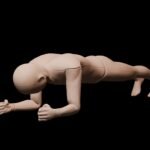
- Planks
- Dead bugs
- Leg raises (advanced)
How to start bodyweight training (step-by-step)
Step 1: Start simple
Don’t try advanced workouts. Begin with basic movements.
Step 2: Focus on form first
Quality matters more than reps. Slow and controlled movement builds better strength.
Step 3: Train 2–3 times per week
Your body needs rest to adapt and get stronger.
Step 4: Repeat the same basics
Beginners improve faster by repeating simple workouts instead of constantly changing them.
Beginner bodyweight workout plan (3 days per week)
Workout A
- Squats – 3 sets of 10–15 reps
- Push-ups (or incline/knee version) – 3 sets of 6–12 reps
- Glute bridges – 3 sets of 12–15 reps
- Plank – 3 sets of 20–45 seconds
Workout B
- Lunges – 3 sets of 8–12 reps per leg
- Incline push-ups or knee push-ups – 3 sets of 8–12 reps
- Superman hold – 3 sets of 15–30 seconds
- Dead bug – 3 sets of 10 reps per side
Weekly schedule example
- Monday – Workout A
- Wednesday – Workout B
- Friday – Workout A
(next week: B / A / B)
How to progress (this is where results happen)
To get stronger, you need gradual progression. You can do this in simple ways:
- Add 1–2 reps each week
- Increase plank time by 5–10 seconds
- Move from incline → knee → full push-ups
- Slow down your movement for more difficulty
Progress doesn’t need to be complicated, just consistent.
Common beginner mistakes
1. Doing too much too soon
More workouts doesn’t mean faster results.
2. Ignoring form
Bad form leads to slow progress and frustration.
3. Switching workouts too often
Stick with a routine for at least 3–4 weeks.
4. Not resting
Muscles grow during recovery, not during workouts. Not enough rest and over training can also lead to injuries. Click here to read about my bets tips to prevent injuries while training.
How long does it take to see results?
If you train 2–3 times per week consistently:
- 1–2 weeks: better energy and movement
- 3–6 weeks: noticeable strength improvements
- 6–12 weeks: visible body changes and improved fitness
Do you need to do cardio too?
Not necessarily at the start. Bodyweight training already improves:
- heart rate
- endurance
- calorie burn
You can add walking or light cardio later if needed.
What to do after this guide
Once you understand the basics, you should move into:
- Exercise technique (push-ups, squats, planks)
- Progression guides (how to get stronger)
- Structured challenges (7-day or 30-day plans)
Final advice
Start simple and stay consistent. Most beginners fail not because the training is too hard—but because they try to do too much too fast.
Master the basics first, and everything else becomes easier.