
Pull-ups, chin-ups, and neutral-grip pull-ups are all excellent exercises for developing upper-body strength. But does changing your grip actually make a difference?
The short answer is yes, but probably not as much as you might think.
All three variations train your lats, upper back, biceps, forearms, and grip. The main differences are your hand position, joint mechanics, and how the exercise feels.
For example, I personally find chin-ups easier than regular pull-ups. I sometimes use them after a difficult pull-up set to continue training, and I also enjoy weighted chin-ups when I want to focus more on my arms.
Neutral-grip pull-ups sometimes make me feel stronger, but I don’t always find the movement as natural or achieve the same pulling height.
Quick answer:
- Pull-ups: A good all-around choice for upper-body pulling strength and calisthenics skills.
- Chin-ups: A useful variation for back and arm development, especially if you want more biceps-focused pulling.
- Neutral-grip pull-ups: Another effective pulling variation that some people find more comfortable, provided they have suitable handles.
No single grip is automatically best for everyone.
This guide explains the differences, which muscles each variation trains, and how to choose the right grip for your goals.
Quick Comparison: Pull-Ups vs. Chin-Ups vs. Neutral Grip
| Variation | Hand position | Main reason to choose it |
|---|---|---|
| Pull-Up | Palms facing away | Standard pulling strength and calisthenics development |
| Chin-Up | Palms facing toward you | Back and arm strength, with a useful biceps emphasis |
| Neutral-Grip Pull-Up | Palms facing each other | Alternative hand position and grip variety |
My advice: Start with whichever variation you can perform comfortably with good control. You can develop excellent upper-body strength using any of these grips.
Table of Contents
What’s the Difference Between Pull-Ups, Chin-Ups, and Neutral Grip?
The main difference is how your hands and forearms are positioned on the bar.
Changing that position affects your elbow and shoulder mechanics, which can influence comfort, range of motion, and muscular effort.
Pull-Ups: Overhand Grip
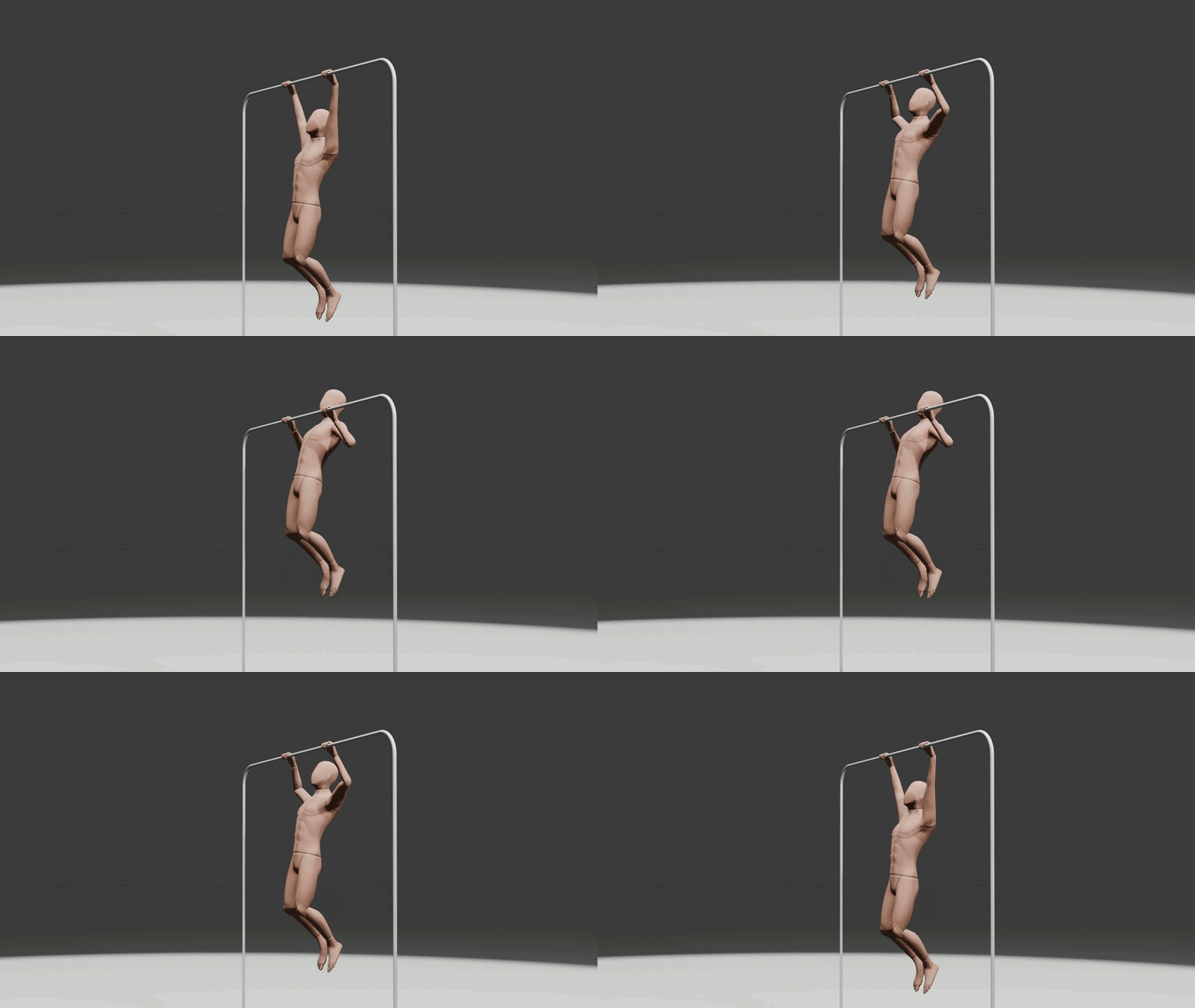
A standard pull-up uses a pronated grip, meaning your palms face away from you.
Your hands are usually around shoulder-width apart or slightly wider.
This is the classic pull-up variation commonly used in calisthenics.
To perform it:
- Grip a secure pull-up bar with your palms facing away.
- Begin with your arms extended and body controlled.
- Pull yourself upward until your chin clears the bar.
- Lower yourself under control.
- Repeat without excessive swinging.
Pull-ups involve the lats, elbow-flexing muscles, upper back, and grip.
They are useful for developing general pulling strength and preparing for more advanced exercises.
For a complete technique breakdown, see our How to Do Pull-Ups Guide.
Chin-Ups: Underhand Grip
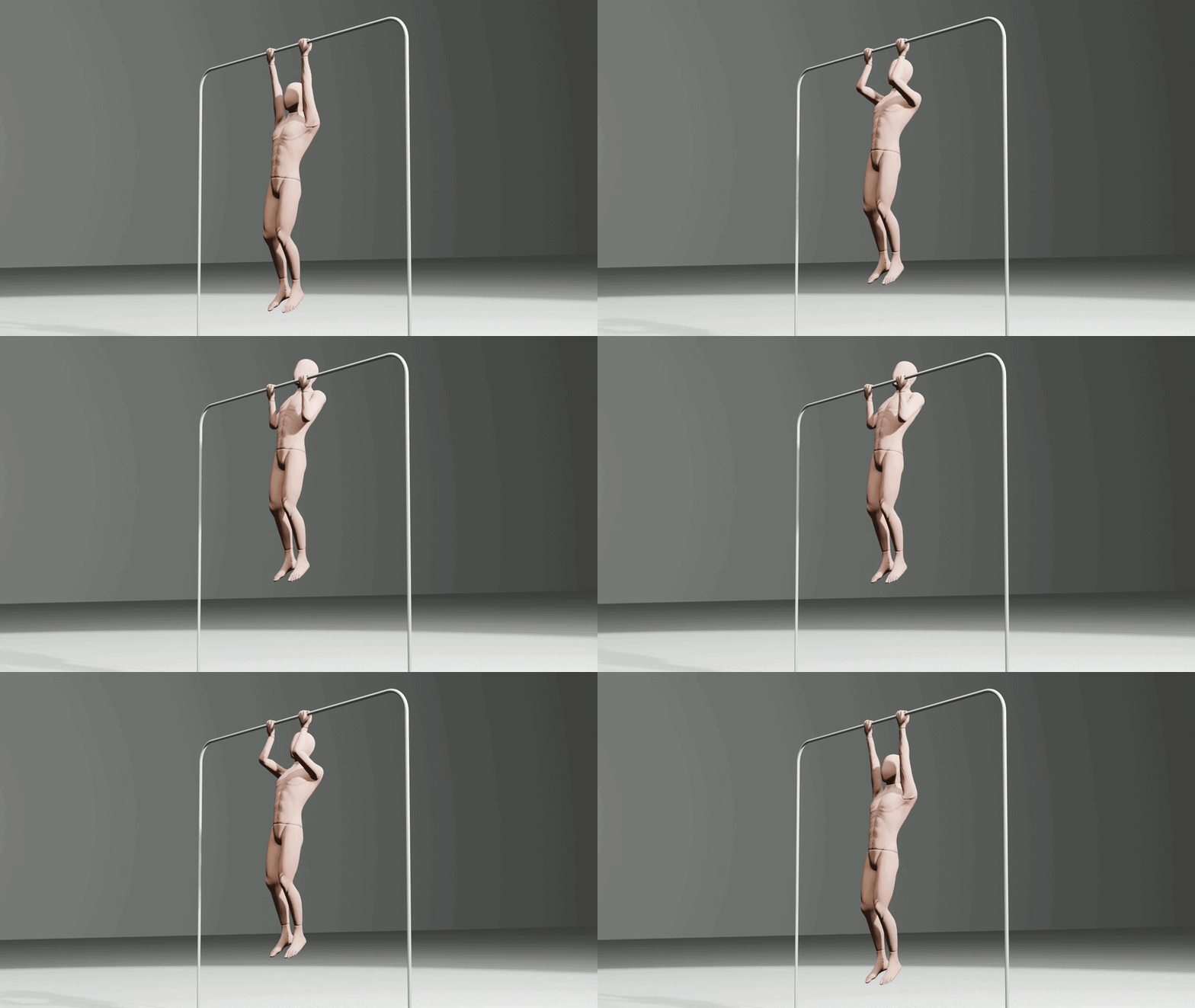
Chin-ups use a supinated grip, meaning your palms face toward you.
Your hands are usually around shoulder-width apart or slightly narrower.
This hand position changes the mechanics of elbow flexion and can make the exercise feel more biceps-focused.
To perform a chin-up:
- Grip the bar with your palms facing toward you.
- Start with your arms extended in a comfortable position.
- Pull yourself upward until your chin clears the bar.
- Keep your body controlled rather than swinging.
- Lower yourself gradually.
Some people can perform more chin-ups than regular pull-ups, but that’s not universal.
If you’re struggling with overhand pull-ups, chin-ups may be another useful variation to practice.
For more information, see our Chin-Ups Guide.
Neutral-Grip Pull-Ups: Palms Facing Each Other
Neutral-grip pull-ups use parallel handles, allowing your palms to face each other.
You generally cannot perform a conventional neutral-grip pull-up on a single straight bar without suitable additional handles.
The movement still trains your back and arms, but the forearm and shoulder positions are different.
To perform a neutral-grip pull-up:
- Grip a pair of secure parallel handles with your palms facing each other.
- Begin with your arms extended.
- Pull yourself upward through a comfortable range of motion.
- Keep your body controlled.
- Lower yourself gradually.
Some athletes find this grip more comfortable for their wrists or elbows.
However, it isn’t automatically safer or better for everyone.
The movement can also feel different depending on the width, height, and design of the handles.
Which Grip Works the Most Muscles?
All three variations work many of the same muscles.
The primary muscles involved include:
- Latissimus dorsi (lats).
- Biceps brachii.
- Brachialis and brachioradialis.
- Upper-back muscles, including the trapezius.
- Forearm and grip muscles.
- Core muscles that help stabilize your body.
The differences between grips are mainly changes in muscle contribution and movement mechanics, not completely different muscle groups.
What Does Research Say About Muscle Activation?
A study by Youdas and colleagues (2010) compared conventional pull-ups and chin-ups.
The researchers found greater biceps and pectoralis major electrical activity during chin-ups, while the lower trapezius showed greater activity during pull-ups.
Another study published in 2017 compared overhand, underhand, neutral, and rope pull-ups.
It found broadly similar muscle-activation patterns across several pulling variations, alongside some differences between grips and movement phases.
These findings help explain why different grips may feel different.
However, muscle activation measured by electromyography (EMG) does not directly tell us which exercise will produce the most muscle growth over several months.
There isn’t enough evidence to claim that one of these three grips is universally superior for building muscle.
For a more detailed explanation of the muscles involved, read What Muscles Do Pull-Ups Work?.
Chin-Ups vs. Pull-Ups: Which Is Better for Biceps?
If your goal is to place more emphasis on your biceps during bodyweight pulling, chin-ups are a very reasonable choice.
The underhand grip changes the position of your forearms and the mechanics of the elbow-flexing muscles.
Research has also found greater biceps EMG activity during chin-ups than overhand pull-ups in some comparisons.
However, this doesn’t mean regular pull-ups are ineffective for your biceps.
Both variations challenge the elbow flexors.
My Experience With Chin-Ups for Biceps
I’ve recently been paying more attention to building my biceps, and chin-ups have become one of my favorite pulling variations.
I personally find the underhand grip easier than regular pull-ups.
Sometimes I complete a hard set of overhand pull-ups and then perform an additional set of chin-ups.
Other days, I skip regular pull-ups entirely and focus on chin-ups or weighted chin-ups.
I especially enjoy concentrating on bending my elbows and squeezing my biceps during the movement.
That creates a strong muscular sensation for me, which I enjoy during training.
However, feeling a stronger burn doesn’t automatically prove that an exercise produces more muscle growth.
The important factors are still appropriate training effort, sufficient volume, recovery, and gradual progression.
My advice: If you enjoy chin-ups and want to develop your arms, include them regularly. You don’t need to abandon regular pull-ups. Do both!
If maximizing biceps growth is your main goal, you can also combine chin-ups with direct biceps exercises.
Pull-Ups vs. Chin-Ups: Which Builds a Wider Back?
Both pull-ups and chin-ups train the latissimus dorsi, which contributes significantly to back width.
The overhand grip is often promoted as the best choice for developing wider lats.
However, that claim is too simplistic.
Changing grip position influences muscle mechanics, but both exercises can provide substantial loading for the lats.
There isn’t convincing long-term evidence showing that standard overhand pull-ups always produce greater lat growth than chin-ups.
Instead of focusing on one theoretically perfect grip, consider:
- Which variation allows controlled repetitions?
- Which grip feels comfortable?
- Can you progressively increase your training difficulty?
- Are you training consistently?
- Are you recovering sufficiently?
For example, if you can perform more high-quality chin-ups than overhand pull-ups, those chin-ups can still provide valuable back training.
The best grip for back development is not necessarily the widest or most difficult one.
Is Neutral Grip Better Than Pull-Ups or Chin-Ups?
Neutral-grip pull-ups are another effective way to train the back and arms.
Because your palms face each other, the position of your wrists and forearms differs from both overhand and underhand grips.
Some people find this position comfortable, while others prefer a straight bar.
Are Neutral-Grip Pull-Ups Easier?
Not necessarily.
Some people feel stronger using a neutral grip, but that depends on their experience, handle spacing, and individual mechanics.
Neutral-grip pull-ups can also feel awkward if the handles are positioned too wide, too narrow, or at an unfamiliar angle.
My Experience With Neutral Grip
I don’t perform neutral-grip pull-ups as frequently as regular pull-ups or chin-ups.
Interestingly, I sometimes feel like I have the most pulling strength with a neutral grip.
However, I don’t always achieve the same pulling height, and the movement occasionally feels a little strange to me.
I still include neutral-grip pull-ups from time to time because I enjoy experimenting with different variations.
For me, that demonstrates why the grip that feels strongest isn’t automatically the one that feels most natural.
The design and spacing of the handles can also affect the movement.
My advice: Try neutral-grip pull-ups if you have access to suitable equipment, but don’t feel obligated to use them if regular pull-ups or chin-ups suit your training better.
Is Neutral Grip Safer for Your Joints?
Neutral grip is sometimes marketed as the safest pulling variation for your elbows and shoulders.
That claim is too broad.
Different grips may feel more comfortable for different people, but no grip guarantees that you won’t experience pain or injury.
If a particular variation causes persistent discomfort, don’t force it.
Read our Elbow and Shoulder Pain During Pull-Ups guide for general guidance, and seek professional advice for ongoing symptoms.
Which Grip Should You Choose for Your Training Goal?
Your ideal grip depends on what you’re trying to achieve.
| Your training goal | What I’d suggest |
|---|---|
| Learning regular pull-ups | Standard pull-ups or assisted pull-ups |
| Developing biceps alongside your back | Chin-ups |
| General upper-body pulling strength | Any comfortable variation |
| Trying a different hand position | Neutral-grip pull-ups |
| Progressing toward muscle-ups | Keep practicing overhand pull-ups and explosive high pulls |
| Improving weighted pulling strength | Use a grip you can load and control consistently |
| Adding variety | Alternate grips based on your goals and preferences |
You don’t need to change grips every workout.
You also don’t need to use all three variations in every session.
Choose the variation that fits your immediate goal, then gradually improve it.
How I Alternate Pull-Ups, Chin-Ups, and Neutral Grip
I don’t follow a strict rule that says I must perform every grip during each workout.
Instead, I choose based on what I want to focus on that day.
Sometimes I primarily train standard pull-ups.
Other times I focus on chin-ups or weighted chin-ups because I enjoy the movement and want to develop my arms.
I also occasionally perform neutral-grip pull-ups for variety.
When I train regular pull-ups, I sometimes finish a hard set and then use chin-ups for additional pulling work.
I don’t think everyone needs to copy this exact approach.
If you’re a beginner, you’ll probably benefit from a more consistent exercise selection so it’s easier to track your progress.
But once you’re comfortable performing multiple pulling variations, experimenting with different grips can make training more enjoyable.
The main lesson from my experience is that you don’t have to choose one grip forever.
Your preferred variation can change depending on your goals and what feels comfortable.
Example Pull-Up and Chin-Up Workout
If you can already perform controlled pull-ups, here’s a simple way to combine different grips.
| Exercise | Sets and reps |
|---|---|
| Regular Pull-Ups | 3 × 5-8 |
| Chin-Ups | 2-3 × 5-8 |
| Inverted Rows | 2 × 8-12 |
Rest approximately 1-3 minutes between sets, depending on difficulty.
If the workout is too demanding, reduce the total sets or use assistance.
You can also alternate the main variation between sessions.
Workout A: Pull-Up Focus
Start with regular pull-ups, then use chin-ups or inverted rows for additional work.
Workout B: Chin-Up Focus
Start with chin-ups or weighted chin-ups if you’re sufficiently experienced, then use another pulling variation if desired.
If you want to develop your biceps, chin-ups can be your main pulling exercise on certain days.
However, doing every set to complete failure isn’t necessary. Leave some repetitions in reserve when fatigue begins affecting technique.
If you cannot perform an unassisted pull-up yet, start with our Beginner Pull-Up Progression instead.
Do You Need Special Equipment for Neutral-Grip Pull-Ups?
Regular pull-ups and chin-ups can both be performed on a secure straight pull-up bar.
For neutral-grip pull-ups, you generally need additional parallel handles or equipment that allows your palms to face each other.
Common options include:
- Multi-grip pull-up bars with built-in parallel handles.
- Compatible neutral-grip attachments designed for pull-up bars.
- Properly installed gymnastics rings.
Are Neutral-Grip Handles Worth Buying?
If you already own a straight pull-up bar and want to experiment with neutral-grip training, compatible handles may be a useful addition.
They can provide another hand position without requiring you to replace your entire training setup.
However, they are completely optional.
Before purchasing, check:
- Whether the attachments are compatible with your bar.
- Their rated weight capacity.
- Whether they remain secure during pulling.
- Whether the handle spacing feels appropriate.
- How much vertical clearance they require.
Some hanging attachments position your hands lower than the original bar, which may affect the available movement space.
Check neutral-grip pull-up handles price on Amazon.
You don’t need to buy additional equipment simply to develop a strong back.
Regular pull-ups and chin-ups already provide excellent training.
Common Mistakes When Comparing Pull-Up Grips
1. Assuming Wide-Grip Pull-Ups Are Always Better
A wider grip changes the pulling mechanics and available range of motion.
It doesn’t automatically produce better lat growth.
Choose a comfortable grip width rather than forcing the widest possible position.
2. Believing Chin-Ups Are Cheating
Chin-ups are a legitimate bodyweight pulling exercise.
The underhand grip changes the movement, but it doesn’t make the exercise less valuable.
3. Assuming Neutral Grip Prevents Injury
Neutral-grip pull-ups may feel comfortable for some people, but they don’t eliminate joint loading or guarantee protection from injury.
4. Comparing Repetitions With Different Ranges of Motion
If you perform one variation with a shorter range of motion, you may complete more repetitions without necessarily being stronger.
When comparing your own performance, try to use consistent technique within each variation.
5. Changing Grips Every Session Without Tracking Progress
Variation can be enjoyable, but constantly changing exercises may make progress harder to measure.
If you have a specific strength goal, consider practicing your main grip consistently while using other variations as optional accessories.
Frequently Asked Questions
Are Chin-Ups Easier Than Pull-Ups?
Many people find chin-ups easier because of the different hand position and pulling mechanics.
However, this varies depending on individual strength, technique, and training experience.
Which Is Better for Biceps: Pull-Ups or Chin-Ups?
Chin-ups are a reasonable choice if you want more biceps-focused pulling.
Some muscle-activation research has found greater biceps activity during chin-ups.
However, both exercises can contribute to arm development.
Which Grip Is Best for Lats?
All three grips train the lats.
There isn’t enough evidence to say that one grip always produces the greatest lat growth.
Choose a variation you can perform comfortably and progressively overload.
Are Neutral-Grip Pull-Ups Better for Forearms?
Neutral-grip pull-ups challenge your forearms and elbow-flexing muscles, but they aren’t universally superior for forearm development.
All pull-up variations require substantial gripping effort.
Can You Build a Big Back With Only Chin-Ups?
Chin-ups can contribute significantly to back development because they train the lats and other pulling muscles.
However, adding rows and other pulling variations may provide a more complete training approach.
Should I Train Pull-Ups and Chin-Ups in the Same Workout?
You can, but you don’t have to.
Some people perform both in one session, while others alternate them between workouts.
Choose an approach that fits your total training volume and recovery.
Can I Do Weighted Chin-Ups Instead of Weighted Pull-Ups?
Yes.
Weighted chin-ups are a legitimate strength-training exercise.
If you can perform controlled bodyweight chin-ups consistently, gradually adding external resistance is one possible progression.
Use secure equipment and increase the difficulty progressively.
Do I Need Neutral-Grip Handles?
No.
They are optional equipment for people who want an additional pulling variation.
Regular pull-ups and chin-ups remain effective without them.
Final Verdict: Which Pull-Up Grip Is Best?
Pull-ups, chin-ups, and neutral-grip pull-ups are all effective upper-body pulling exercises.
The best choice depends on your goals, comfort, experience, and access to equipment.
If you want to develop standard pull-up strength and advanced calisthenics skills, keep overhand pull-ups in your training.
If you want to emphasize your arms while continuing to develop your back, chin-ups are a useful option.
If you want another pulling variation and have suitable handles, neutral-grip pull-ups are worth experimenting with.
Personally, I enjoy all three, although chin-ups have become particularly useful for my current interest in developing my biceps.
The most important thing isn’t finding one perfect grip.
It’s choosing movements you can perform well, training consistently, and gradually building strength over time.
References and Further Reading
- Youdas et al. (2010) — Pull-Up and Chin-Up Muscle Activation — Research comparing muscle activity during overhand and underhand pull-ups.
- Dickie et al. (2017) — Muscle Activation During Pull-Up Variations — Research comparing overhand, underhand, neutral, and rope pull-up variations.
Disclaimer: This article provides general fitness education and is not individualized medical or rehabilitation advice.