
The single-leg Romanian deadlift (RDL) is a bodyweight exercise that trains your hamstrings, glutes, and balance.
The movement looks simple: stand on one leg, lean forward, and extend your other leg behind you. But there’s one important detail.
You’re supposed to bend at your hips, not your lower back.
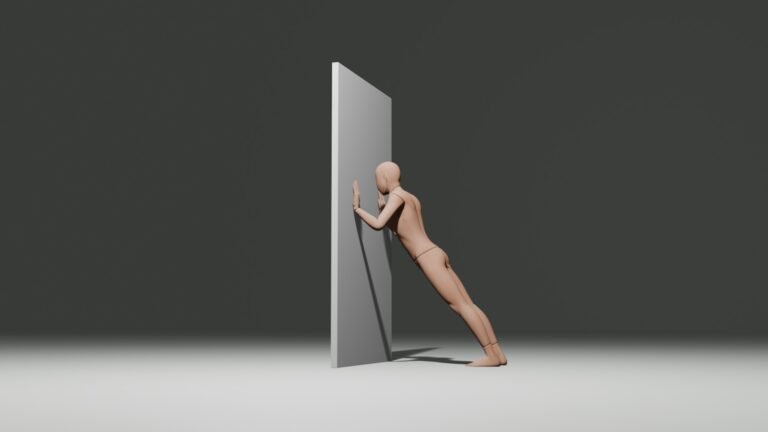
And if you keep losing your balance, don’t worry. You can learn the movement with one hand on a wall before attempting it without support.
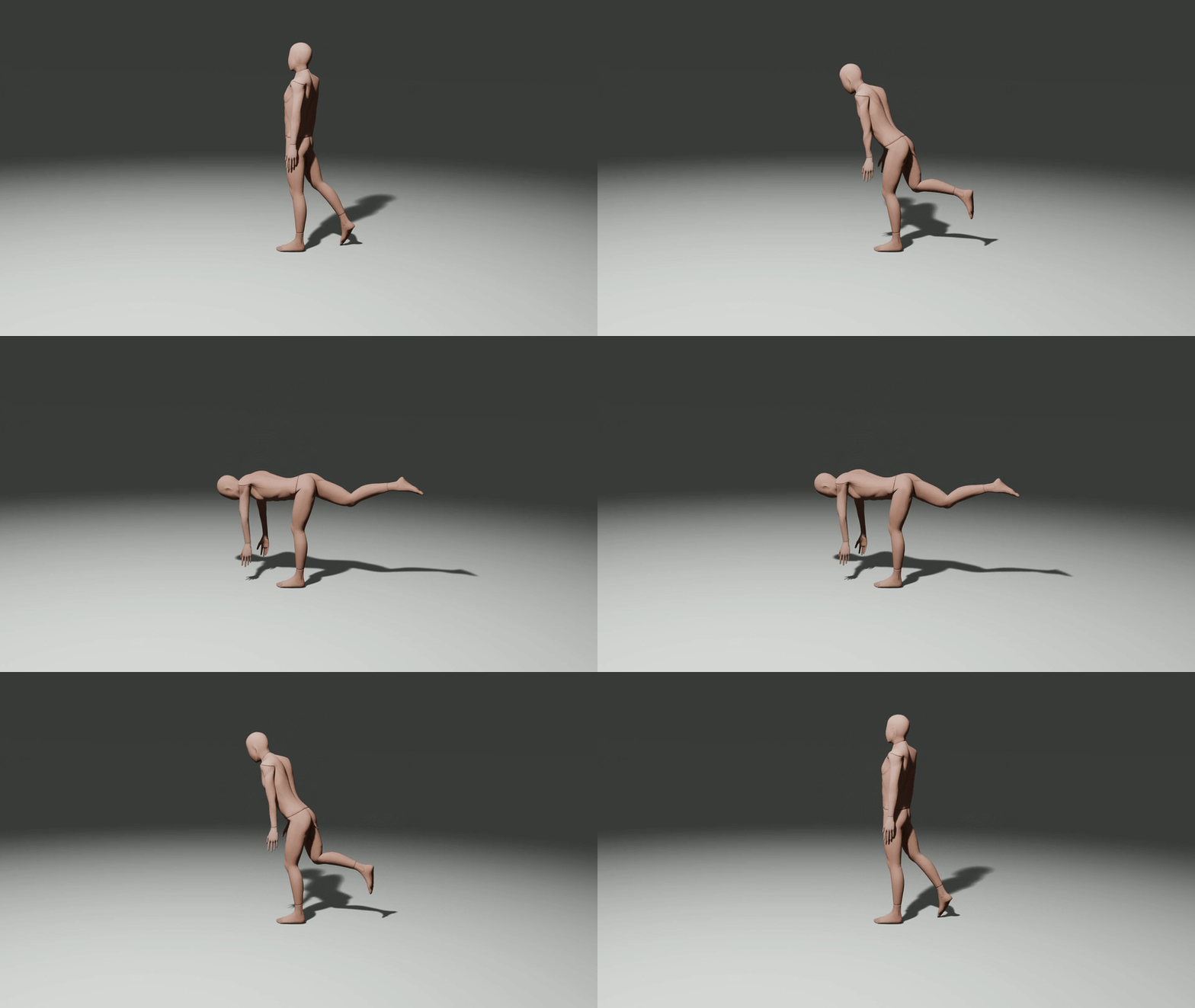
Quick form check
- Keep a slight bend in your standing knee.
- Push your hips backward as your chest moves forward.
- Extend your free leg behind you.
- Keep your hips facing the floor instead of rotating open.
- Return to standing by extending your hip.
How to Do a Single-Leg Romanian Deadlift
1. Start Standing on One Leg
Stand upright with your feet approximately hip-width apart.
Shift your weight onto one leg and slightly bend that knee.
Lift your other foot just off the floor.
Brace your core gently and look toward a point on the ground a few feet ahead of you.
2. Push Your Hips Back
Begin bending forward from your hips.
Imagine trying to push your hips backward toward a wall behind you.
Your standing knee should remain slightly bent, but don’t bend it excessively as if you’re performing a squat.
Keep your back comfortably aligned rather than rounding forward to reach lower.
3. Extend Your Free Leg Behind You
As your upper body moves forward, extend your free leg backward.
Your torso and rear leg should move together, almost like a seesaw.
Keep your hips relatively level and pointing toward the floor.
Don’t rotate your lifted hip outward just to raise your leg higher.
4. Lower as Far as You Can Control
Continue hinging until you feel tension through the hamstrings of your standing leg.
You don’t need to reach the floor.
For beginners, lowering your hands toward knee height may already provide enough challenge.
Stop before you lose balance, round your back to reach farther, or rotate your hips excessively.
5. Return to Standing
Press firmly through your standing foot.
Extend your hip to bring your torso upright and your free leg back down.
Keep the movement smooth rather than kicking your leg or jerking your upper body upward.
Complete your repetitions, then switch legs.
Losing Your Balance? Try These Fixes
Balance can become the limiting factor before your hamstrings or glutes receive much of a challenge.
Use this table to identify what needs adjusting.
| Problem | What to try |
|---|---|
| Keep falling sideways | Hold a wall or stable support with one hand |
| Hips rotate outward | Keep both hip bones pointing toward the floor |
| Lower back rounds | Reduce your range and focus on hinging at the hips |
| Standing knee bends too much | Maintain a smaller, comfortable knee bend |
| Can’t reach the floor | Don’t worry—reaching the floor isn’t necessary |
| Movement feels too unstable | Try a kickstand RDL with your rear toes lightly supported |
The Most Useful Beginner Adjustment
Use a wall for balance.
Place one hand lightly against a sturdy wall or secure support while performing the movement.
This reduces the balance challenge so you can concentrate on pushing your hips backward and maintaining your body position.
Using support isn’t cheating. It’s a practical way to learn the movement.
Single-Leg RDL Progression: Easy to Hard
You don’t need to begin with the full unsupported exercise.
Level 1 — Bodyweight Hip Hinge
Stand with both feet on the floor and practise pushing your hips backward while keeping your knees slightly bent.
Learn the basic movement before balancing on one leg.
Level 2 — Supported Single-Leg RDL
Perform the exercise with one hand on a stable support.
Practise keeping your hips level and moving through a comfortable range of motion.
Level 3 — Single-Leg RDL
Remove the hand support when you’re ready.
Perform controlled repetitions without rushing or forcing additional depth.
Level 4 — Weighted Single-Leg RDL
Once the bodyweight movement becomes manageable, you can increase resistance using a dumbbell or kettlebell.
Start light and maintain the same technique.
There’s no need to add weight until you can control the movement.
What Muscles Do Single-Leg RDLs Work?
| Muscle group | Main role |
|---|---|
| Hamstrings | Control the lowering phase and help extend your hip |
| Gluteus maximus | Helps bring your torso back upright |
| Hip stabilizers | Help keep your pelvis controlled |
| Core and back muscles | Stabilize your torso during the movement |
The single-leg RDL is a hip-dominant exercise, meaning the movement comes mainly from your hips.
That’s different from squats and lunges, which involve a greater degree of coordinated knee and hip bending.
It also complements Glute Bridges, another hip-extension exercise that doesn’t require balancing on one leg.
How Many Single-Leg RDLs Should You Do?
Start with 2–3 sets of 6–10 controlled repetitions per leg.
Rest around 60–90 seconds between sets, or longer if needed.
Use a wall for assistance until your balance becomes more consistent.
You can include single-leg RDLs in your lower-body workouts alongside exercises such as Bodyweight Squats and Lunges.
When Should You Progress?
Once you can complete your repetitions without repeatedly losing balance, try reducing your hand support or increasing your range of motion slightly.
Eventually, you can add external resistance if building more strength is your goal.
Remember that a deeper movement isn’t automatically better.
Controlled hip movement matters more than how close your hands get to the floor.
Final Form Reminder
The single-leg Romanian deadlift trains more than balance.
It teaches you to control your hips while strengthening the muscles along the back of your legs.
If you’re struggling, use a wall and focus on three things:
Push your hips back. Keep your pelvis level. Return to standing with control.
Start with a small range of motion and gradually make the exercise more challenging.
You don’t need additional weights, perfect balance, or the ability to touch the floor to get started.