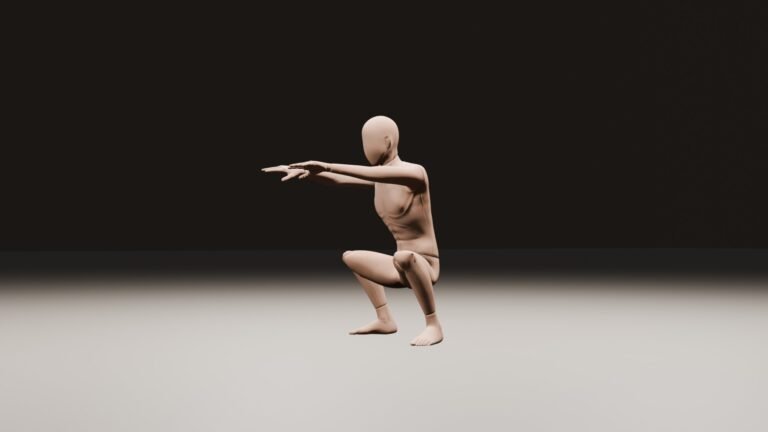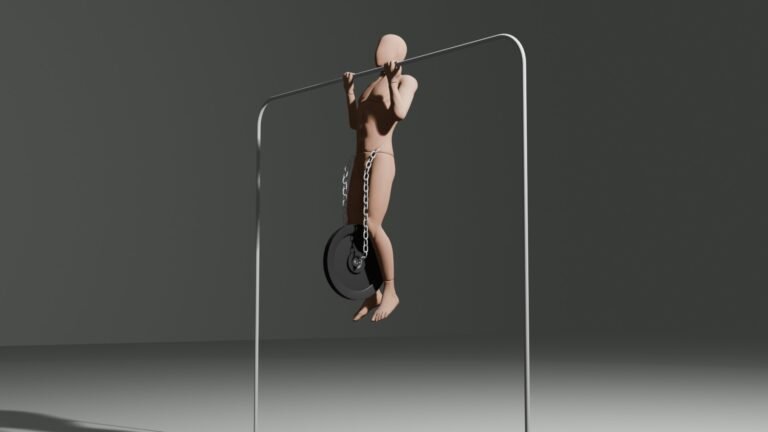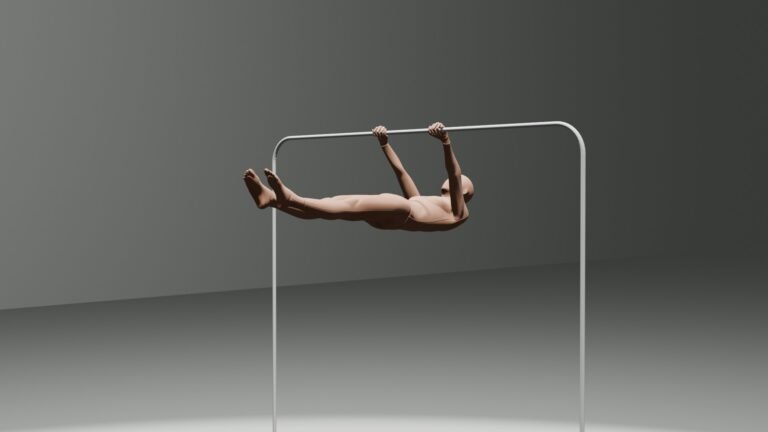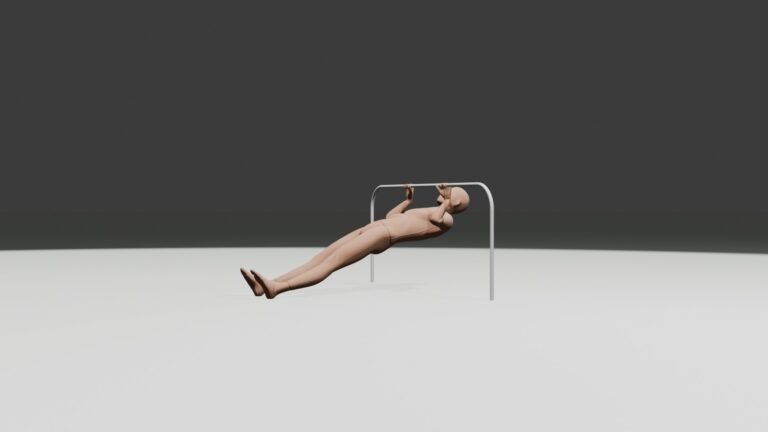

The chin up is often overshadowed by the other bodyweight pulling exercise, the pull up, but chin ups remains one of the most effective compound upper-body movements in existence. If you are looking to build impressive biceps, widen your lats, and develop a grip like a vice with only your bodyweight, doing chin ups is the way.
While it is generally considered slightly easier than the pull up due to the mechanical advantage of the arms, mastering the technique is essential to avoid injuries and keep your joints healthy.
Typical progression path for pull-exercises would look something like this: Dead Hang 🠖 Inverted Rows 🠖 Chin Ups 🠖 Pull Ups 🠖 Weighted Chin Ups 🠖 Bar Pullovers 🠖 Muscle Up 🠖 Front Lever
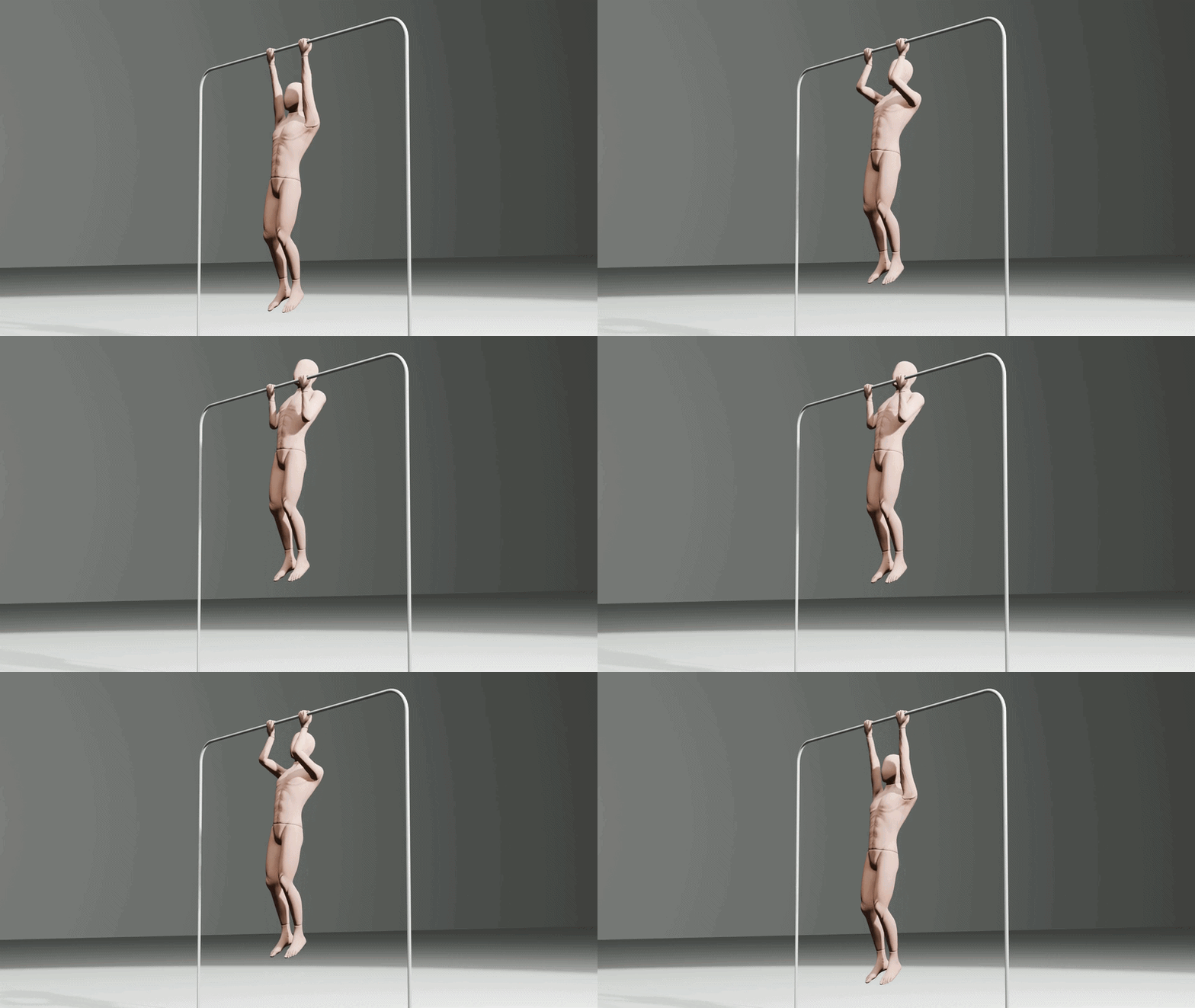
Here is a demonstration animation of how a chin up should look like. If you are doing them right now this will help you get an understanding:
How To Do Chin Ups For Beginners
Doing a chin up isn’t just about somehow pulling your weight up with your arms. To get a perfect chin up and maximize gains without injuring yourself you must focus on controlled movement from bottom to top. Here is a step-by-step execution guide:
1. Starting Position
Reach up and grab the bar with a shoulder width underhand grip. Your palms should be facing you. Hang at full dead hang position. Your legs can be straight or crossed at the ankles. Squeezing you glutes helps to stabilize your lower body.
2. Activating Right Muscles
Don’t just yank your body up with your elbows as fast as possible. Start the move by pulling your shoulder blades down and back (depressing the scapula). Imagine you are trying to put your shoulder blades into your back pockets. This activates your back muscles to make sure you are doing the heavy lifting with them, not just with your biceps.
3. Pulling Up
Start pulling by driving your elbows toward your ribs. Think about pulling the bar down to you rather than pulling yourself up to the bar. This will help you to stay in a better position and use right muscles. Lean back very slightly to allow your chin to clear the bar without straining your neck.
4. The Top Position
The rep is complete when your chin has clearly passed the bar. Now don’t try to extend your neck just to barely reach your chin over the bar. If and when you have enough strength your chin will go over the bar without cheating. For maximum recruitment, try to get your upper chest to touch the bar. Hold this peak contraction at the top for a split second before coming down.
5. The Controlled Descent
The descent, or lowering phase is where most muscle growth happens. Don’t just let loose and drop your body down. Lower yourself with control until your arms are fully locked out again.
What Muscles Do Chin Ups Work?
Before we grab the bar, it’s important to understand what is happening under the skin and what muscles are worked and need to do chin ups. The chin up utilizes an underhand grip, where your palms face toward your face.
- Primary Muscles Worked: Biceps and lats (latissimus dorsi)
- Secondary Movers: Rhomboids, trapezius, posterior deltoids, and the your core of course.
- The Advantage Of Chin Ups vs Pull Ups: Because your palms face you, your biceps are in a stronger anatomical position to assist the back. This makes the chin up easier and the ultimate “two-for-one” exercise for back and arm growth compared to pull ups.
Common Mistakes to Avoid
- Half-Reps: Not going all the way down to a dead hang or not getting the chin over the bar. You’re only cheating your own progress.
- Kicking/Kipping: Using your legs to create momentum. This turns a strength exercise into a cardio exercise and reduces muscle tension.
- The “Neck Reach”: Straining your neck forward to get your chin over the bar. This causes unnecessary neck strain and usually means your lats have given up and has absolutely no benefit at all to anything.
- Elbow Flaring: Keep your elbows tucked relatively close to your body. Letting them flare out wide can put undue stress on the shoulders.
How To Get Your First Chin Up
If you can’t do a single rep yet, don’t worry. Most people can’t when they start. Follow this progression to get your first chin up:
Level 1 Dead Hangs
Simply hang from the bar for as long as possible. Aim for 3 sets of 30 seconds. This builds the necessary grip strength and shoulder stability. You can have overhand grip (palms away) or underhand grip (palms facing your) depending if you want to just train for chin ups or overall grip strength that also helps with pull ups and other exercises down the line.
Level 2 Chin Up Negatives
This is the fastest way to get your first rep. Take a starting position for chin up and use a box to jump on top of the bar to the chin up position. Hold it for a second, then lower yourself as slowly as possible (aim for a 5-second count). Aim for 5-8 reps.
Level 3 Assisted Chin Ups
Use a resistance band looped over the bar to provide an “assist” by removing some of your bodyweight at the bottom of the movement. Start with thick bands and as you get stronger, use thinner bands until you don’t need them at all. I suggest to moving away from the bands as soon as possible.
4-Week Chin-Up Progression Program
This 4-week program will take your chin ups from zero to your first chin up and from first few, shaky chin ups to a solid set of 7 to 10 reps. Depending on your level, start where you feel is the most convenient for you. If 1 week for a specific focus are is not enough repeat that same week for as many times as needed before moving to the next focus area.
Resting is key. Take 2-3 minutes of rest between sets. Chin-ups are a high-intensity movement. You need your energy back to maintain good form.
Listen to your body. If you feel more sore than normal or somewhere hurts in a bad way for example your elbows, take an extra rest day.
| Week | Focus | Day 1 | Day 2 | Day 3 |
| 1 | Grip & Control | Dead hangs: 3 sets of max time | Chin up negatives: 3 sets of 5 reps (5-sec lower) | Active scapular holds*: 3 sets of 10 reps |
| 2 | Building Volume | Band assisted chin ups: 3 sets of 8 reps | Chin up negatives: 4 sets of 5 reps (6-sec lower) | Dead Hangs: 3 sets of Max Time |
| 3 | Strength Peak | Band assisted chin ups: 4 sets of 6 reps (Thinner band) | Chin up negatives: 5 sets of 3 reps (8-sec lower) | Isometric holds at the top position: 3 sets of 15 sec |
| 4 | The Mastery | Full chin up attempts: 5 sets of max reps | Band assisted chin ups: 3 sets of 10 reps | Test day: See how many full reps you can do! |
*Hang from a pull-up bar with straight arms and engage your scapula by pulling the shoulders down and slightly back without bending the elbows
Improve Your Results With Proper Training
If you’re doing chin ups as part of your training, make sure you’re also focusing on proper form, progression, and consistency.
Most beginners struggle not because the exercise is bad, but because they’re missing the basics. If you are just starting out and looking to learn the basics of bodyweight training without equipment, this Beginner No Equipment Bodyweight Training Guide will get your started easily and you will make your workouts so much better and see result in no time!
Once you have the basics down, you can try this very simple Beginner Bodyweight Workout Plan to stay on track until you want to move onto some more advanced exercises.
If you are struggling with bad form, injuries or lack of motivation, you can also check these:
How To Advance With Chin Ups?
Okay let’s say you are already a master at chin ups and want to keep doing them but they just feel too easy and boring now. Once you are at this point and can perform 10–12 perfect bodyweight chin ups for couple sets, it’s time to increase the intensity to continue seeing results.
- Weighted Chin Ups: Use a dip belt or a weighted vest. Adding even 10 % of your bodyweight will significantly restart your strength gains.
- Pause Reps: Go even slower and puse for 2 seconds at the top, midway, and bottom of every rep. This eliminates momentum and increases “time under tension.”
- L-Sit Chin Ups: Keep your legs out straight in front of you (parallel to the floor) while performing the chin up. This adds a massive core stability challenge to the move.
- Towels/Fat Grips: Wrap a towel around the bar and hold onto that instead. This will take your grip and forearm strength to an elite level.