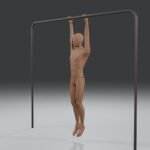

The L-sit is one of the first impressive and cool looking calisthenic skill that proves your bodyweight strength is getting momentum. It is a “statue-like” hold where you support your entire body weight on your hands while keeping your legs locked out horizontally in front of you, forming a perfect “L” shape.
While it looks like a simple core move, the L-Sit is actually a full-body contraction that demands a lot of tricep strength, shoulder depression, and hip flexor endurance. If you want a “bulletproof” core and the ability to control your body in space, the L-sit is one of the best first skills to learn when starting calisthenics and bodyweight training.
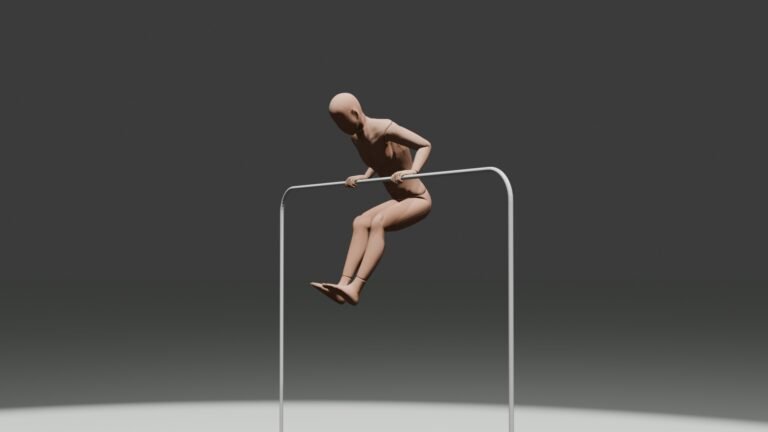
You can perform the L-sit on the floor, on parallettes, or on dip bars. For beginners, using parallettes, dip bars or two sturdy chairs is recommended because it gives you more ground clearance and you legs can sag a bit if you don’t yet have the strength to keep them above your hips.
Correct execution for L-sit:
- sit on the floor with back straight
- place your hands directly under your shoulders. If you are on the floor, spread your fingers wide. If you are on bars, grip them firmly
- imagine you are trying to push the floor away to depress your shoulders. your shoulders should move down, far away from your ears to kind of give your arms more length. If your shoulders “shrug” up, you will not have enough space to lift your body
- engage your core and press into your hands to lift your butt off the ground. At first, keep your knees tucked toward your chest
- slowly straighten your legs out in front of you. Point your toes and squeeze your quads. Your goal is to keep your legs at a 90-degree angle to your torso
To Get Your First L-Sit, Follow These Progressions
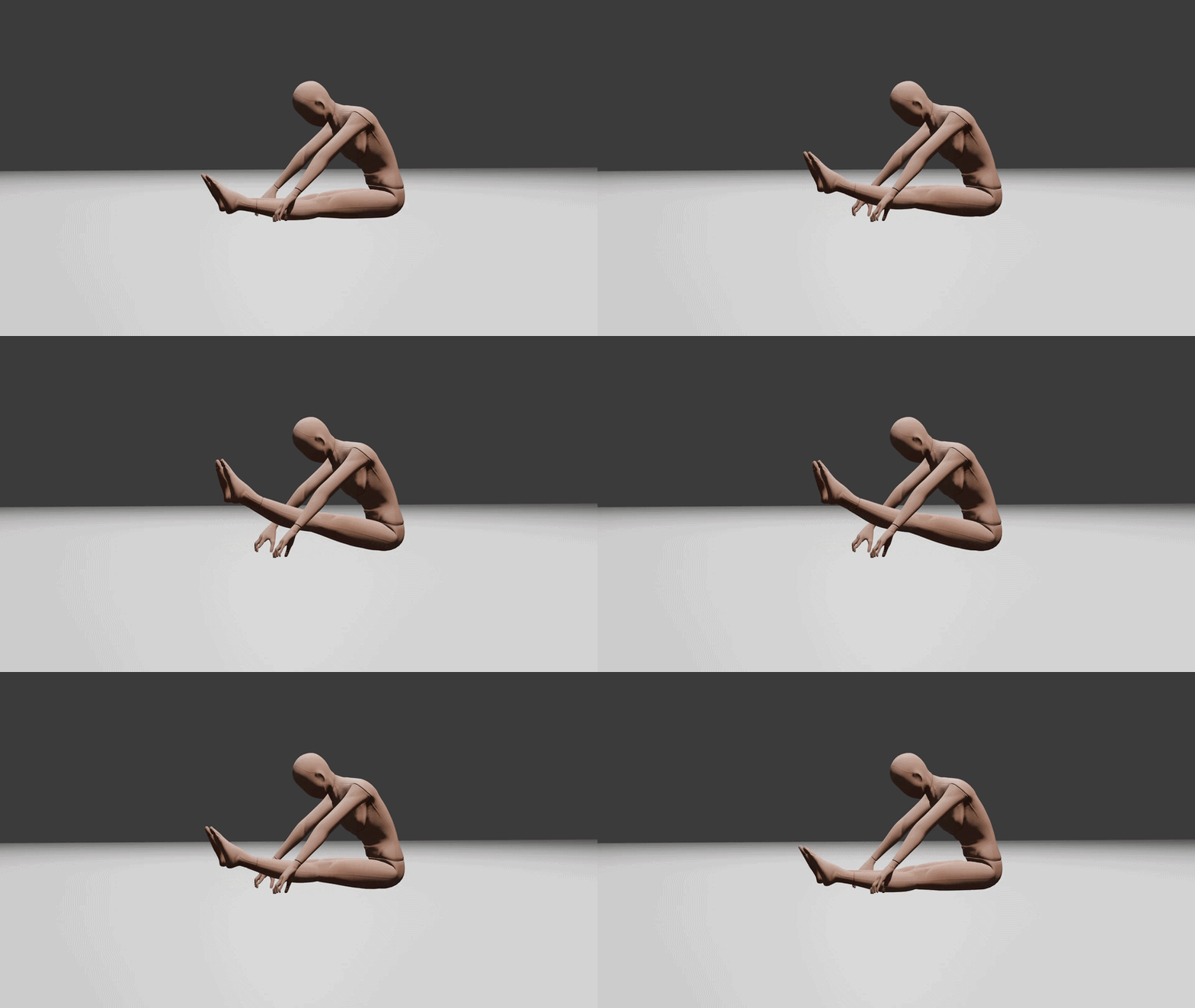
Pike compressions. From the L-sit starting position, place your hands as far away as possible and lift your straight legs up, so your body makes almost a V-shape. Hold your legs here as long as possible and progress to repetition from up to down. Don’t let your feet touch the ground between repetitions. Goal: 3 sets of 30 seconds and 3 sets of 12 reps.
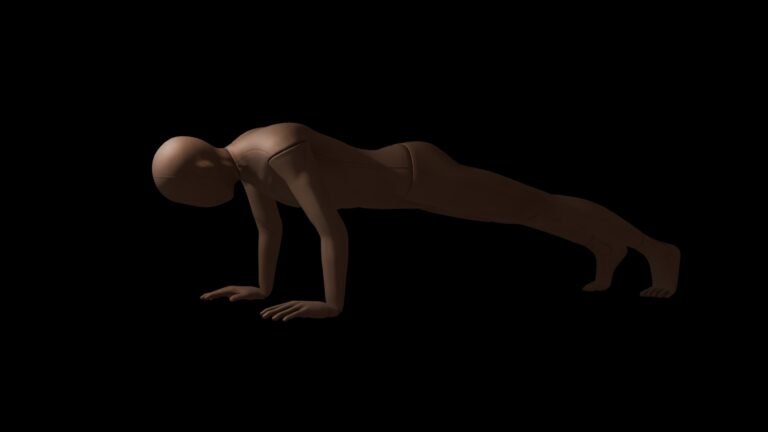
Support holds. Just focus on holding your body weight up with your feet still on the ground, knees bent or with straight legs. Focus entirely on shoulder depression. Goal: 3 sets of 30 seconds.
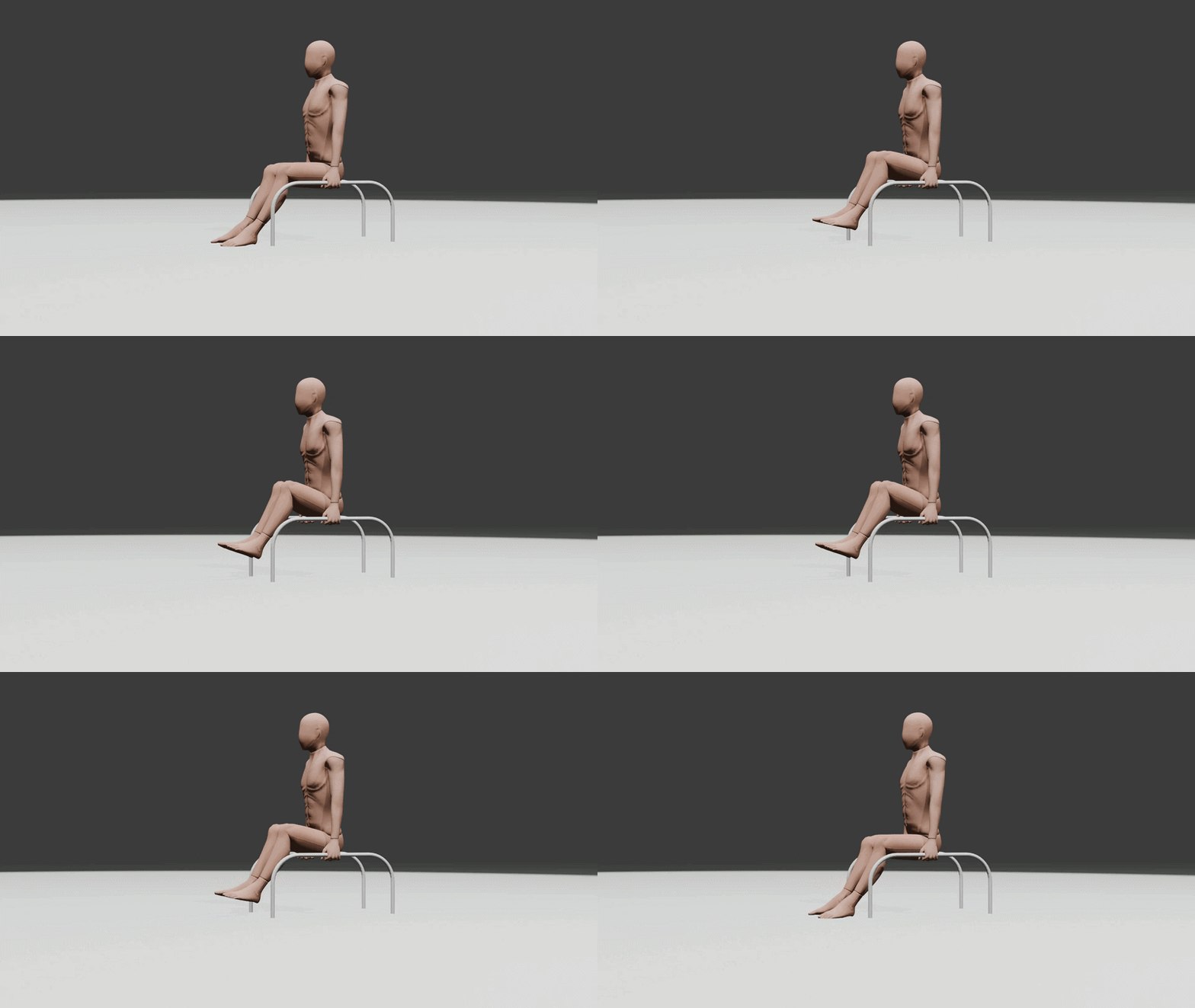
Tuck L-sit holds. Lift your butt and your feet off the ground, but keep your knees tucked tightly into your chest. Tucked position helps to take some weight off of your bodyweight. Goal: 3 sets of 15–20 seconds.
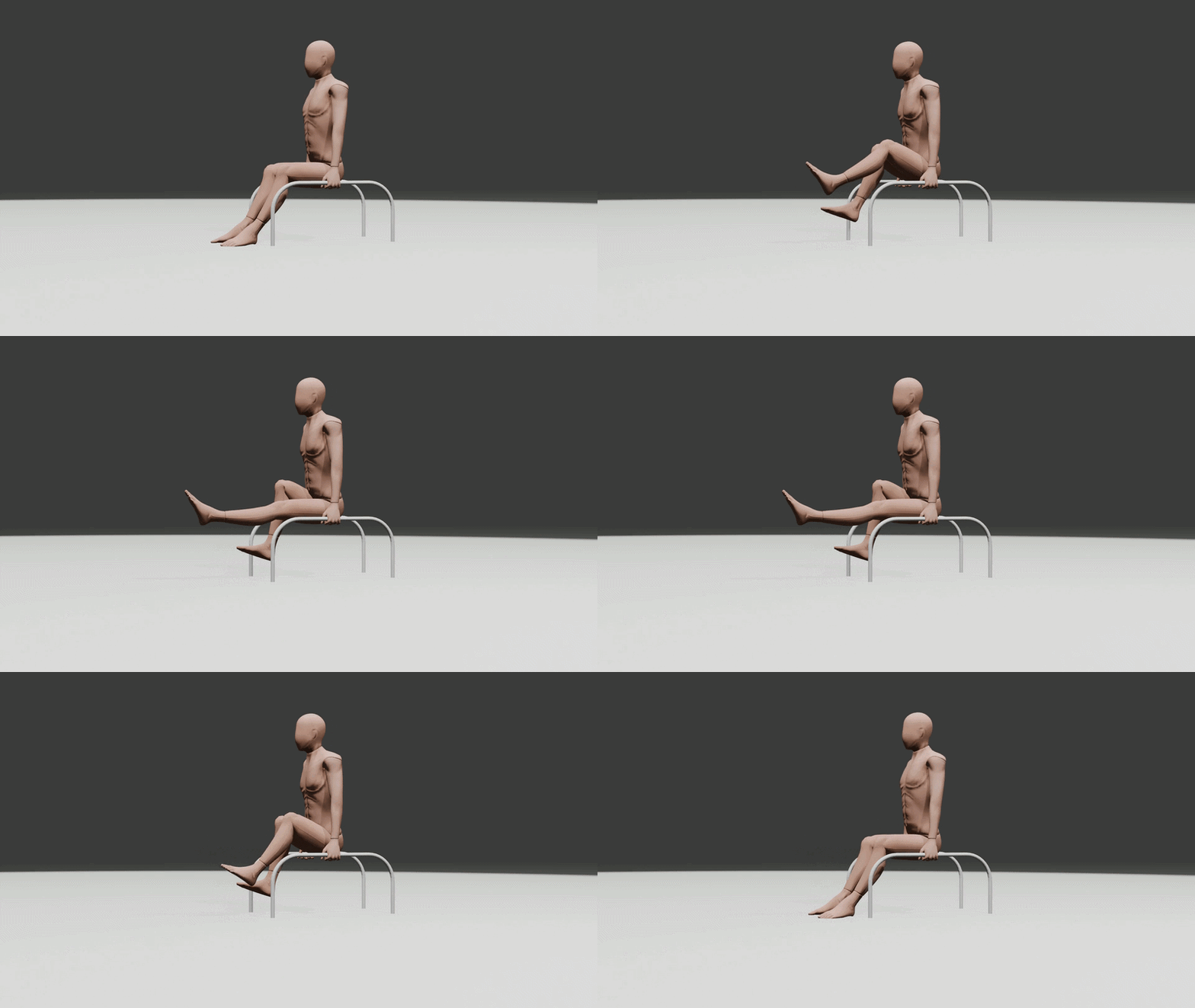
One-leg L-sits. From the tuck position, slowly extend one leg out straight while keeping the other tucked. Switch legs halfway through the set. Goal: 3 sets of 10 seconds per leg.
The full L-sit.Extend both legs. Even if you can only hold it for 2 seconds, you have officially achieved the L-sit!
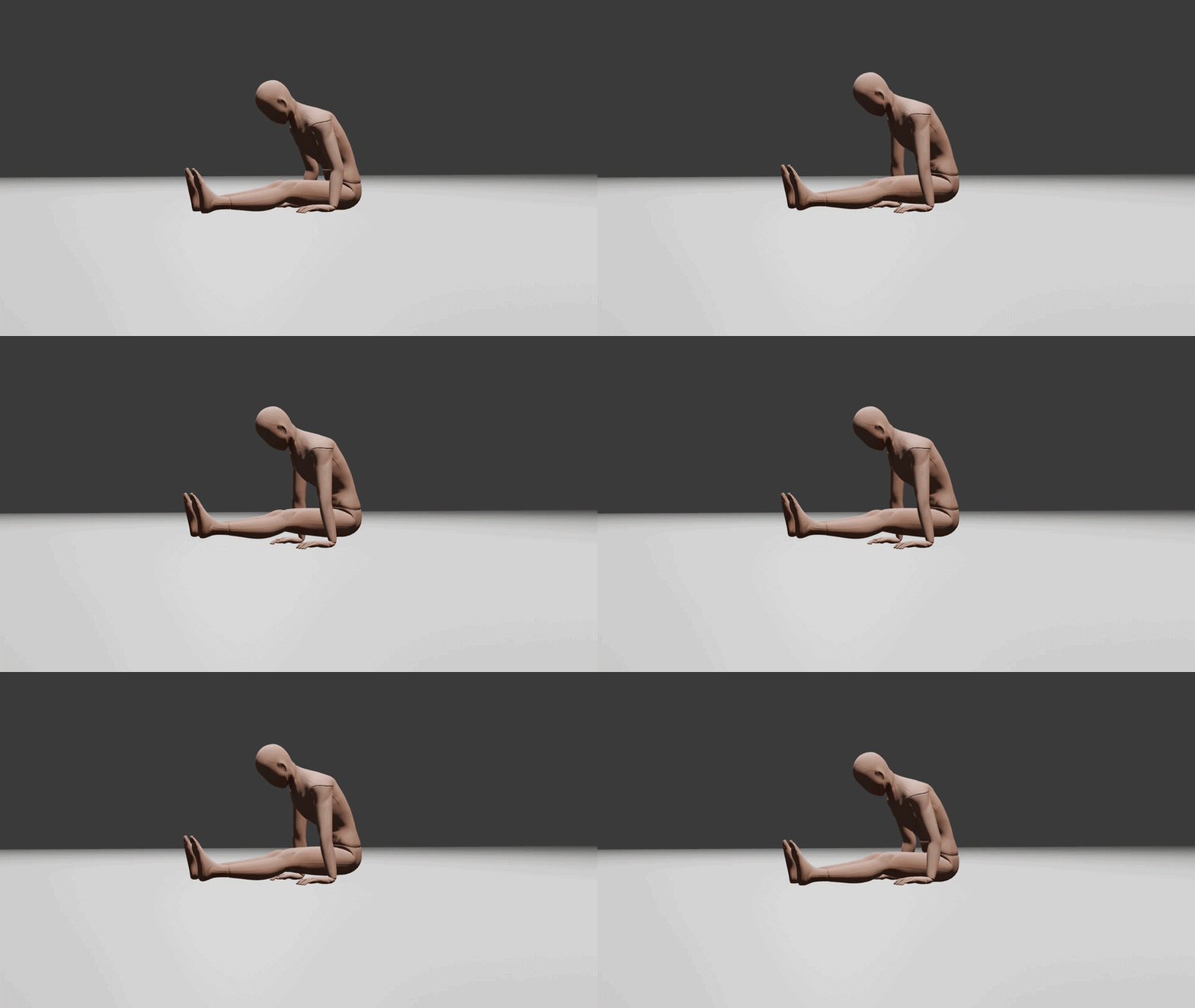
The L-Sit is a brutal but rewarding exercise. It leaves no room for weakness but once you get it, it is a cool looking skill to impress others and a great way to start or finish any training day.
If you can’t do a proper L-sit, it exposes your tight hamstrings, weak shoulders, and a soft core. So this tells you what you should focus on and train for in coming weeks. By adding L-sit progressions and eventually full L-sits to your routine, you will see a massive carryover into your pull-ups, push-ups, and overall athletic performance.
Tips For L-Sits
The “Hidden” Requirement: Active Hamstring Flexibility
Many people think they have a “weak core” because their legs won’t stay up, but the culprit is often stiff hamstrings.
- The Insight: When you sit in an L-Sit, your hamstrings are being stretched while your quads and hip flexors are being contracted. This is called reciprocal inhibition. If your hamstrings are tight, they act like a tensioned rubber band pulling your legs back down toward the floor.
- The Fix: To improve your L-Sit, you must train your “Pike Stretch.” Being able to touch your toes easily will make the L-Sit feel 50% lighter because you aren’t fighting your own muscle tension.
Compression Strength: The Missing Link
The L-Sit is a “compression” exercise. This is the ability to close the gap between your upper body and your thighs.
- The Insight: Most gym-goers have strong abs from crunches, but they have zero “compression strength.”
- Pro Drill: Sit on the floor with your legs straight out in front of you. Place your hands on the floor by your knees and try to lift your feet off the ground while keeping your butt down. It will likely cause your hip flexors to “cramp”—that cramp is a sign that those muscles are weak and need this specific training.
Why Your “Triceps Feel Too Short” During L-Sit
A common complaint from beginners is: “My arms are too short to lift my butt off the floor!” * The Insight: Your arms are almost certainly not too short. The issue is scapular depression.
- The Anatomy: Most people sit with their shoulders “relaxed” (elevated). To do an L-Sit, you must actively push your shoulders down. This “lengthens” your arms by about 2–3 inches. If you are still struggling, start your training on parallettes or dumbbells to give yourself extra height until your depression strength improves.
The “Cramp” Factor (And why it’s a good thing)
It is very common for the quads or hip flexors to seize up or “charley horse” during the first few weeks of L-Sit training.
Healthy hip mobility plays an important role in posture, performance, and lower-body movement. Many people develop tight hip flexors from sitting too much or repetitive training patterns. See our complete guide on stretching tight hip flexors for practical exercises and mobility tips.
- The Insight: This happens because those muscles are being asked to contract in a very “shortened” position that they aren’t used to.
- The Advice: If you cramp, shake it out, stretch for a second, and go again. Eventually, your nervous system will adapt, the cramping will stop, and you’ll unlock a new level of lower-body control.
Improve Your Results With Proper Training
If you’re doing L-sits as part of your training, make sure you’re also focusing on proper form, progression, and consistency.
Most beginners struggle not because the exercise is bad, but because they’re missing the basics. If you are just starting out and looking to learn the basics of bodyweight training without equipment, this Beginner No Equipment Bodyweight Training Guide will get your started easily and you will make your workouts so much better and see result in no time!
Once you have the basics down, you can try this very simple Beginner Bodyweight Workout Plan to stay on track until you want to move onto some more advanced exercises.
If you are struggling with bad form, injuries or lack of motivation, you can also check these:
How to Advance With L-Sits
Once you can hold a clean L-Sit for 15+ seconds, you are ready for the elite variations:
L-Sit to Handstand: A classic gymnastics transition that requires incredible shoulder mobility and strength.
V-Sit: Instead of a 90-degree angle, you pull your feet up toward your face, creating a “V” shape. This requires extreme hip flexor strength.
L-Sit Pull-Ups: Perform a standard pull-up while maintaining the L-Sit position throughout the entire rep.
Weighted L-Sits: Use light ankle weights to increase the leverage challenge on your hip flexors and lower abs.