
After two solid years of grinding in the weight room, lifting heavy, and chasing the pump, I hit a wall. Don’t get me wrong—weightlifting gave me a great foundation of strength. But one day, I found myself scrolling through videos of people doing insane calisthenics skills.
I saw athletes holding effortless handstands, explosive muscle-ups, and defying gravity with the human flag. I looked at my barbell and realized I wanted that kind of absolute, functional body control.
So, I decided to completely pivot my fitness journey. I swapped the iron for the pull-up bar, and I just started.
It hasn’t been easy, but the progression has been incredibly rewarding. Here is how my timeline looked:
- The Handstand: Took me about 6 months to master the balance and shoulder mobility.
- The Muscle-Up: Took 8 months to figure out the explosive transition from a pull to a push.
- The Human Flag: This was the ultimate test. It took me about 15 months of dedicated lateral core and shoulder training to finally nail it.
If you are sitting where I was a year or two ago, wondering how to make the leap, here is exactly how you can start your own calisthenics journey. By already building your basic strength at the gym your journey will be so much easier than completely beginners.
How To Make The Switch From Weightlifting To Calisthenics
When you transfer from weightlifting, it’s easy to think you can jump straight into the cool tricks. Trust me, that is a fast track to injury. Even with a strength background, bodyweight training uses your muscles, joints, and connective tissues in entirely different ways.
You need to master the basics first. Here are the foundational exercises you should focus on:
The Essential Basic Bodyweight Exercises
- Push-Ups & Pike Push-Ups: Standard push-ups build chest and tricep endurance, while pike push-ups shift the load to your shoulders, laying the groundwork for handstands.
- Pull-Ups & Dips: The ultimate upper-body builders. Pull-ups build the vertical pulling power needed for muscle-ups, while dips bulletproof your chest and triceps through a deep range of motion.
- Hanging Leg Raises: Forget crunches. You need a strong, compressed core to hold your body straight in mid-air.
The “Every-Other-Day” Beginner Routine
When starting out, your nervous system and tendons need time to adapt. Don’t train every day. Instead, use a high-frequency, high-rest split:
- Schedule: Train 3 days a week (e.g., Monday, Wednesday, Friday) with every other day as rest, followed by 2 full days of rest over the weekend.
- Focus: Perfect form over reps. Keep your core tight and move through a full range of motion.
Visual Learner? We’ve Got You Covered!
If you’re ready to start your own transformation, you don’t have to figure it out by yourself. This site is packed with step-by-step guides and easy-to-follow animated videos of every single exercise.
Check out our comprehensive animated bodyweight training exercises library to see the exact form required to master these moves safely.
Advanced Bodyweight Exercises That Will Transfer To Cool Calisthenic Skills
Once you can comfortably smash out 15 clean pull-ups, 20 dips, and perfect hanging leg raises, the real fun begins. Your weightlifting background will actually give you a massive advantage here as you move toward advanced calisthenics skills.
Here are the harder exercises you should transition to next:
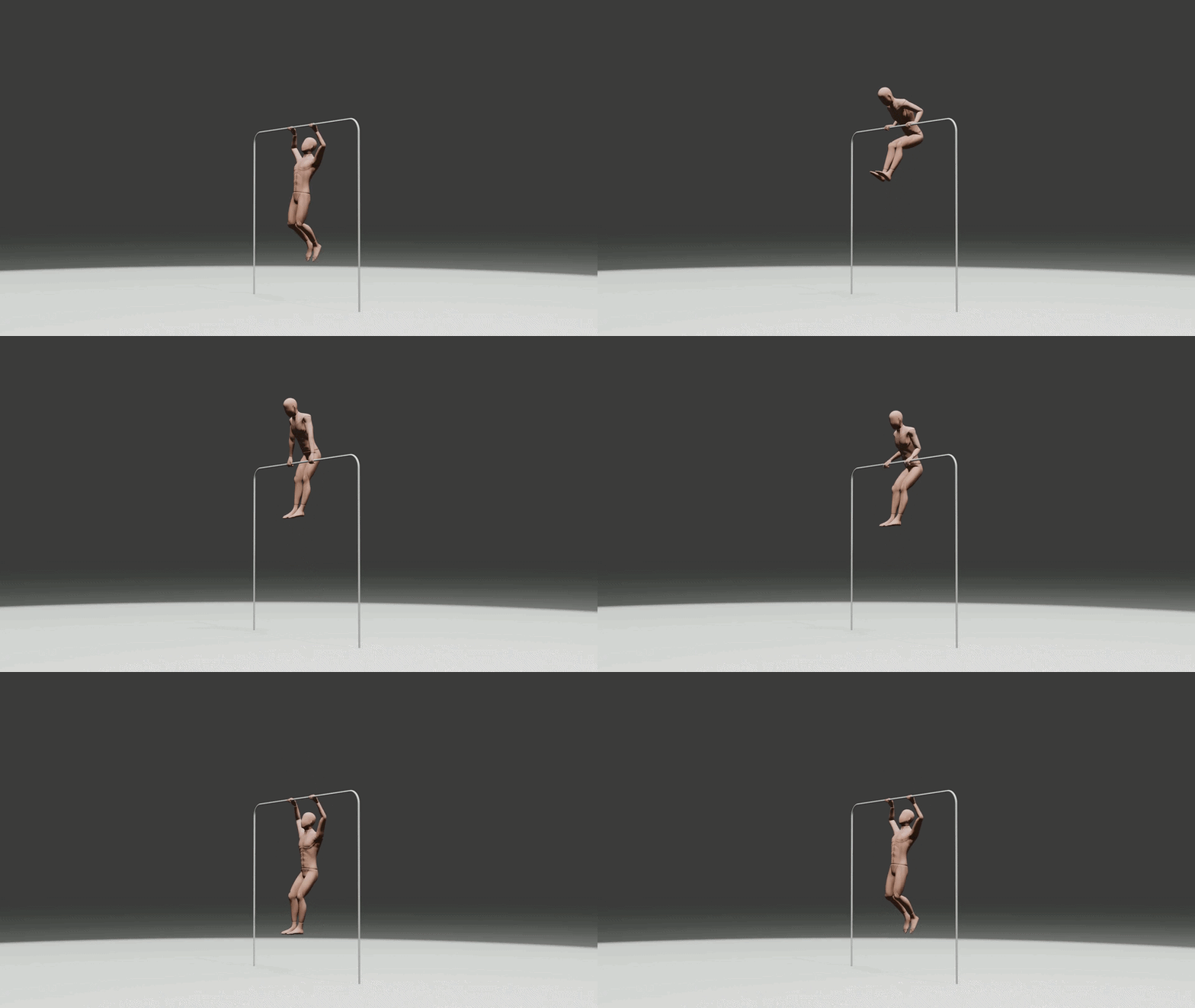
1. Muscle-Ups
This is the ultimate milestone that separates the basics from advanced calisthenics. Unlike a standard pull-up, a muscle-up requires explosive power to pull your chest past the bar, followed by a powerful transition to dip yourself over it. It builds incredible upper-body pulling and pushing power simultaneously.
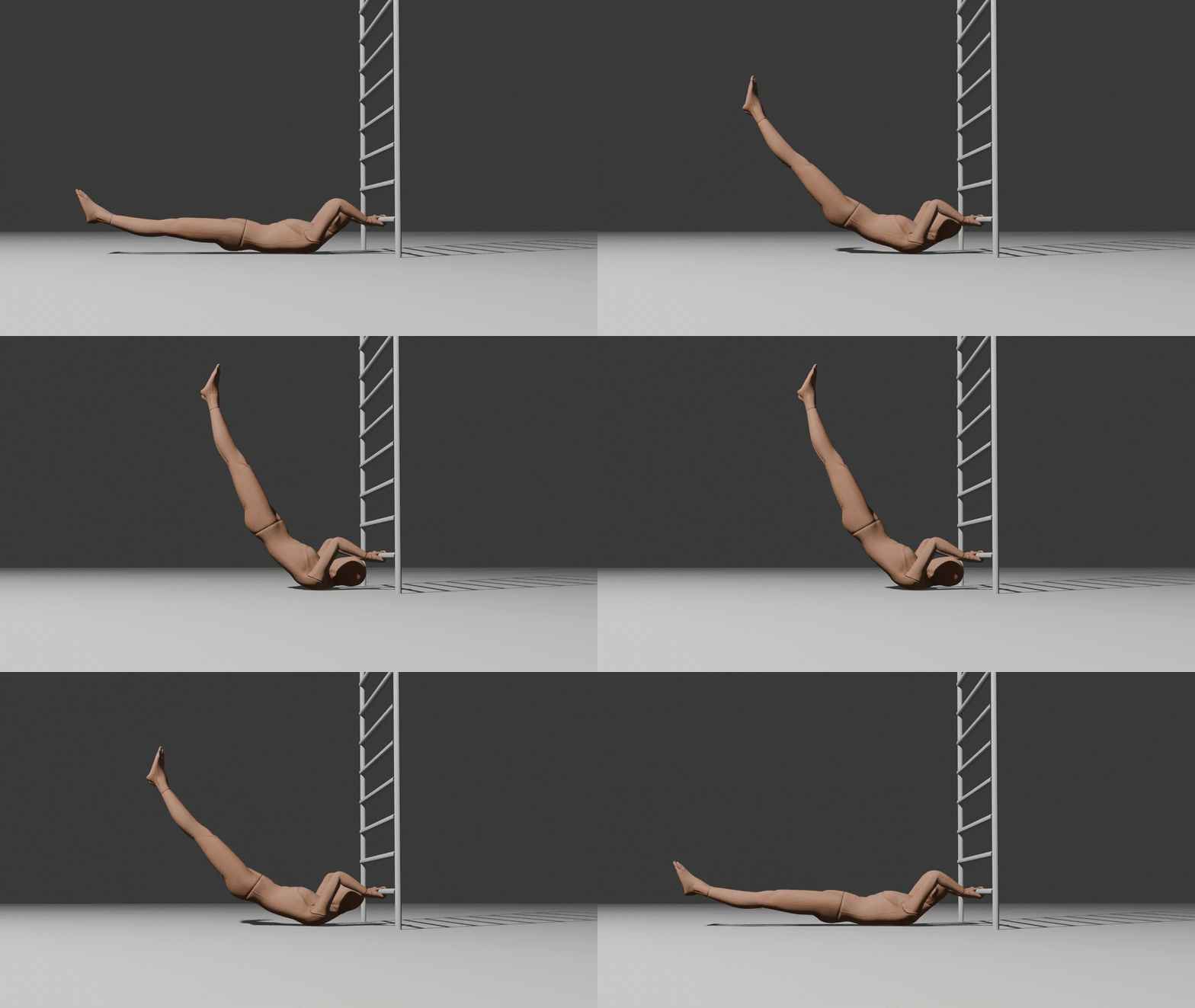
2. Dragon Flags
Made famous by Bruce Lee, the dragon flag is a brutal full-body core exercise. It requires you to lock your entire body into a straight line while pivoting from your shoulders. This is the direct stepping stone to the Human Flag and Front Lever.
3. Handstand Holds (Against the Wall & Free)
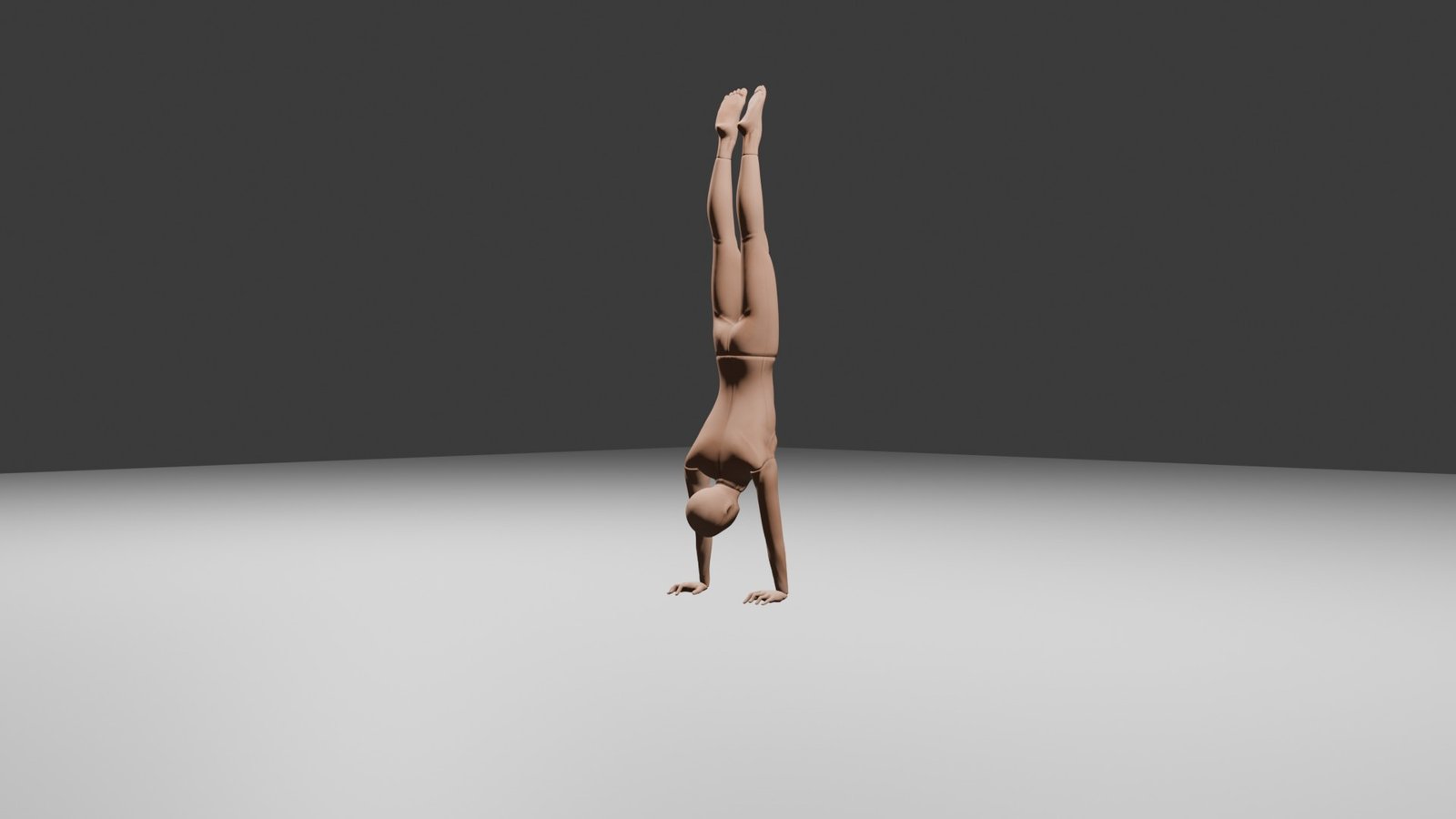
Move away from pike push-ups and start kicking up. Begin with chest-to-wall handstand holds to build straight-line endurance, then slowly practice removing your feet from the wall to find your balance.
Bodyweight Training vs. Weightlifting: Why the Progress Feels Different
When I was weightlifting, progress was purely a numbers game. You add 2.5 kg to the bar, or you don’t. It was slow, linear, and honestly, it often felt like a grind. But when I switched to calisthenics, my perception of progress completely changed—and I actually found myself progressing much faster.
Why? Because calisthenics is packed with hundreds of micro-milestones.
In weightlifting, you’re doing the same movement forever, just heavier. In bodyweight training, you are constantly changing the physics of how your body moves. One week you can’t hold a tucked L-sit; the next week you can hold it for three seconds. A month later, your legs are straight.
Every single workout gives you a small, tangible victory. Whether it’s a slightly cleaner pull-up form, a second longer in a handstand, or leaning a fraction deeper into a planche lean, these constant wins keep your dopamine levels high and make the journey incredibly addictive compared to chasing a higher number on a barbell.
Does Calisthenics Transfer to Weightlifting? (The Bench Press Shock)
The short answer? Absolutely, yes. There is a common myth in the bodybuilding world that bodyweight training makes you lose your raw gym strength. I am living proof that the exact opposite is true.
After quitting weightlifting entirely and doing nothing but calisthenics for 8 months, I decided to test my strength on the bench press just for fun. At this point, my chest routines consisted entirely of basic variations: intense push-ups, deep dips, and pike push-ups. I hadn’t touched a barbell in nearly a year.
To my absolute shock, I broke my old bench press personal record. The bar felt completely effortless. Because calisthenics forces your stabilizing muscles, core, and shoulders to work in perfect synchronization, it creates a bulletproof foundation of raw power. Exercises like deep dips build incredible lower-chest and tricep drive, while push-ups build serious pectoral endurance.
If you’re worried about losing your gains by moving away from the weights, don’t be. Calisthenics doesn’t just keep you strong—it unlocks a type of functional, explosive power that weightlifting alone rarely achieves.
Are You Ready to Start Your Calisthenics Journey?
Making the switch from weightlifting to bodyweight training completely redefined what fitness means to me. It took me from just looking strong to actually feeling powerful, agile, and in total control of my body.
If you are on the fence about leaving the heavy weights behind, my advice is simple: just start. You don’t need to master the human flag on day one. Focus on nailing your first clean pull-up, building a solid routine, and celebrating those small, daily micro-milestones. Your weightlifting background has already given you the foundation—now it’s time to unlock your true functional potential.
Wherever you are on your fitness path, remember that consistency beats perfection every single time.