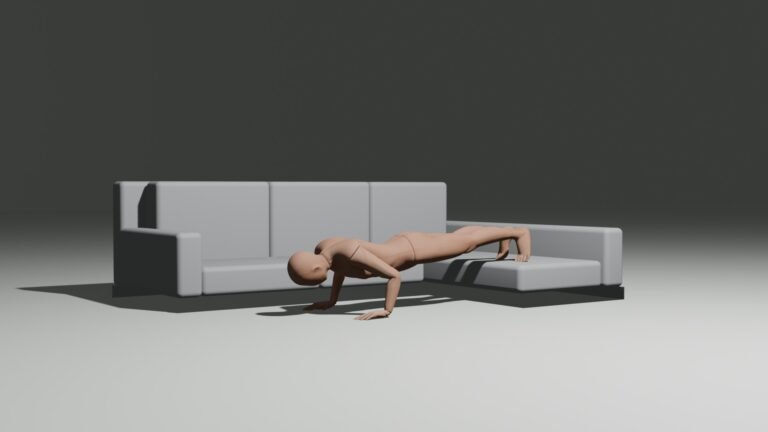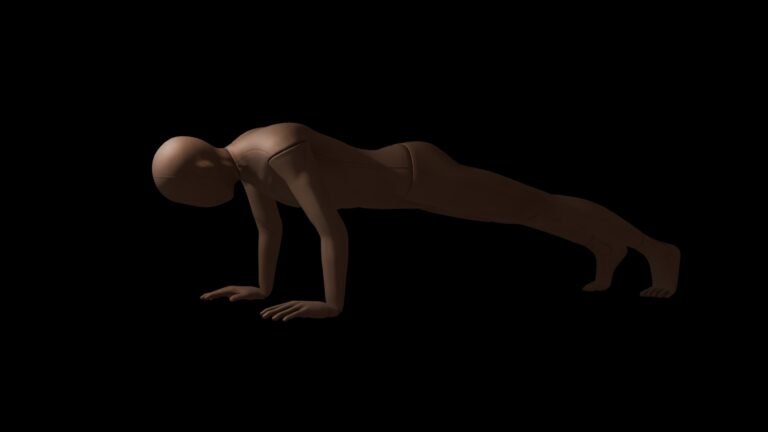

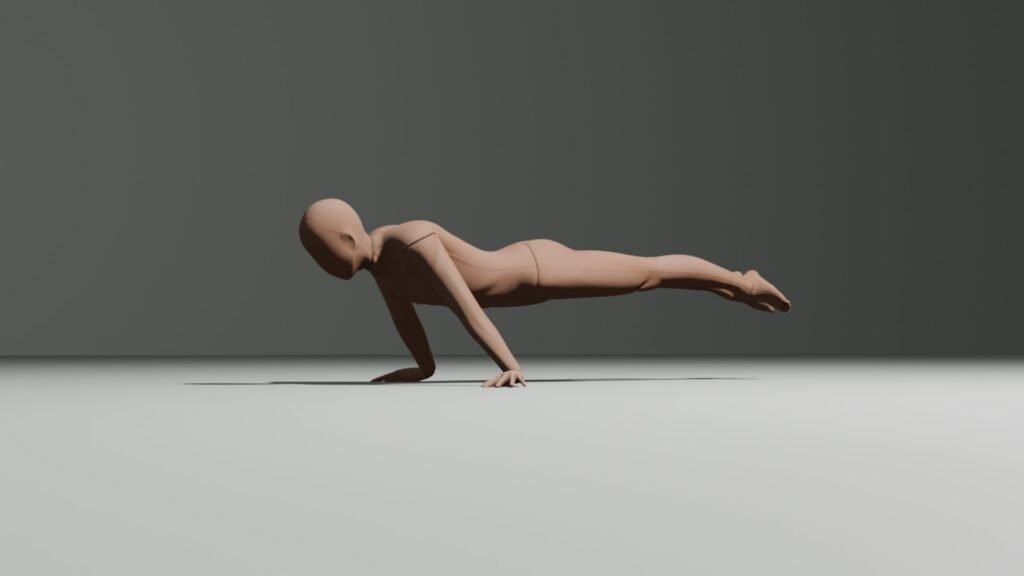
To learn a planche, start by building straight-arm strength and learning to lean your shoulders forward over your hands. Progress from the planche lean to tuck planche, advanced tuck, straddle planche and finally the full planche. Keep your elbows straight, push the floor away, maintain a tight body position, and only move to a harder progression when you can control the current one.
| Progression | Main goal |
|---|---|
| Planche Lean | Learn forward lean and straight-arm support |
| Tuck Planche | Lift the feet while keeping the body compact |
| Advanced Tuck | Lengthen the lever |
| Straddle Planche | Extend the legs with a shortened lever |
| Full Planche | Straight legs together, body parallel to floor |
What Is A Planche?
A planche is a static calisthenics skill in which you support your body entirely on your hands while keeping your feet off the floor. In a full planche, the arms remain straight and the body is held roughly parallel to the ground.
The challenge increases as you lengthen the lever between your hands and the rest of your body. That’s why beginners normally progress from planche leans and compact tuck positions toward advanced tuck, straddle and eventually the full planche.
The planche combines incredible levels of:
- Shoulder strength
- Core strength
- Straight-arm strength
- Body control
- Balance
For many calisthenics athletes, the planche is considered one of the ultimate bodyweight skills alongside the front lever and handstand push-up.
Unlike push-ups, your feet never touch the floor.
To perform a planche successfully, you must generate enough strength to keep your entire body elevated while maintaining a rigid body position.
There are several variations:
- Planche Lean
- Tuck Planche
- Advanced Tuck Planche
- Straddle Planche
- Full Planche
As your legs move farther from your hands, the lever becomes longer and the demand on your shoulders and straight-arm strength increases.
The good news is that almost anyone can work toward a planche if they follow proper progressions and stay consistent.
In this guide, you’ll learn:
- What the planche is
- Muscles worked during the planche
- Prerequisites for beginners
- Step-by-step planche progressions with animations for demonstration
- Common mistakes
- How long it takes to learn
- A beginner-friendly planche training routine
Are You Ready to Start Planche Training?
You don’t need to be able to perform a planche variation before you begin planche-specific training. However, a basic foundation of pushing strength, core control and comfortable wrist loading makes the early stages easier.
Useful starting points include:
Push strength: Being able to perform around 15-30 clean push-ups can be a useful benchmark, but it is not a strict requirement.
Core control: A solid plank or hollow-body hold gives you a useful foundation.
Scapular control: You should be able to actively push your upper back away from the floor with straight arms.
Wrist tolerance: You should be comfortable supporting your weight in a plank or gentle planche lean.
Supplements aren’t necessary to learn the planche, but creatine may support strength-training performance. Keep in mind that additional water weight can also make bodyweight skills more demanding. Read our Creatine for Calisthenics guide for a closer look at the benefits and trade-offs.
Planche Form: 5 Things to Get Right
1. Keep Your Elbows Straight
The planche is a straight-arm skill. Bending the elbows changes the movement and reduces the straight-arm demand you’re trying to develop.
2. Lean Your Shoulders Forward
Your shoulders need to travel in front of your hands to shift your center of mass over your base of support. As you get stronger, you can gradually tolerate a greater forward lean.
3. Push the Floor Away
Actively push through your hands and protract your shoulder blades rather than allowing your upper body to collapse between your shoulders.
4. Keep Your Core and Glutes Tight
Brace your abs and squeeze your glutes to keep the hips from dropping and maintain a controlled body position.
5. Keep the Progression Clean
Don’t move to a longer lever simply because you can briefly lift your feet. Use a progression you can control with straight elbows and consistent body position.
Planche Progression: From Lean to Full Planche
Step 1: Planche Lean
Why Start With the Planche Lean?
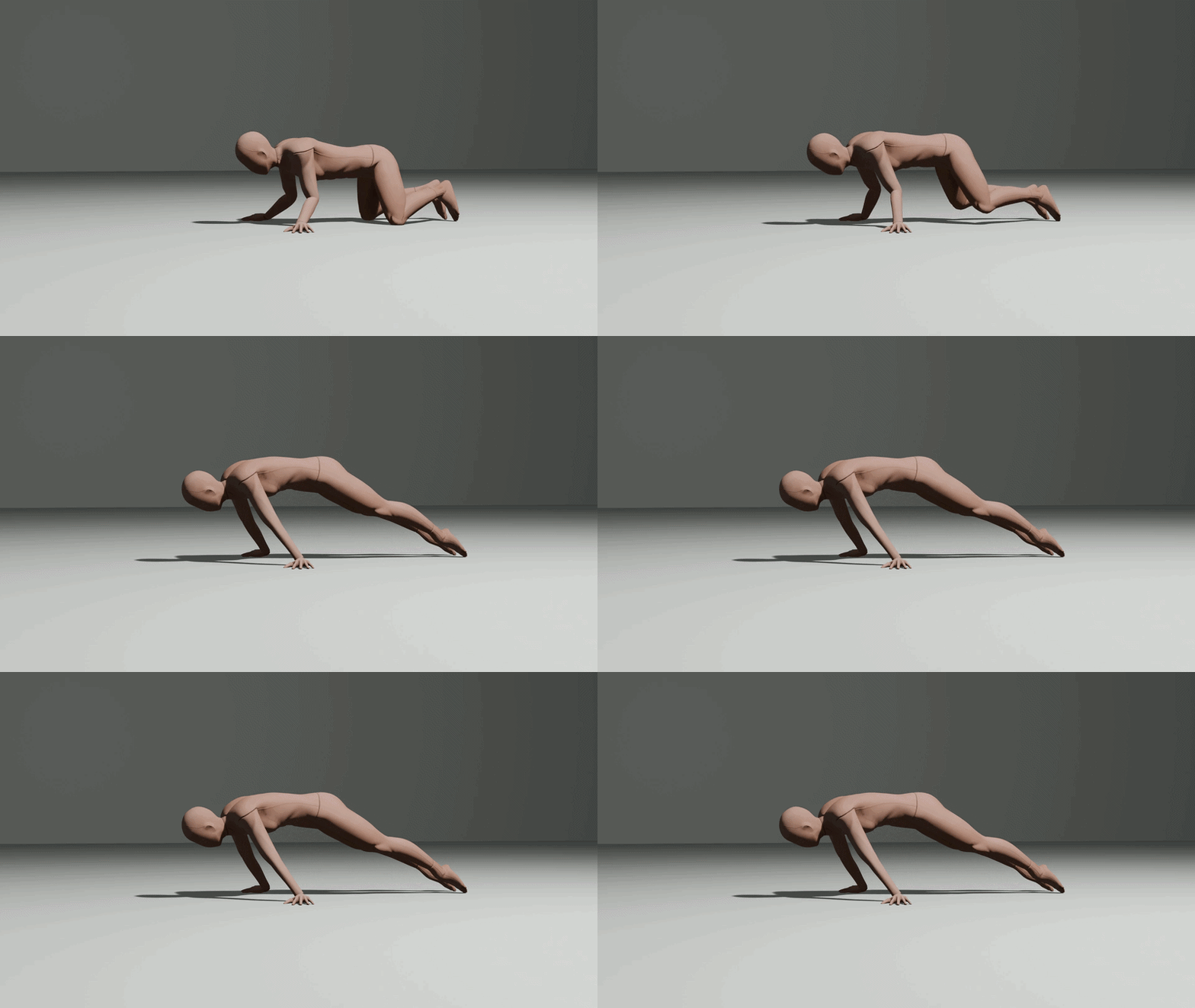
The planche lean is the best place to learn the mechanics of the planche because your feet remain on the floor while you practice straight arms, shoulder protraction and forward lean.
How to do it:
- Start in a high plank with your elbows straight.
- Push the floor away so your shoulder blades move forward around your rib cage.
- Brace your abs and squeeze your glutes.
- Slowly lean your shoulders forward beyond your wrists.
- Keep your body tight and your feet on the ground.
- Hold only as far forward as you can maintain control.
Move on when:
You can repeatedly hold a strong forward lean for roughly 20-30 seconds without bending your elbows or losing your body position before progressing.
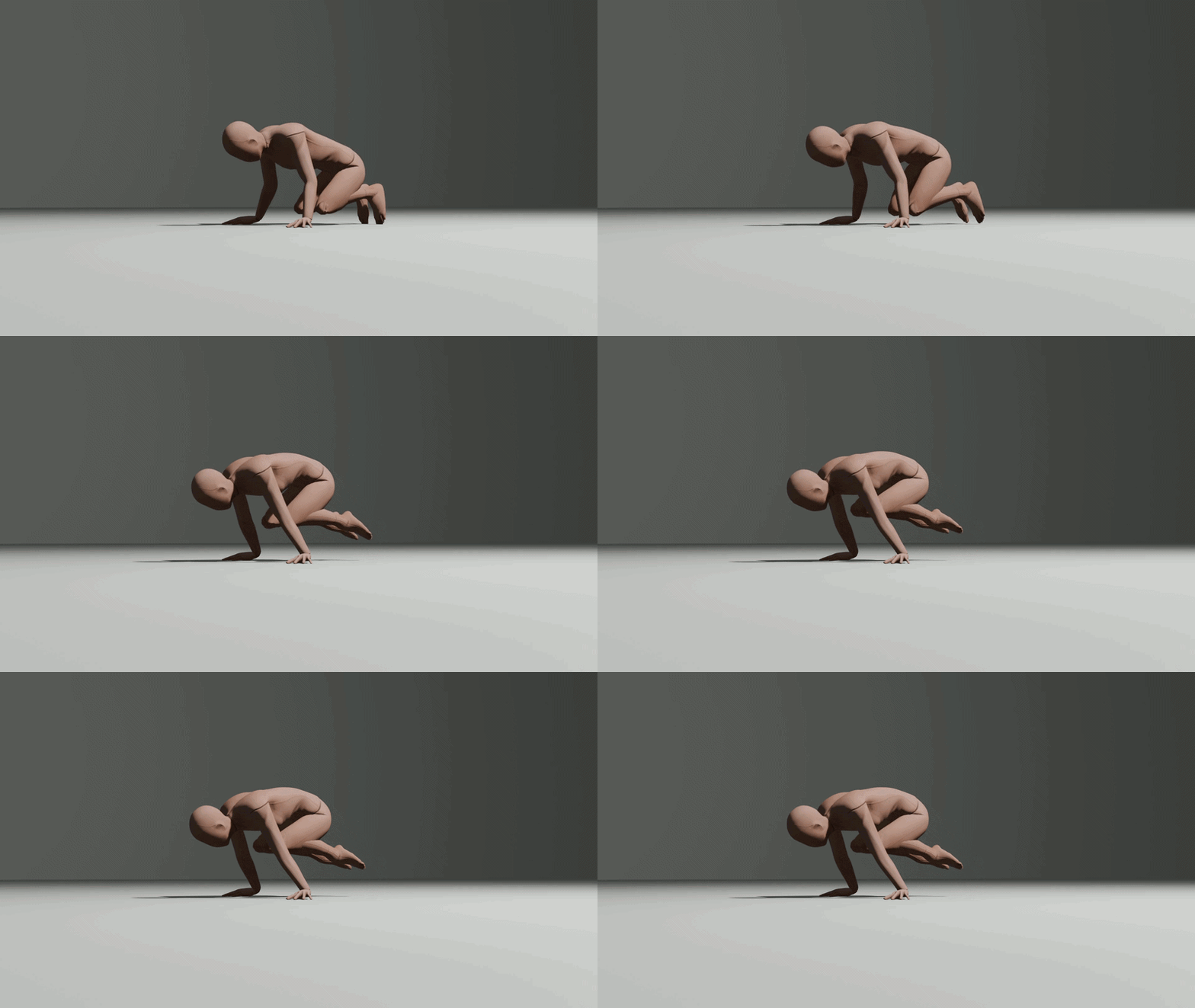
Optional beginner preparation: Frog Stand
If balancing your body on your hands is completely new, the frog stand can help you become comfortable shifting weight onto your hands. It is not a required step before planche training.
Step 2: Tuck Planche
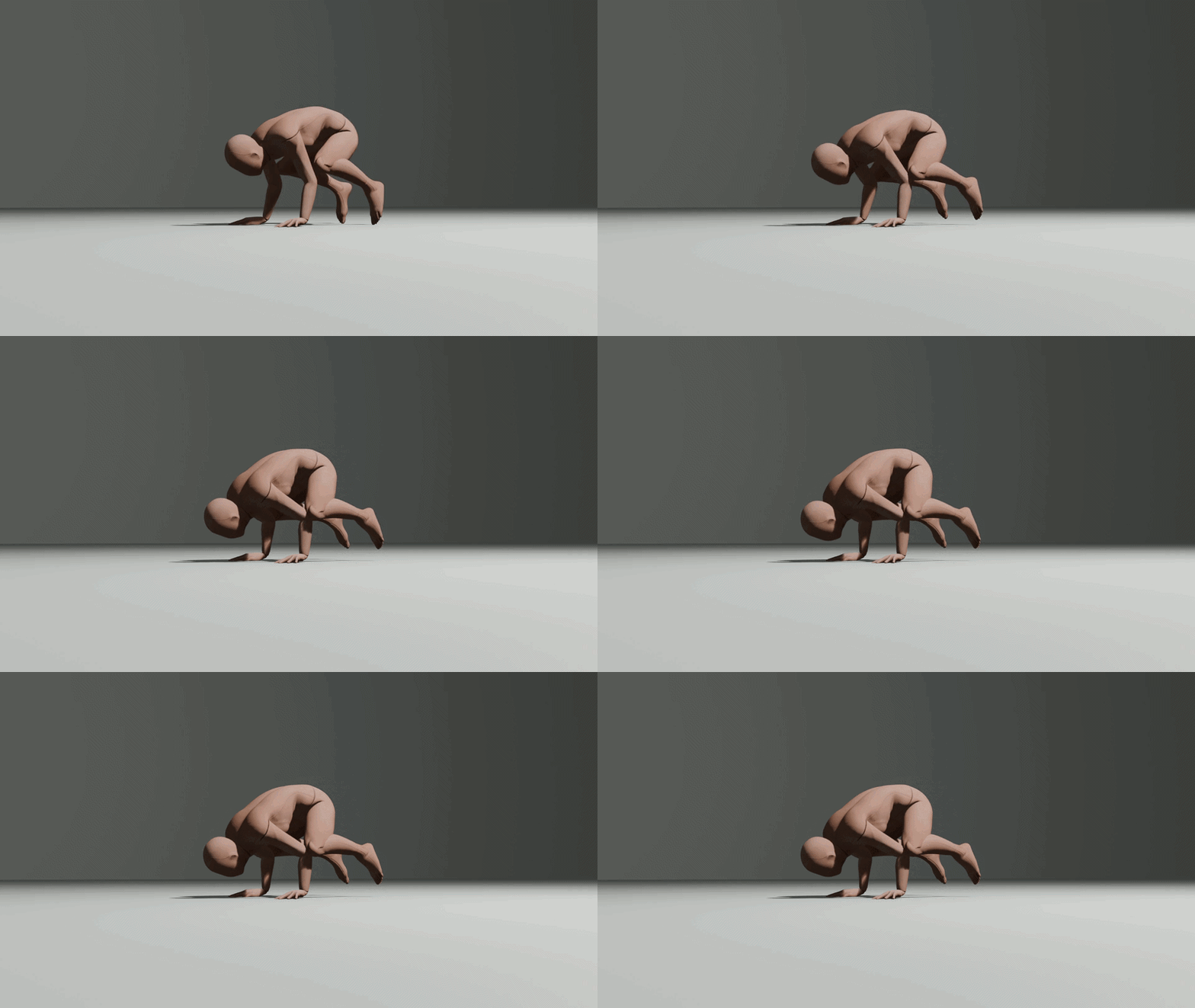
The tuck planche is the first progression where your feet leave the floor while your arms remain straight. Keeping the knees close to your chest shortens the lever and makes the position substantially easier than a straddle or full planche.
How to do it:
Start with your hands about shoulder-width apart. Lock your elbows, push strongly through the floor and lean your shoulders forward. Pull your knees toward your chest while keeping your upper back slightly rounded and your core tight. Continue leaning until your feet leave the ground.
Don’t try to jump into the position. Your feet should lift because your center of mass has shifted over your hands.
Move on when:
Aim for repeated controlled holds of roughly 10-15 seconds before spending most of your training time on advanced tuck.
Step 3: Advanced Tuck Planche
The advanced tuck increases the lever by moving your knees farther away from your chest. Compared with the tuck planche, your hips open and your back becomes flatter while your legs remain bent.
Start from a controlled tuck planche. Gradually move your knees away from your chest without allowing your hips to drop. Keep your elbows straight, shoulders forward and shoulder blades protracted.
Don’t rush to make the tuck as open as possible. Increase the lever gradually while maintaining the same upper-body position
How to Perform It:
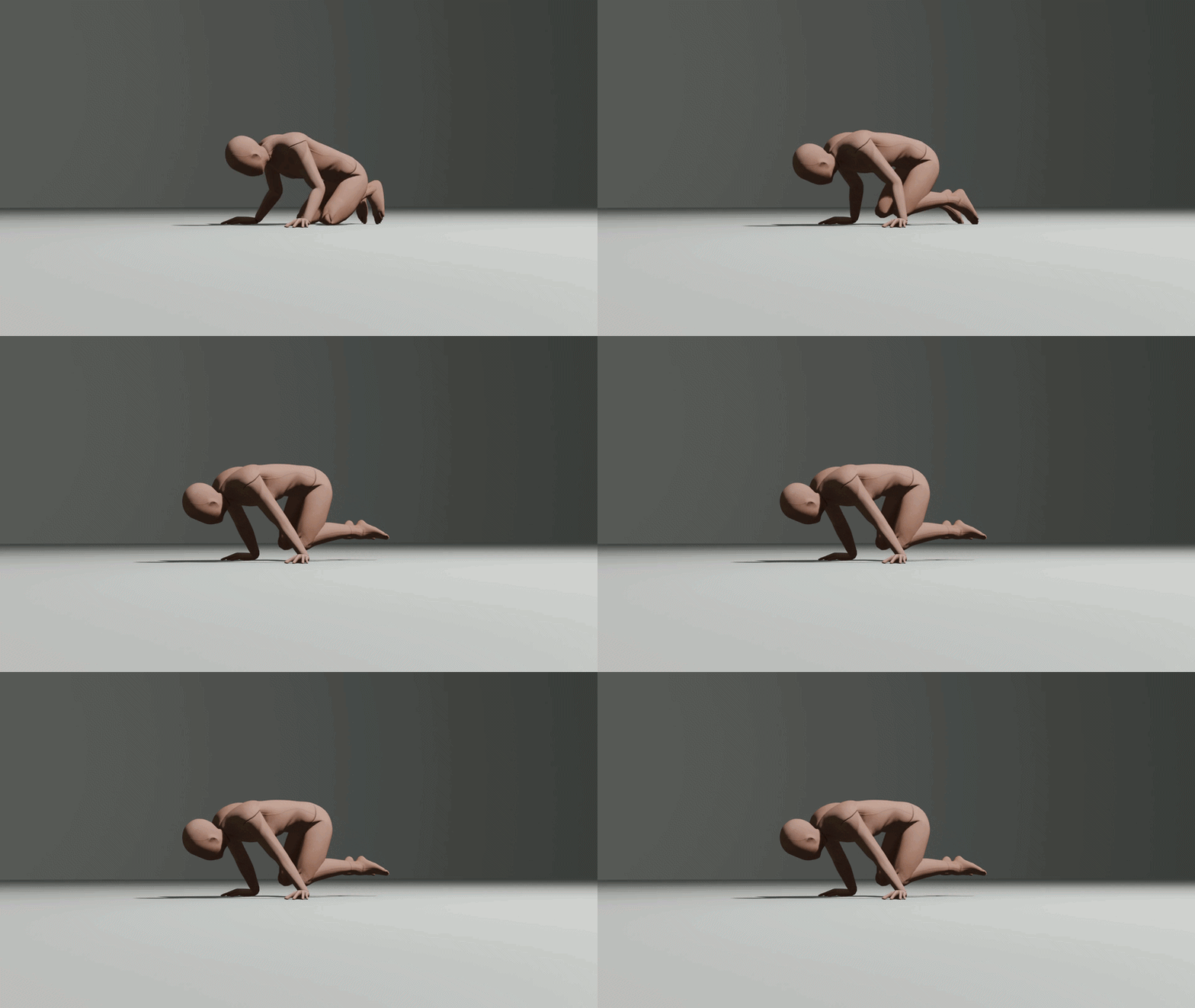
Instead of keeping knees close to the chest:
- Open the hips slightly
- Move knees farther away
This significantly increases difficulty.
Move on when:
You can repeatedly hold a clean advanced tuck for around 10 seconds without bent elbows, sagging hips or losing your forward lean.
Step 4: Straddle Planche
The straddle planche spreads the legs apart.
This reduces leverage demands compared to the full planche.
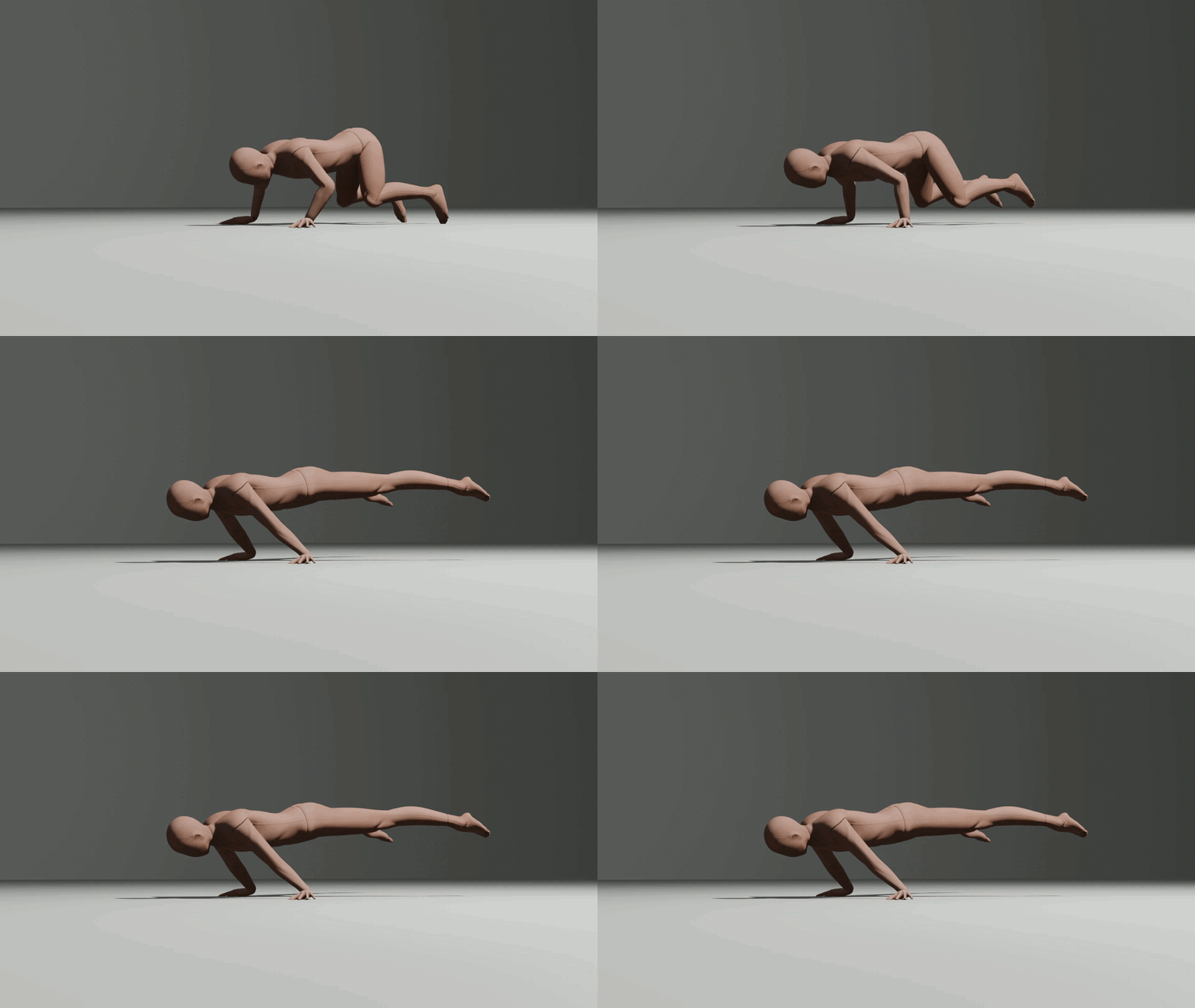
How to Do a Straddle Planche
From a strong advanced tuck, gradually extend your legs behind you while separating them into a wide straddle. Keeping the legs apart shortens the effective lever compared with keeping them together.
Maintain straight elbows, strong shoulder protraction and level hips. Extend only as far as you can without losing your body line.
The goal isn’t simply to get your legs farther back. The goal is to lengthen the lever while preserving the same shoulder and core position.
Move on when:
You can repeatedly hold a controlled straddle for roughly 5-10 seconds
Step 5: Full Planche
The full planche is the final progression in this sequence. Unlike the straddle planche, the legs are straight and held together, creating a longer lever and substantially increasing the demand on the shoulders.
Begin from your strongest straddle or advanced planche position. Gradually bring your legs together while maintaining the same forward shoulder position. Push firmly through the floor, keep your elbows straight, brace your core and glutes, and prevent your hips or feet from dropping.
A clean full planche should show a controlled body line with the arms straight and the body approximately parallel to the floor.
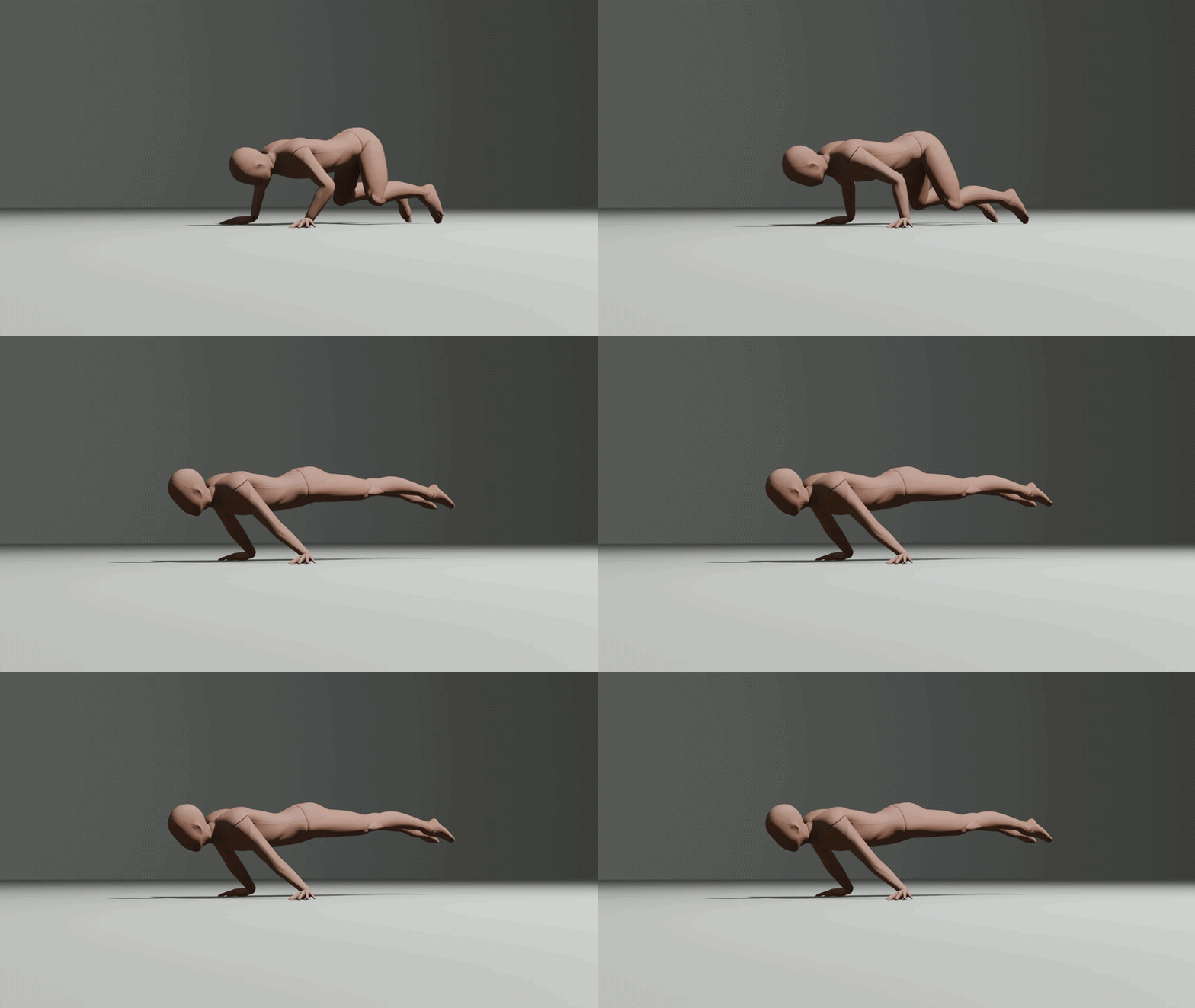
Full Planche Position
Key form points
- straight elbows
- shoulders forward of the hands
- shoulder blades protracted
- core and glutes tight
- hips level
- legs straight and together
4-Week Planche Training Block
Use this block 3 times per week, for example Monday, Wednesday, and Friday. Do the Planche work near the beginning of your gym session, after warming up your wrists and shoulders.
Choose the hardest Planche progression you can perform with controlled form. Whenever the table says Current Planche Hold, use that progression.
For example, if you’re working on the Tuck Planche, then “Current Planche Hold” means Tuck Planche.
| Week | Session 1 | Session 2 | Session 3 |
|---|---|---|---|
| 1 | Planche Lean – 3 × 15-20 sec Current Planche Hold – 4 × 5-10 sec Hollow Body Hold – 3 × 20-30 sec | Current Planche Hold – 4 × 5–10 sec Pike Push-Ups —- 3 × 8–12 Plank -3 × 30-45 sec | Planche Lean – 3 × 15-20 sec Current Planche Hold – 4 × 5-10 sec Hollow Body Hold – 3 × 20-30 sec |
| 2 | Current Planche Hold – 5 × 5–10 sec Planche Lean – 3 × 20 sec Hollow Body Hold – 3 × 30 sec | Current Planche Hold – 4 × 8–12 sec Pike Push-Ups – 3 × 8–12 Plank – 3 × 30–45 sec | Current Planche Hold – 5 × 5–10 sec Planche Lean – 3 × 20 sec Hollow Body Hold – 3 × 30 sec |
| 3 | Current Planche Hold – 5 × 8-12 sec Planche Lean – 3 × 20-30 sec Hollow Body Hold – 3 × 30 sec | Current Planche Hold – 4 × controlled max hold Pike Push-Ups – 3 × 8-12 Plank – 3 × 45 sec | Current Planche Hold – 5 × 8-12 sec Planche Lean – 3 × 20–30 sec Hollow Body Hold – 3 × 30 sec |
| 4 | Current Planche Hold – 3 × 5-8 sec Planche Lean – 2 × 15 sec | Pike Push-Ups – 2 easy sets Plank – 2 easy sets Light wrist work | Current Planche Hold – 2-3 warm-up sets Progress Test – 2-3 controlled attempts |
Exercise Guides
If you are unfamiliar with any of the supporting exercises, use these guides:
The Planche hold is the main skill practice. Pike push-ups help build shoulder pressing strength, while planks and hollow body holds help develop the core control needed to keep a rigid body position.
Common Planche Mistakes
Bending Your Elbows
Problem: Your arms bend as you lean or lift your feet.
Fix: Use an easier progression or reduce your lean until you can keep the elbows straight throughout the hold.
Not Leaning Forward Enough
Problem: You’re trying to lift your feet without moving your shoulders sufficiently in front of your hands.
Fix: Spend more time on planche leans and gradually increase the forward shift.
Losing Your Body Position
Problem: Your hips drop or your lower back arches as the progression gets harder.
Fix: Brace your abs, squeeze your glutes and return to a shorter lever.
Progressing Too Quickly
Problem: You’re repeatedly attempting a harder progression that you cannot control.
Fix: Build more clean time at the previous progression and increase difficulty gradually.
Before training for harder exercises, read our guide on how to train without injuries.
Exercises That Help Build Planche Strength
| Exercise | Why it helps |
|---|---|
| Pseudo Planche Push-Ups | Builds bent-arm pushing strength while practicing forward lean |
| Scapular Push-Ups | Trains active shoulder-blade protraction |
| Hollow Body Hold | Builds trunk tension and pelvic control |
| Pike Push-Ups | Adds shoulder pressing strength |
How Long Does It Take to Learn a Planche?
There is no reliable universal timeline for learning a full planche. For some athletes it takes many months to reach the early tuck variations, while a clean full planche can require years of consistent practice.
Progress depends on your starting strength, body proportions, body weight, training history, technique, recovery and how consistently you practice.
Instead of training toward a deadline, measure progress through better form, longer controlled holds and gradually increasing leverage.
How Often Should You Train Planche?
For most athletes:
- 2–4 sessions per week
works best.
More is not always better.
Recovery is crucial for progress.
Related article:
Do You Need Rest Days As A Beginner?
Are Parallettes Worth Using for Planche Training?
You can learn the planche on the floor or on parallettes. The progression and leverage principles remain similar, but the hand and wrist position changes.
On the floor, the wrist is placed in substantial extension as you lean forward. Parallettes allow you to grip a handle with the wrist closer to a neutral position, which some athletes find more comfortable. They also provide additional ground clearance for tuck and straddle positions.
- Wrist position: less wrist extension than floor training.
- Grip: lets you actively grip the handles.
- Clearance: creates additional space underneath the body.
Look for stable parallettes with non-slip feet, comfortable handles, and a weight capacity suitable for your training.
See parallettes for calisthenics on Amazon.
Paid link: I may earn a commission if you purchase through this link.
Read our complete calisthenics parallettes equipment guide to read more about parallettes!
What Muscles Does the Planche Work?
The shoulders, especially the anterior deltoids, handle much of the demand created by the forward lean. The chest, serratus anterior and muscles around the shoulder girdle help stabilize the upper body, while the arms and forearms support the straight-arm position and grip.
Your abs, lower back and glutes work isometrically to maintain a rigid body line and prevent the hips from sagging.
| Area | Main role |
|---|---|
| Shoulders | Support the forward lean |
| Chest / serratus | Upper-body stabilization |
| Arms / forearms | Straight-arm and hand support |
| Core | Maintains body position |
| Glutes | Helps keep hips extended and body rigid |
Benefits of Planche Training
Planche training develops advanced straight-arm pushing strength, shoulder control and whole-body tension. Training the skill also requires you to improve your ability to control leverage and maintain a rigid body position under load.
FAQ
Is the planche harder than a handstand?
For most people, yes.
A handstand requires more balance, while a planche requires significantly more strength.
Can beginners learn a planche?
Yes, but beginners should first build foundational strength through push-ups, planks, and core training.
Is planche easier on parallettes?
Parallettes don’t remove the leverage demands of the planche, but they change the wrist position and provide additional ground clearance. Some athletes therefore find planche training more comfortable or easier to control on parallettes than on the floor.
Does the planche build muscle?
Planche training can contribute to muscle and strength development in the shoulders, chest, arms and core, although its primary purpose is skill and strength development rather than hypertrophy.
Is planche training safe?
Planche training places substantial load on the wrists, elbows and shoulders. Build the progression gradually, stop if you experience sharp or persistent pain, and seek qualified medical guidance if you have an existing injury