
When I started calisthenics, I didn’t have a complicated plan. I just had a couple of clear goals and built my training around them.
My main goals at the beginning were:
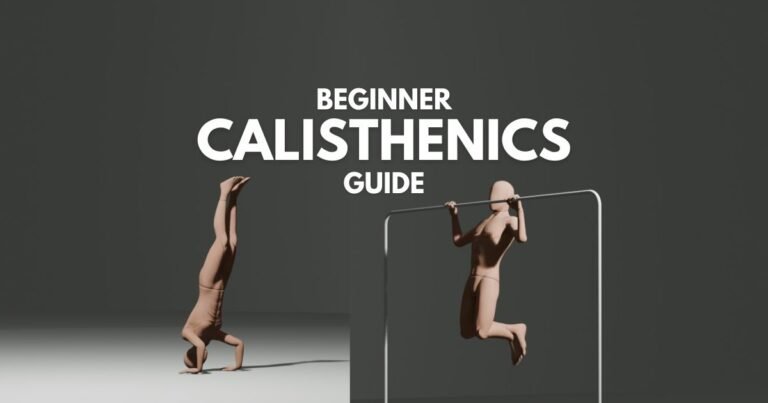
- LEARNING HANDSTAND
- GETTING MY FIRST MUSCLE UP
These are not really that beginner-level skills, but having clear goals helped me stay motivated and consistent.
My Training Split (Push, Pull, Legs)
To work toward these goals, I was just training randomly all the bodyweight exercises that I was able to perform, but once I started following a simple PPL routine (Push, Pull, Legs) and I stuck with it, I started to see progression much faster.
This helped me train my whole body while still focusing on the muscles needed for calisthenics skills and letting certain muscle groups rest for enough period of time.
At one point I felt my left chest starting to get injured because I did push ups and dips almost daily – so there was not much rest. I got that fixed with PPL-split and thus having longer rest times (couple days) for each muscle group. Anyways, here is my PPL-split:
Warm-Up and Stretching
Before every workout, I started with stretching.
I focused on:
- Chest
- Shoulders
- Back
- Triceps
- Wrists (very important)
Wrist preparation is especially important in calisthenics because many exercises put a lot of pressure on them. Skipping this can easily lead to pain or injury.
Push Day
Push day focused on building strength in:
- Chest
- Shoulders
- Triceps
These muscles are especially important for handstands and pushing movements.
Here are the main exercises I did:
- Push-ups
- Decline push-ups
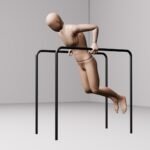
- Dips (if available)
- Pike push-ups
Pike push-ups were one of the most important exercises because they build shoulder strength, which is essential for handstand progress.
I focused on controlled reps and proper form instead of rushing through sets.
Pull Day
Pull day was all about building strength for:
- Back
- Biceps
- Grip
This is especially important for movements like pull-ups and working toward a muscle-up.
My main exercises were:
Pull-ups were the key exercise here. At first, I couldn’t do many reps, but I focused on improving little by little.
Inverted rows helped me add more volume and build strength when full pull-ups were too difficult.
Leg Day (and Core)
On leg days, I kept things simple. I mostly focused on:
I didn’t overcomplicate leg training, but I made sure not to skip it. Strong legs and core help with overall balance and control, especially for skills like handstands.
Handstand Practice (Almost Every Workout)
After each workout, I usually added some extra “fun” exercises and skill work.
The one thing I did almost every session was:
Handstand training
Unless my wrists or shoulders were too tired, I always practiced handstands.
This helped me:
- Get more comfortable being upside down
- Improve balance over time
- Build shoulder endurance
Consistency and volume here was more important than long sessions. Training anything for long enough you will eventually get it.
Extra “Fun” Exercises I Did
Outside of my main routine, I also did some exercises more freely — either between sets or after workouts.
These included:
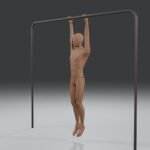
- Dead hangs
- Bar pull-overs
- Pseudo planche holds
- Tuck front levers
- Skin the cats and German hang
These weren’t always structured, but they helped me keep training interesting, build grip strength and explore new movements.
What I Learned From This Routine
Looking back, my routine wasn’t perfect, it wasn’t something I paid someone money to build for me, not checked by any professional but it worked.
The most important things were:
- Consistency
- Practicing skills regularly
- Keeping training simple and fun
You don’t need a complicated program to start calisthenics. You just need to show up and keep improving little by little.